Astrophotography diagnosis of Galaxies Mosaic: Guiding oscillation and astigmatism
ProcessedLPLP 322×180s (total ~16.1 h)23 mai 2026
The Doc examined this image of Galaxies Mosaic (processed, LP, LP 322×180s (total ~16.1 h)). Estimated overall technical quality: 7/10. 2 defects found: Guiding oscillation (severity 2/5), Astigmatism (severity 2/5).
&w=1920&q=75)
Info
- Cible
- Galaxies Mosaic
- Date
- 23 mai 2026, 00:00
Not enough information for an opinion from the Doc.
Setup
- Type d'image
- Traitée
- Télescope
- William Optics MiniCat 51 WIFD
- Caméra
- ZWO ASI2600MC AIR
- Filtre
- LP
- Monture
- ZWO AM3
- Exposition
- LP 322×180s (total ~16.1 h)
- Notes
- Logiciels : Astro Pixel Processor (APP), PixInsight
The MiniCat 51 (250mm focal length) with the ASI2600 provides a very wide field perfectly suited to a mosaic of galaxies spread over several degrees: a coherent choice for mapping a galaxy group rather than isolating a single target. The trade-off is very coarse sampling (~3 arcsec/px), so each individual galaxy stays small and poorly resolved, and stars are only 1 to 2 px: at this scale, any tracking error becomes visible, which explains the measured elongation. The LP filter suits broadband work under light-polluted skies. For this kind of wide-field project the setup is well sized, the main challenge being clean tracking.
The diagnosis in detail
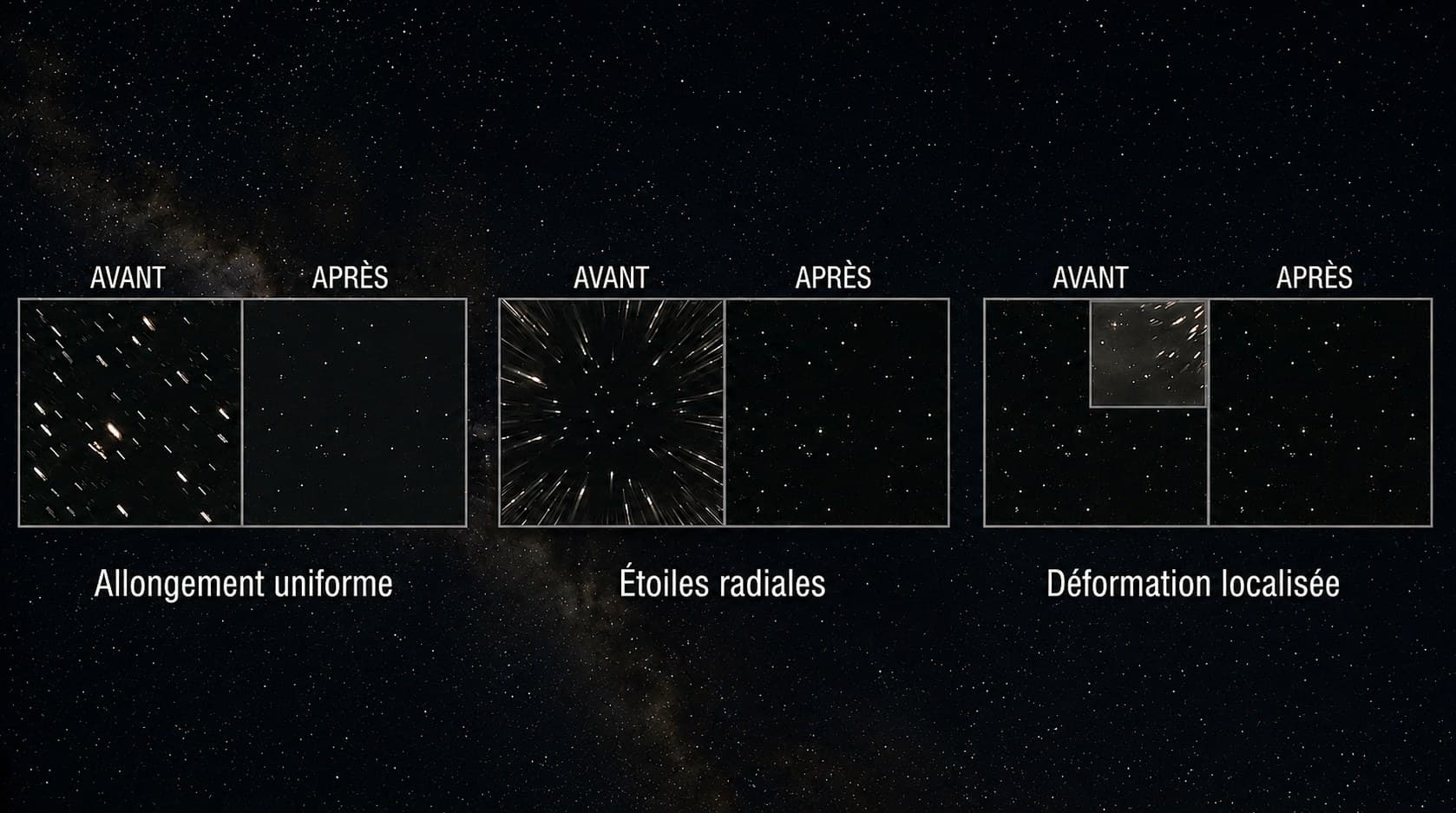
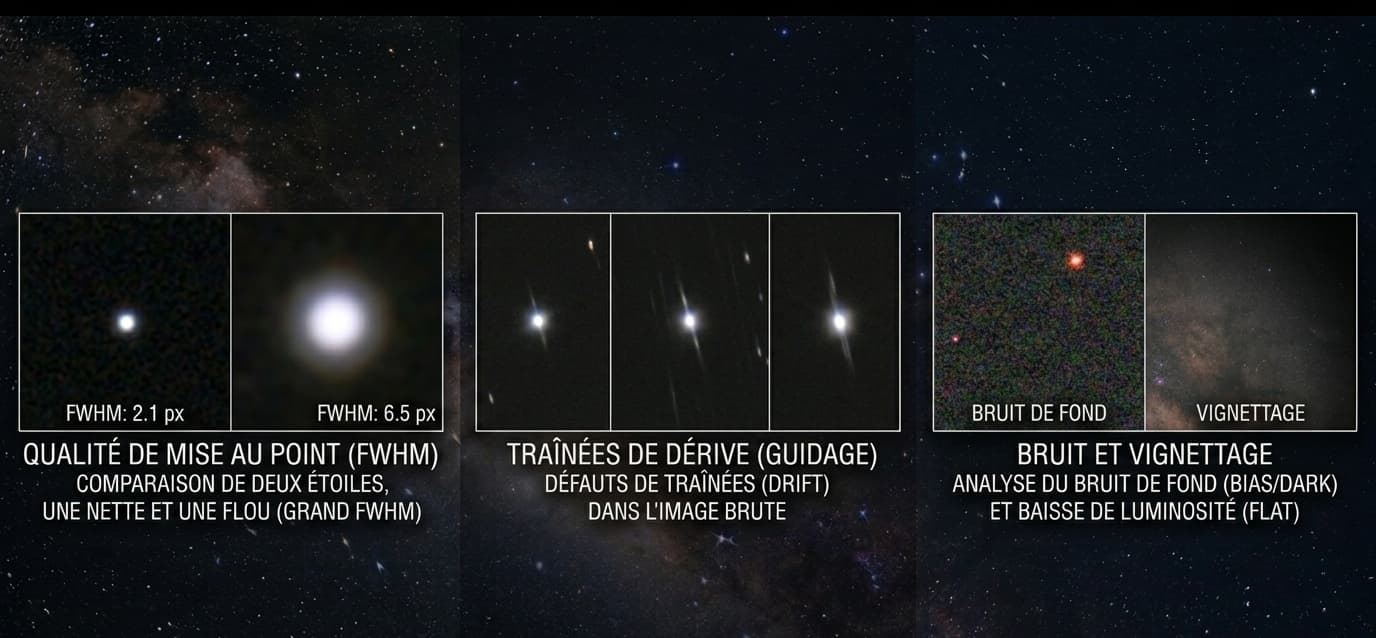
The PSF analysis is the key element of this diagnosis. The automatic pre-verdict leaned toward a backfocus/field-curvature defect, but the figures contradict it: the corner/center FWHM ratio is only 1.059, meaning the corners are barely more degraded than the center. Yet a backfocus or coma defect by definition spares the center. Here on the contrary, central zone C shows an elongation of 2.08, among the highest in the field. An elongation reaching the center can only come from tracking or guiding.
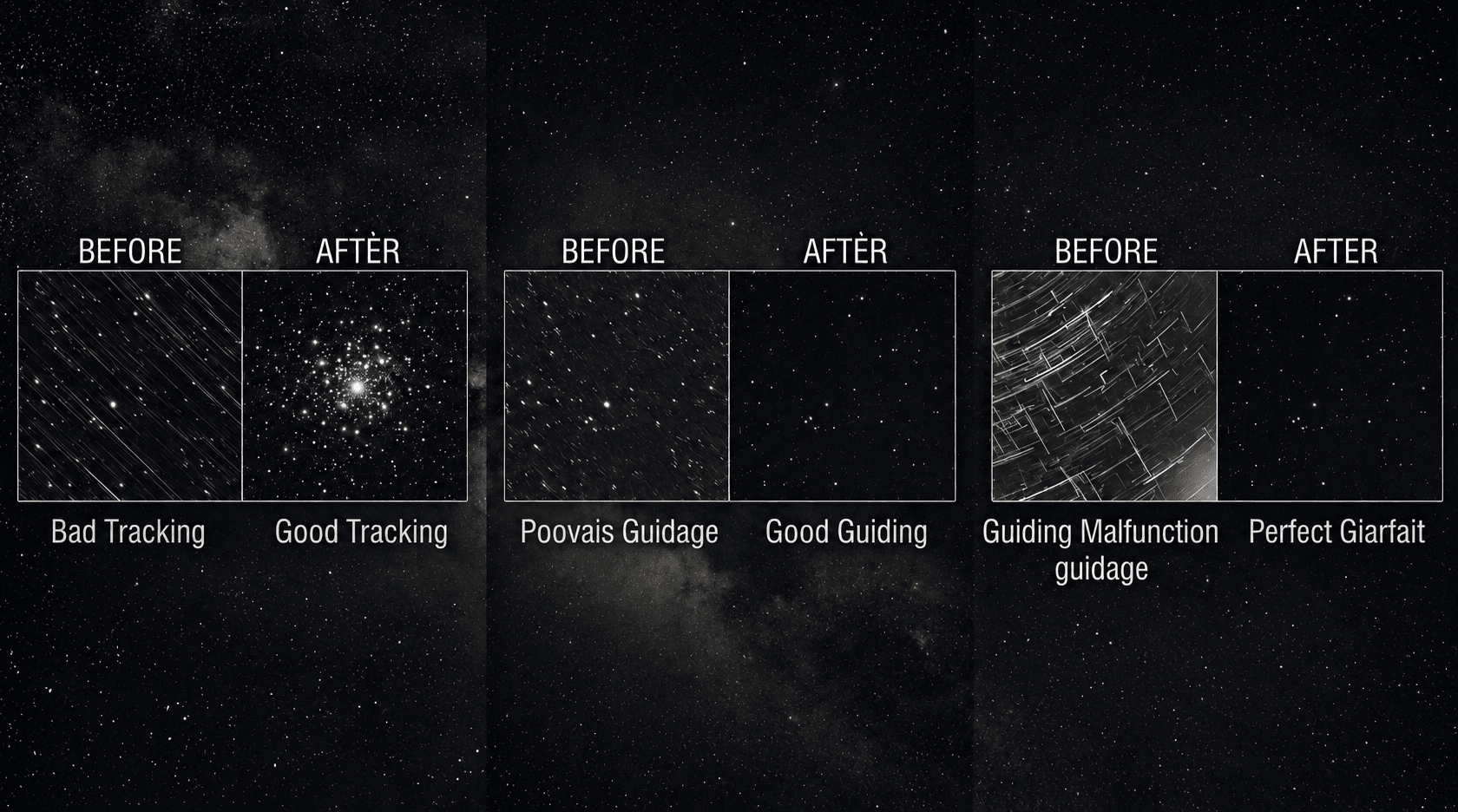
The more precise signature points to guiding oscillation: the position-angle dispersion across zones is moderate (44.8 degrees) and the elongation axes are not perfectly aligned (PA varying from 0 to 54 degrees by zone), which rules out a uniform linear drift. On a 16h master, these micro-oscillations average into a stretched PSF. Note that at this extreme undersampling, the slightest tracking defect is amplified on screen.
Otherwise the image is healthy: the background map shows near-perfect radial symmetry (anisotropy 0, gradient amplitude 1%), so no vignetting or gradient to correct, and the histogram is clean (no clipping). The tracking defect remains minor and does not prevent a polished result.
Priority actions
- Optimise guiding settings in PHD2 (aggressiveness, rate) to reduce residual oscillations
- Monitor guiding RMS per session and aim for < 0.8 arcsec at this short focal length
- Sort and reject the most distorted subs before final integration