DocStellar diagnoses your astrophotography defects
The Doc takes your image in consultation, raw, master or processed. It examines, diagnoses, and hands you a detailed prescription for every defect spotted, in under a minute.
How it works
You submit your image
JPG, PNG, FITS or XISF, up to 1 GB. Raw, master or processed, the Doc extracts a clean preview.
The Doc examines
It reviews your image, looking for 42 defects common in astrophotography.
You get the prescription
Annotated image with the spotted areas, likely causes and what to do for each defect.
Latest diagnoses
&w=1920&q=75)
&w=1920&q=75)
&w=1920&q=75)
&w=1920&q=75)
&w=1920&q=75)
&w=1920&q=75)
&w=1920&q=75)
&w=1920&q=75)
&w=1920&q=75)
&w=1920&q=75)
&w=1920&q=75)
&w=1920&q=75)
42 detectable defects
Defects common in astrophotography, each with its own detailed page.
Why DocStellar?
Astrophotography is a discipline where the slightest error, a sensor tilted by 0.1 degrees, a failed flat, imperfect tracking, leaves a visible trace on the image. Diagnosing these defects requires the trained eye of an experienced astrophotographer and the patience to compare a photo against hundreds of known examples. DocStellar automates that examination.
You submit your raw frame, your master, or your processed image. The Doc scrutinizes the photo, identifies the defects present, pinpoints their probable causes, and tells you what to do about each one. All in under a minute, with no mandatory sign-up. Here is how it works in detail.
For whom?
- Beginners who want to understand why their photo does not look like the ones on the forums, without having to post and wait for feedback.
- Experienced astrophotographers who want a quick second opinion before committing 4 hours of integration to the stack.
- Curious learners who simply want to learn to recognize sensor tilt, walking noise, or a light pollution gradient.
Every diagnostic made public enriches the astrophotography defect gallery, an annotated example corpus that is as useful for learning as it is for comparing your case to others.
Who is the Doc?
The Doc is an astrophoto diagnostician, powered by a vision-language model trained on thousands of example images. It has been briefed on a taxonomy of 42 common astrophotography defects, organized by family (optics, mechanics, electronics, acquisition, calibration, processing, atmospheric, environmental). For each defect, it knows the visual signature, probable causes, differential diagnoses, and corrections to consider.
Its method
For each submitted image, it identifies the defects present, locates the affected areas, and evaluates severity (from marginal to critical) along with its diagnostic confidence. It does not simply name the problem: it explains why it believes it sees it, where exactly, and how to correct it.
Its transparency
The Doc can be wrong. It may confuse sensor tilt with incorrect backfocus, or attribute to light pollution a gradient that actually results from an imperfect flat. That is why every diagnostic displays an explicit confidence level and a differential diagnosis when several causes are plausible. Treat its recommendations as an informed starting point, not a definitive verdict.
Latest articles
The Doc's guides and analyses on astrophotography.
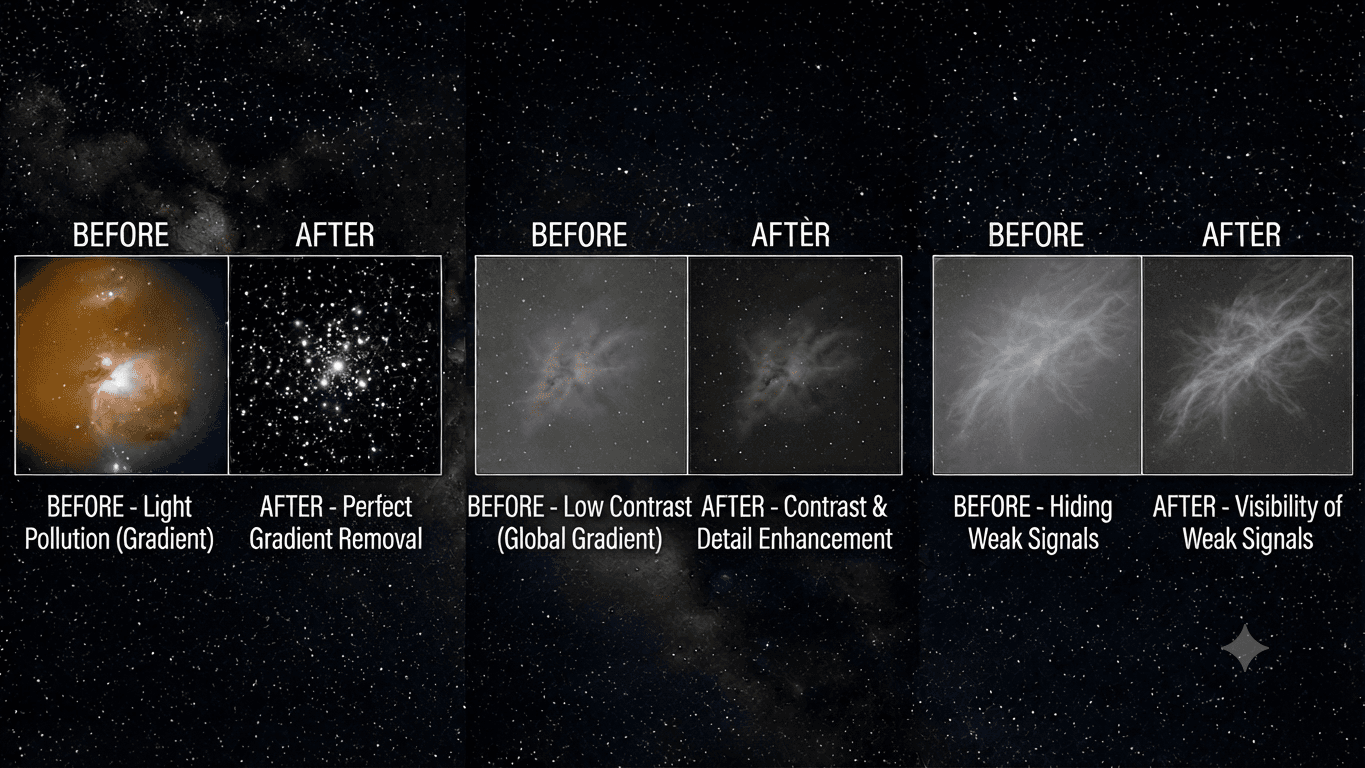
Sky background gradients in astrophotography: light pollution, Moon, and fixes
Uneven sky background? Light pollution, the Moon, cirrus, or dew: learn to recognize each type of gradient and correct it. Diagnose your image with the Doc.
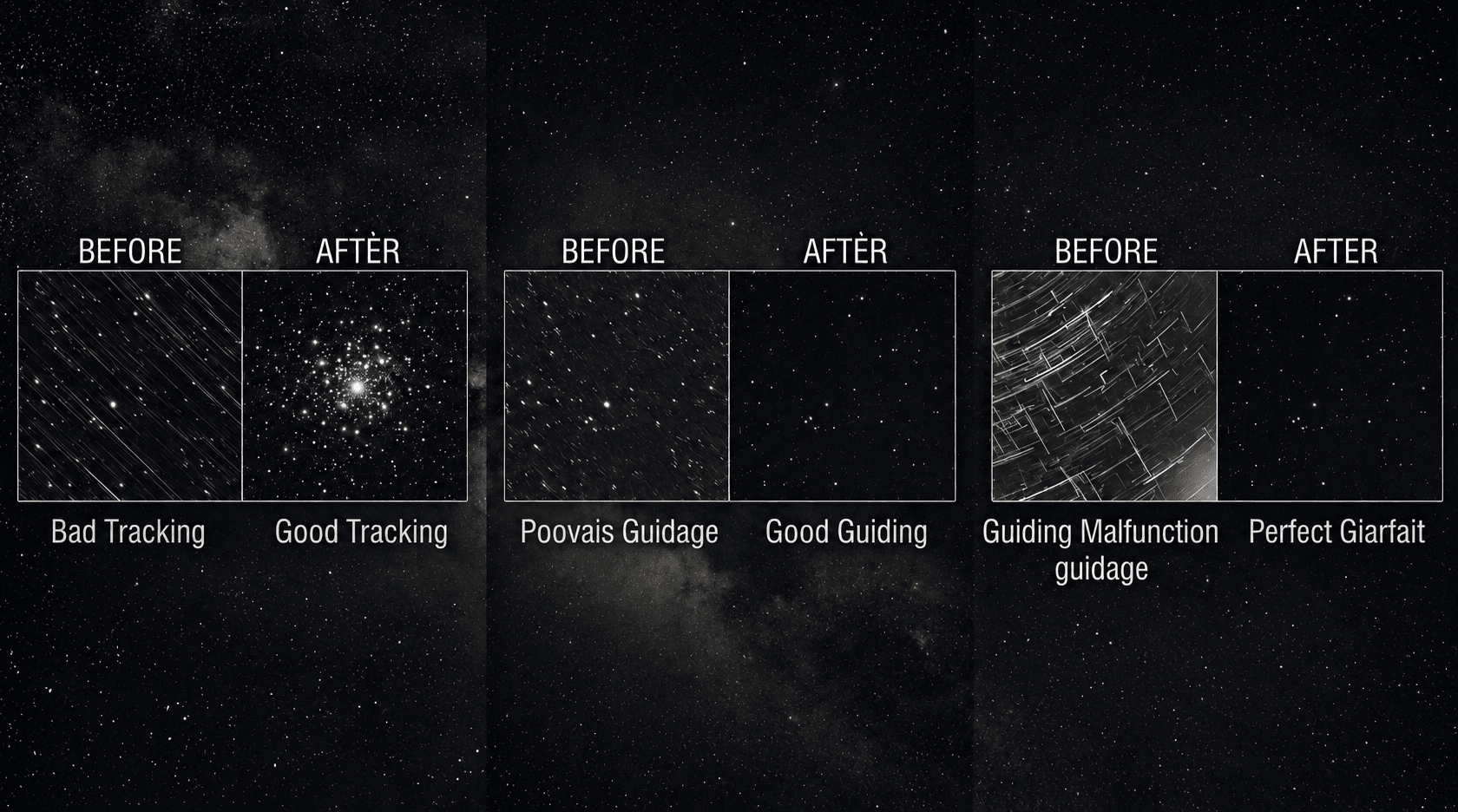
Astrophotography guiding: tuning PHD2 and correcting tracking
Stars trailed, kidney-beaned, or S-shaped? Tune PHD2, polar alignment, and balance for clean tracking. Diagnose your guiding signature with the Doc.
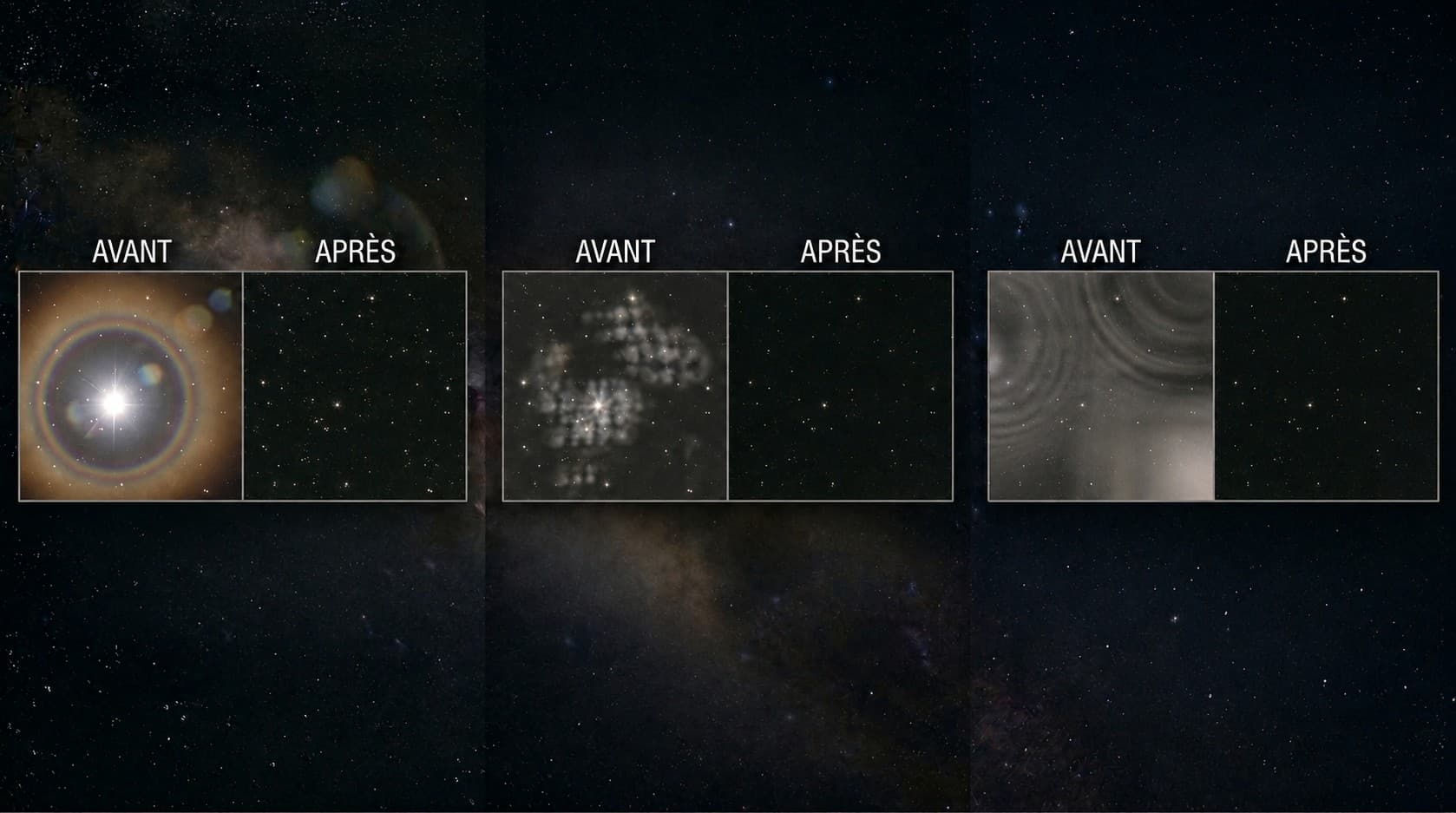
Halos and reflections in astrophotography: causes and solutions
Red ring, ghost spot, or purple fringe? Tell apart filter halos, internal reflections, and chromatic aberration, then fix them. Identify the artifact with the Doc.