Astrophotography diagnosis of m42: Clipped stars, oversaturation and 3 others
Processed
The Doc examined this image of m42 (processed). Estimated overall technical quality: 5/10. 5 defects found: Clipped stars (severity 3/5), Oversaturation (severity 3/5), Noise / underexposure (severity 3/5), Astigmatism (severity 2/5), Background chroma noise (severity 2/5).

Info
- Cible
- m42
- Position
- 5h35m17s · -5°23'24"
A last crescent Moon at 26% illumination is a negligible factor, all the more so since M42 is a very bright emission target: the sky background is not Moon limited here. The real brake lies elsewhere, in total integration: a median of 0.02 with 15% of pixels clipped at the bottom of the histogram means the background sits very close to the black point, so the signal on the outer extensions is weak. With such favourable lunar conditions there was every reason to pile on more subs, including a short set dedicated to the core.
Setup
- Type d'image
- Traitée
- Phase de lune
- Dernier croissant (26 %)
- FOV
- 1.80°
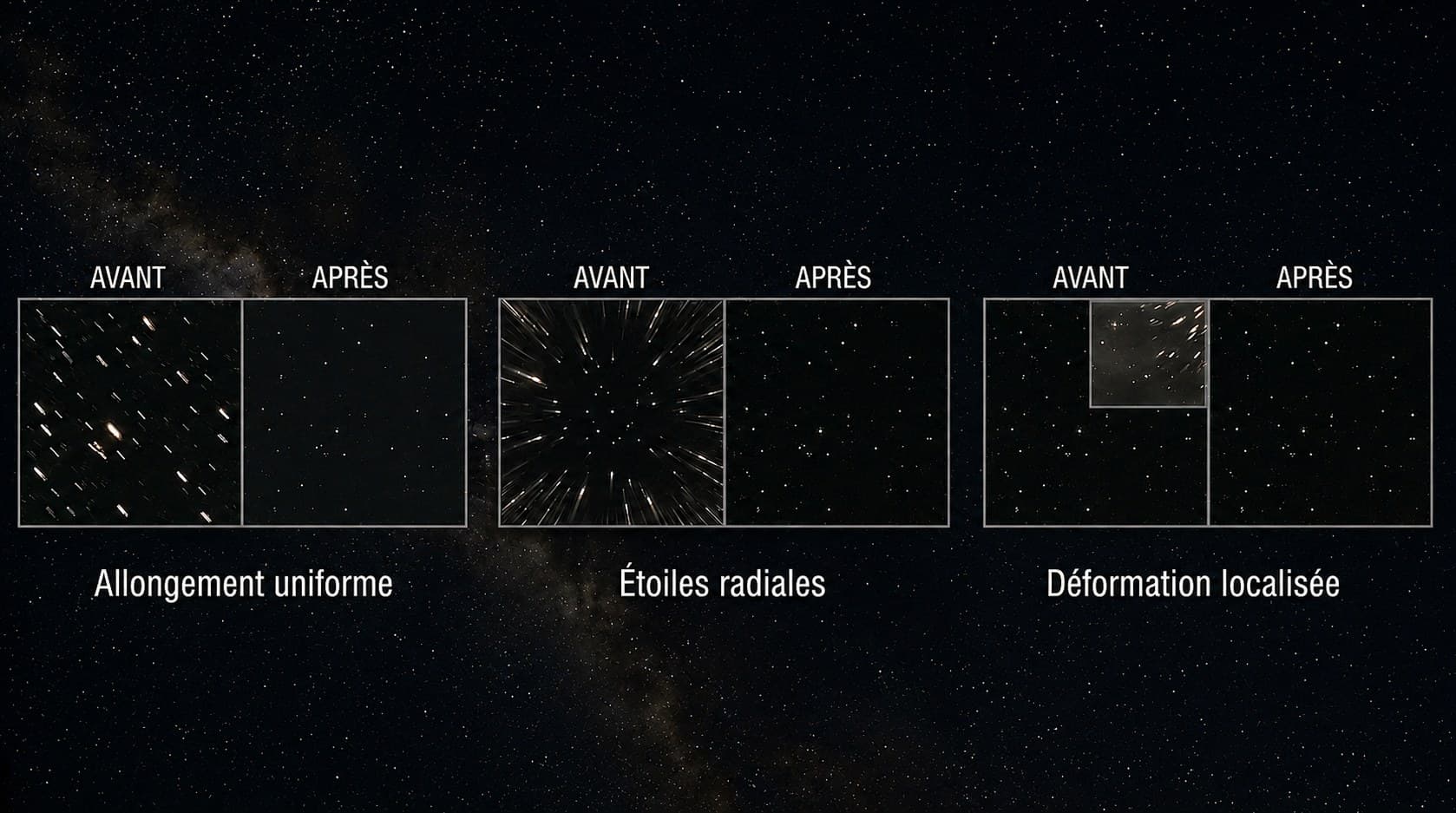
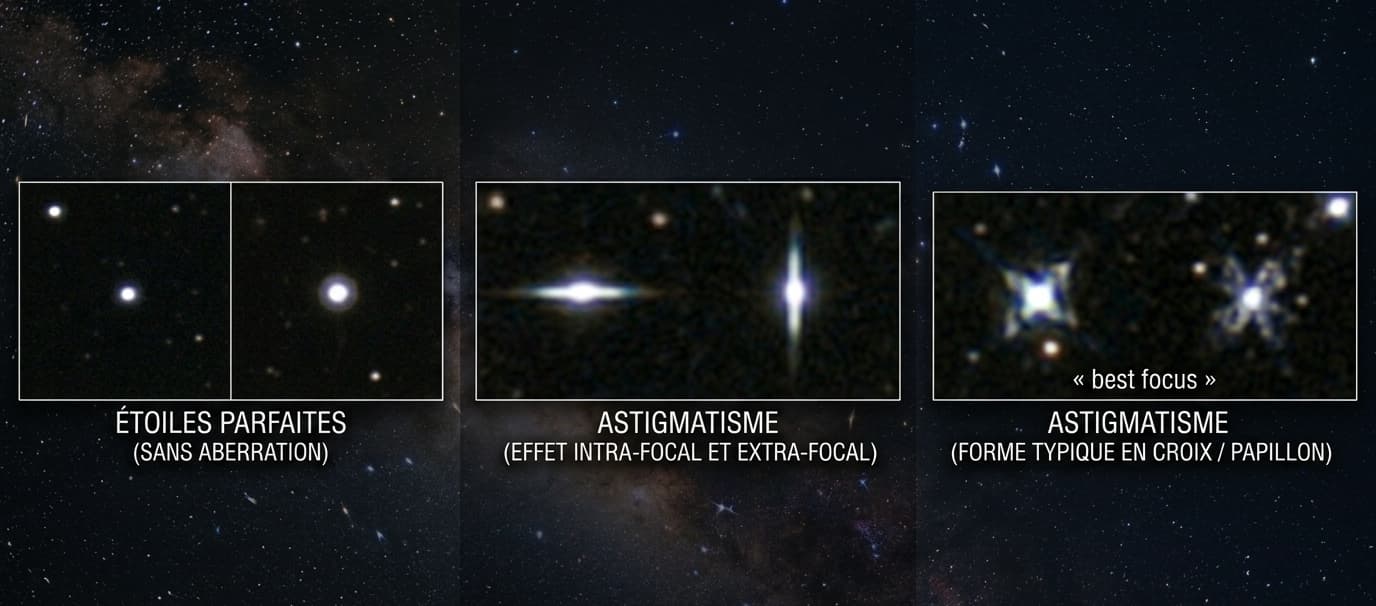
The 1.80 degree wide field suits M42 well: the core, the Trapezium, the pillars and part of the extensions fit in frame with room to spare, and the framing is fine even though the object sits slightly right of centre. The camera is monochrome, which makes channel handling all the more dependent on careful balancing. The weak point shows on the PSF panel: a central FWHM of 9.2 px is broad and the edges show marked astigmatism, suggesting the corrector spacing should be rechecked and that the sampling is likely generous compared with what the optics actually deliver off axis.
The diagnosis in detail
The dominant issue is highlight handling. The M42 core is a flat white plateau with no gradient or hue, and the bright stars, Trapezium first, are pure white discs. The DSS reference confirms there is structure there: this is not a limit of the target but a lack of short exposures and an unmasked stretch on the highlights. It is the single factor that most hurts the reading of the image.
Second, signal to noise. A median of 0.02, 15% of pixels clipped at the bottom of the histogram and a background to black point margin of 0.73 describe a crushed, under exposed background. Visually this shows as clear grain on the background and colour mottling in the dark areas, mostly in the upper left quadrant, absent from the DSS. More integration and a gentler black point would fix both.
Finally, optics: the PSF panel is clear. The centre is round at elong 1.18 against a field floor of 1.12, but the right edge reaches 6.27 and the top right corner 3.69, with no rise in FWHM. That is the signature of field astigmatism, not coma and not a genuine tilt, the 20% confidence tilt candidate not being supported by any readable diagonal asymmetry on the panel. Its impact stays confined to the edges.
Priority actions
- Shoot a short exposure set on the Trapezium and blend it in HDR to recover the clipped core
- Raise the black point in processing so 15% of dark pixels are no longer clipped
- Increase total integration to lift the faint outer extensions out of the noise
- Check corrector to sensor spacing and imaging train tightness to reduce edge astigmatism
- Apply targeted chroma noise reduction on the background before any saturation boost