Astrophotography diagnosis of M 16: Tracking drift
RawH300s11 août 2025
The Doc examined this image of M 16 (raw, H, 300s). Estimated overall technical quality: 2/10. 1 defect found: Tracking drift (severity 5/5).
&w=1920&q=75)
Info
- Cible
- M 16
- Date
- 11 août 2025, 00:17
- Lune
- Croissant croissant 3.4% (35.9° d'alt., 65.6° de la cible)
- Site
- Bortle 3 · rural peu pollué (VIIRS)
- Position
- 18h18m48s · -13°48'24"
Conditions were excellent for M16 in Ha: Bortle 3 and a 3.4% crescent 65.6deg from the target add virtually no lunar pollution. Narrowband Ha is very tolerant of sky background anyway. Nothing to fault with the sky: the limiting factor that night is purely mechanical (tracking), not the environment. The background-to-blackpoint margin e_margin of 2.02 is low but normal for Ha at 300s, not a sign of underexposure to fix.
Setup
- Type d'image
- Brut
- Télescope
- SkyWatcher 150 PDS Quattro
- Caméra
- ZWO ASI585MM Pro
- Filtre
- H
- Exposition
- 300s
- FOV
- 1.23°
The SkyWatcher 150 PDS (f/4, 600mm) with the ASI585MM Pro gives a 1.23deg field well suited to M16, which fits in the frame. Sampling is consistent for this focal length. Gain 252 is high for this camera: on 300s Ha subs watch bright star saturation, but that is not the issue here. Sensor temperature -10.1C is healthy. The weak link is neither optics nor camera but the lack of guiding on a 5-minute exposure: at 600mm without autoguiding, trailing is unavoidable.
The diagnosis in detail
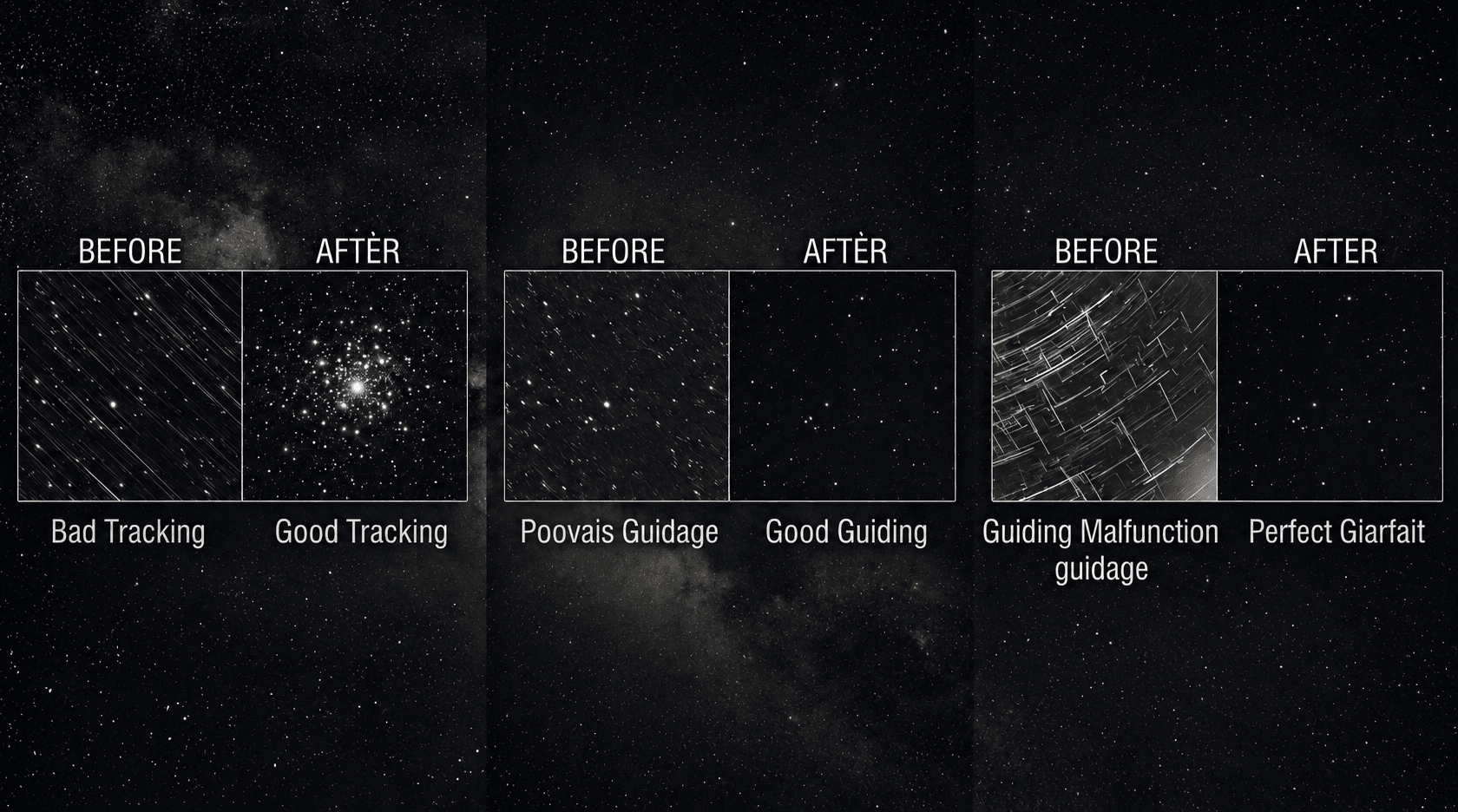
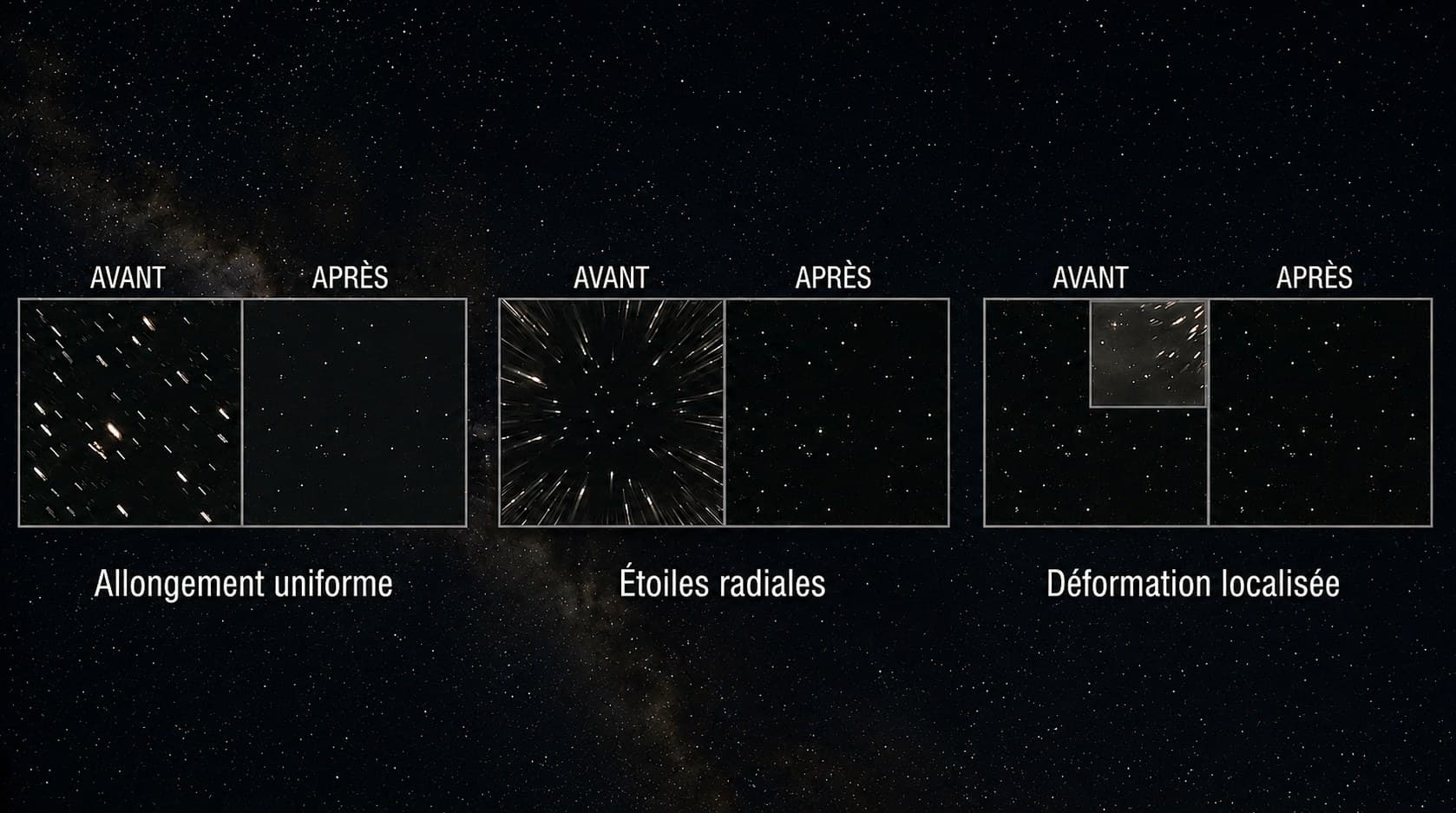
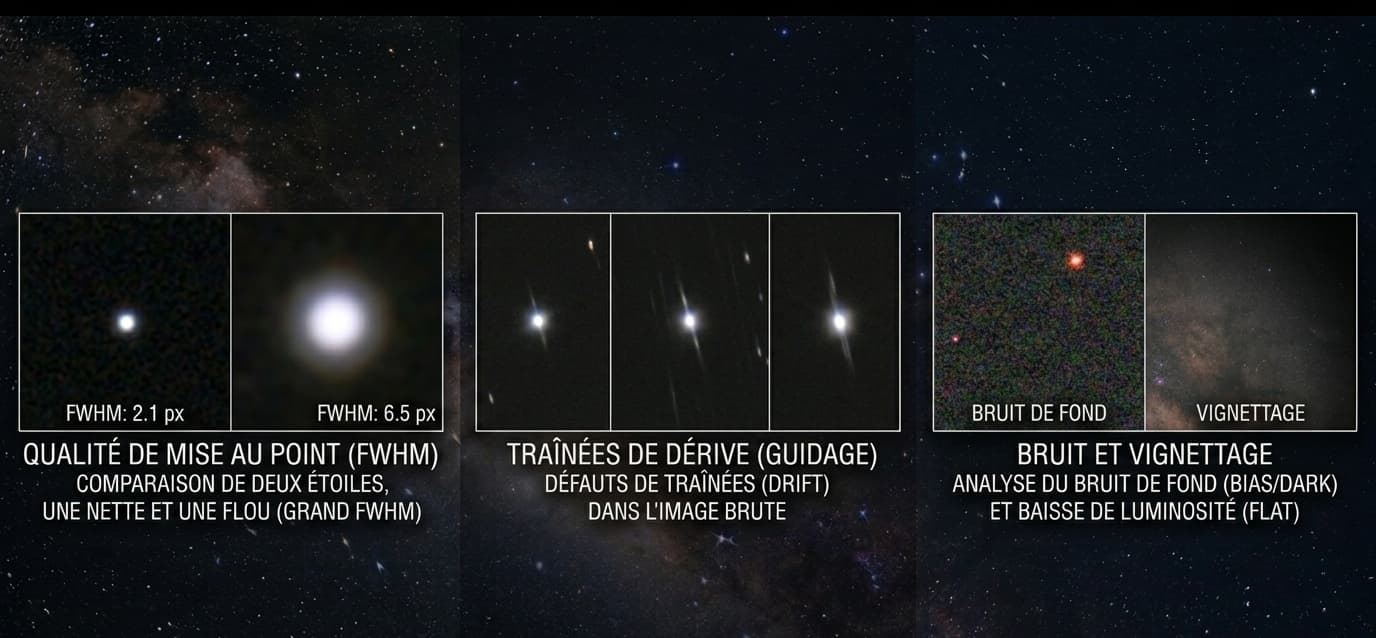
The diagnosis is unambiguous: this sub suffers from severe tracking drift. The PSF panel is explicit, the Moffat ellipses are stretched in the same direction across all nine zones with elongations from 3 to 8.5, and crucially the center itself is elongated (elong 1.76). Deformation present at the center rules out a field optical cause (tilt, backfocus, coma show at the edges with a sharp center). The consistency of position angle (PA grouped 37 to 60deg) and the straightness of the streaks point to a steady drift rather than periodic error in an S shape or guiding oscillation.
The most likely cause is a combination of imperfect polar alignment and lack of autoguiding on a 300s exposure at 600mm focal length. At this scale even a small polar error produces visible trailing within tens of seconds. The rest of the image calls for no criticism: the background is clean, the M16 nebulosity is perceptible and matches the DSS reference, the framing is good.
In practice this sub should be discarded. Before another session, secure the tracking: careful polar alignment then autoguiding, or failing that strongly shorten the exposure to stay below the trailing threshold.
Priority actions
- Set up autoguiding (guide scope or off-axis guider + PHD2) before any new session
- Refine polar alignment (SharpCap polar align or drift align)
- Shorten sub exposure to 60-120s until guiding is operational
- Check mount balance and axis clamping