Astrophotography diagnosis of M16: Sensor tilt and clipped stars
ProcessedSII-Ha-OIII3x20x600s
The Doc examined this image of M16 (processed, SII-Ha-OIII, 3x20x600s). Estimated overall technical quality: 8/10. 2 defects found: Sensor tilt (severity 3/5), Clipped stars (severity 2/5).
&w=1920&q=75)
Info
- Cible
- M16
- Site
- Bortle 4 · transition rural/banlieue (VIIRS)
- Position
- 18h18m49s · -13°52'31"
Decent conditions for this target. Under Bortle 4 with a first quarter Moon (56 %), an emission nebula like M16 shot in SII-Ha-OIII is barely affected: the narrowband filters reject most of the lunar and urban background, which the background map confirms (no instrumental gradient measured, the +84 % variation belongs to the nebula itself). The palette choice was the right compromise for the night. If you plan broadband RGB for the stars, save it for a moonless night, otherwise star color will suffer from the blue-shifted background.
Setup
- Type d'image
- Traitée
- Télescope
- Planewave CDK 12.5"
- Caméra
- Moravian C4 monochrome
- Filtre
- SII-Ha-OIII
- Monture
- Paramount MX +
- Exposition
- 3x20x600s
- Phase de lune
- Premier quartier (56 %)
- FOV
- 49.2'
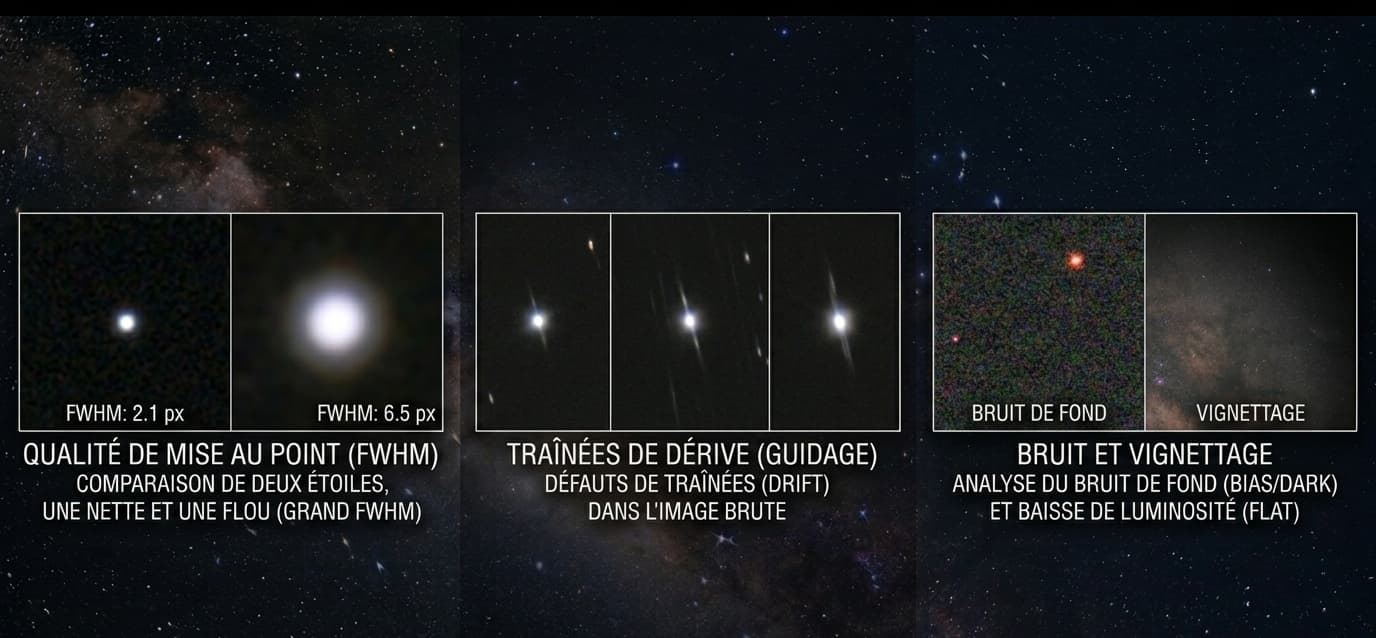
Coherent, high-end setup for the target. At 0.82 degrees of field, M16 and its NGC 6611 cluster sit comfortably in frame with room for the nebular extensions without being lost: well judged framing. The CDK 12.5' paired with the monochrome Moravian C4 gives fine sampling, but the measured FWHM (6.2 px at center) suggests you are oversampled relative to the seeing: software 2x2 binning would gain SNR with no real loss of detail. The 3x20x600s in SHO are well sized. One mechanical caveat: on a heavy train of this class, sensor flatness deserves regular checking, which is exactly what the measurement reveals.
The diagnosis in detail
The verdict is simple: a very good image with a single instrumental defect to fix. Positional comparison with the DSS validates every nebular structure, including the red extensions in the bottom right corner and the wisps at bottom left: nothing artificial in the background. The background map measures no gradient and no vignetting, so calibration is sound.
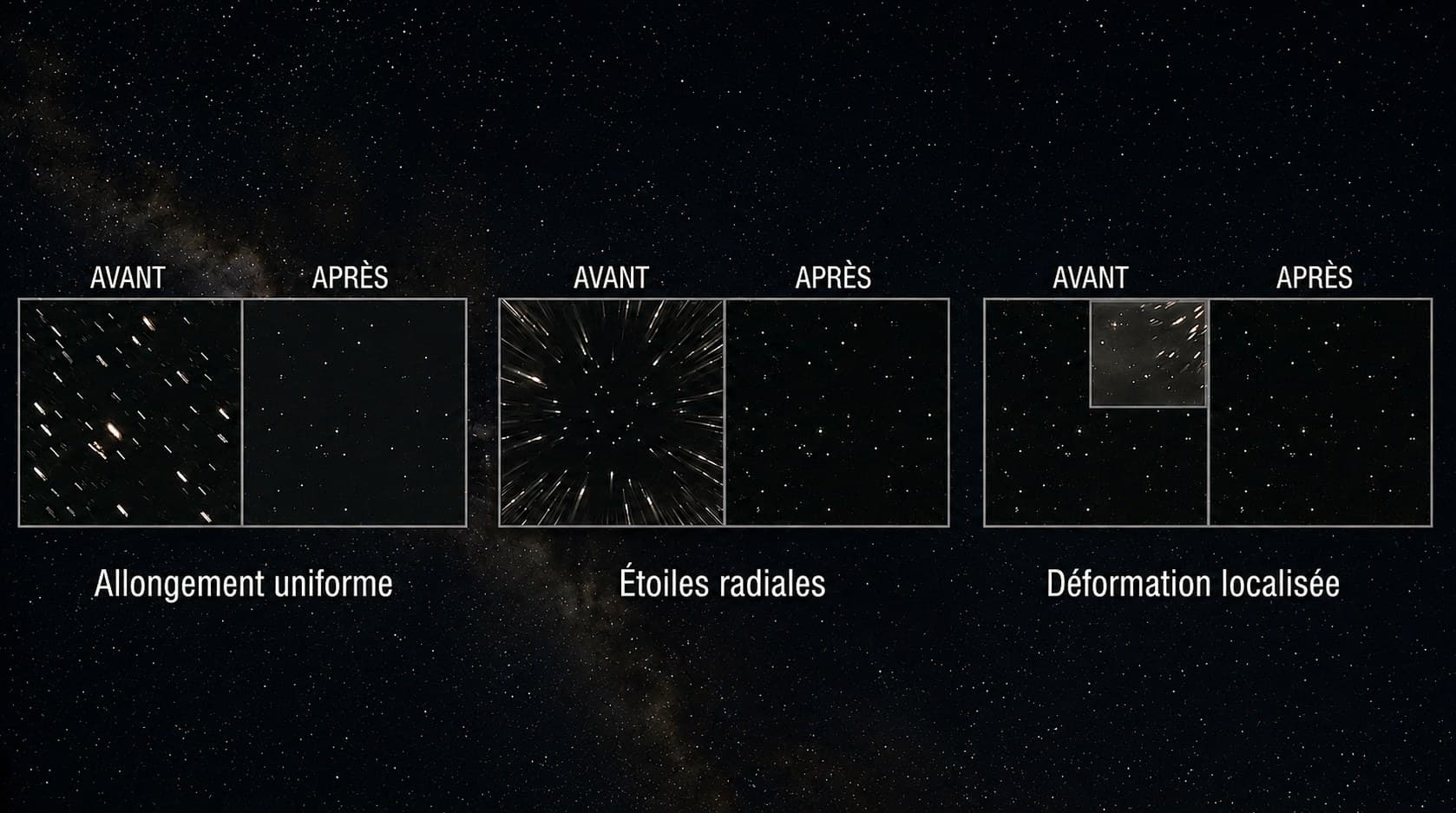
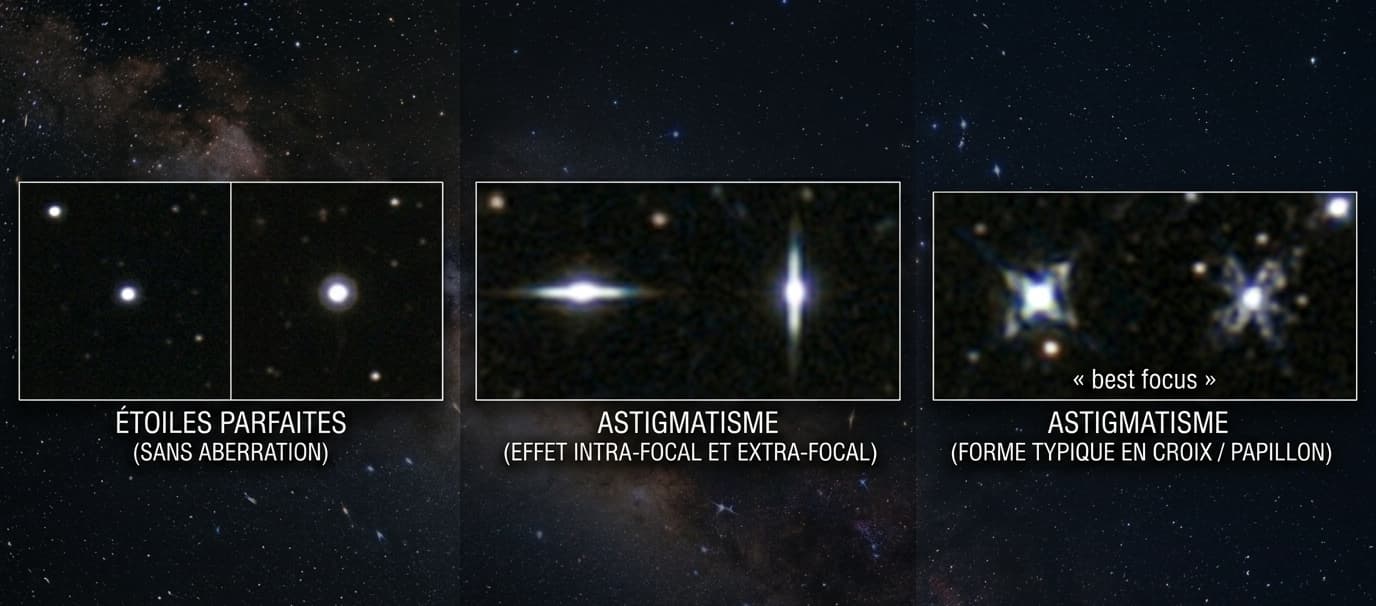
The sticking point is sensor tilt. The signature is clear and strictly single-axis: horizontal FWHM asymmetry of 0.142 against 0.012 vertically, with a continuous gradation from the left side (9.5 px at BL) toward the right (7.3 px at BR), and a center at 6.2 px. Elongations all stay between 1.01 and 1.04, below any significant floor: stars are round everywhere, so this is neither coma, nor astigmatism, nor a tracking issue. The Paramount MX+ is doing its job perfectly. This is a sensor plane tilted relative to the focal plane, with a corner/center ratio of 1.53 costing sharpness across an entire side of the field.
Secondarily, the bright stars of the central cluster show clipped cores with no color gradient, an expected consequence of 600s subs. That is cosmetic and recoverable with a set of short exposures.
Priority actions
- Correct the sensor tilt on the left-right axis with an adjustable tilt plate, aiming for a corner/center FWHM ratio below 1.2
- Check the tightness and concentricity of the whole imaging train (filter wheel, adapters) before touching the tilt plate
- Consider 2x2 binning in processing, the field is oversampled relative to the seeing (FWHM 6.2 px at center)
- Add a short exposure set per filter to rebuild the bright star cores in HDR