Astrophotography diagnosis of M97_ASI585M: Light pollution gradient
Raw200s22 mai 2026
The Doc examined this image of M97_ASI585M (raw, 200s). Estimated overall technical quality: 6/10. 1 defect found: Light pollution gradient (severity 3/5).
&w=1920&q=75)
Info
- Cible
- M97_ASI585M
- Date
- 22 mai 2026, 21:45
The Moon is a 38% crescent, so a lunar contribution is possible but moderate on a compact planetary nebula like M97. The measured gradient oriented toward ~184deg fits ground light pollution better than a strong lunar wash. Under these conditions, stacking many subs and dithering will be enough to drown the gradient at background extraction; no need to reschedule, but watch the Moon-target separation to limit background rise.
Setup
- Type d'image
- Brut
- Caméra
- ASI Camera (1)
- Exposition
- 200s
- Phase de lune
- Premier croissant (38 %)
The ASI585M (5.8um pixels, 1920x1080 sensor) cooled to -16C is a good match for M97: the small (~3') nebula sits comfortably centered with plenty of margin, and the sensor temperature is healthy (no dark-current concern). The 200s exposure is fine in itself, but the histogram shows a poorly lifted background (e_margin=2.19) and 9.24% dark clipping: raise the offset to avoid clipping shadows and read noise, and confirm the exposure stays sky-limited at your site.
The diagnosis in detail
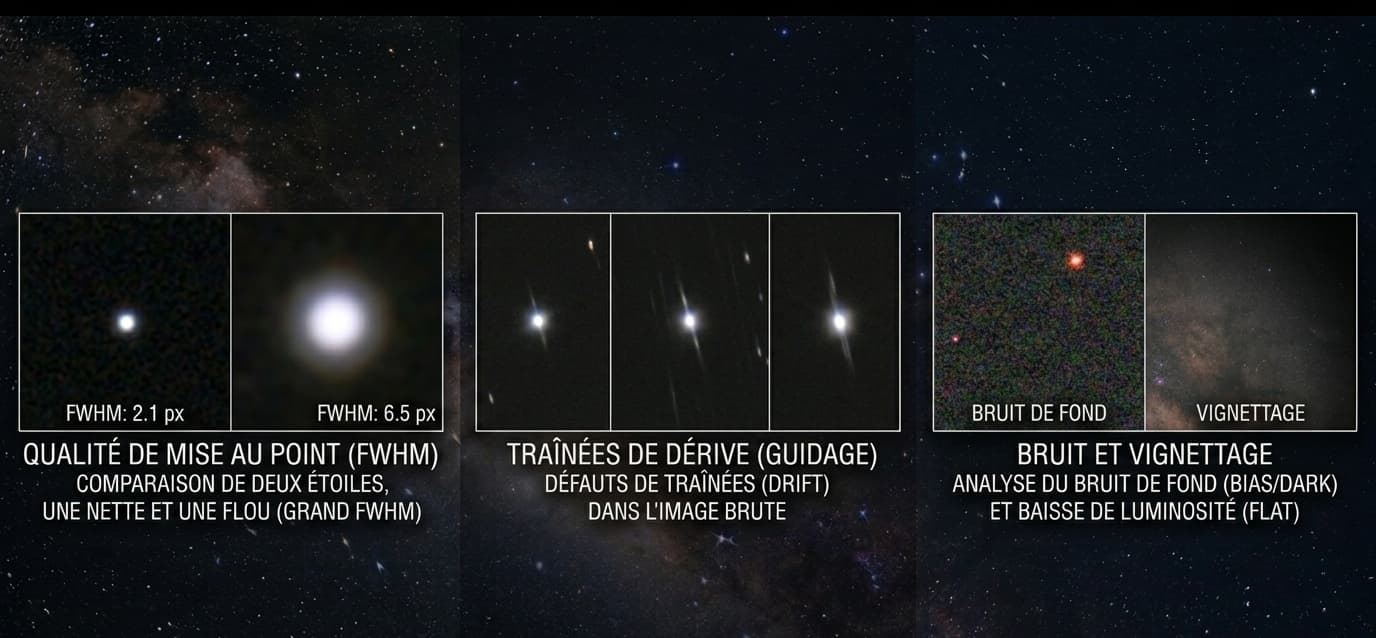
On this single sub the essentials are right: stars are pinpoint and uniform from center to edges, with no directional elongation, no corner coma and no diagonal asymmetry, indicating well-aligned optics and clean tracking over 200s. M97 is sharp, round and well framed, its inner structure already perceptible despite the raw nature of the frame.
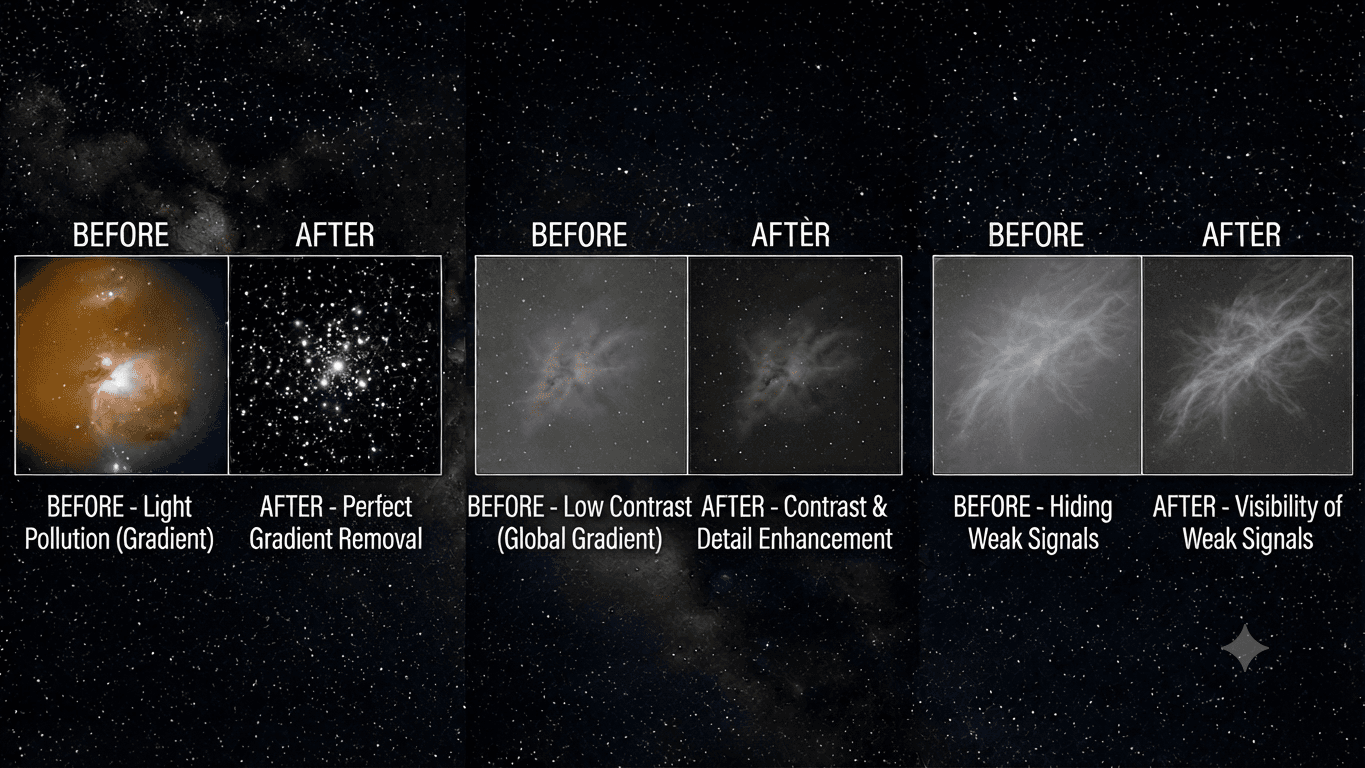
The real topic is the sky background. The background map measures a plane gradient of about 10% oriented at 184deg, with an excellent fit (R2=0.89) and a plane/radial dominance of 8.82: this is an oriented gradient, not vignetting (near-zero radial component, R2=0.1). It is fully recoverable in processing via background extraction, provided it is handled after stacking and with dithering to avoid locking in walking noise.
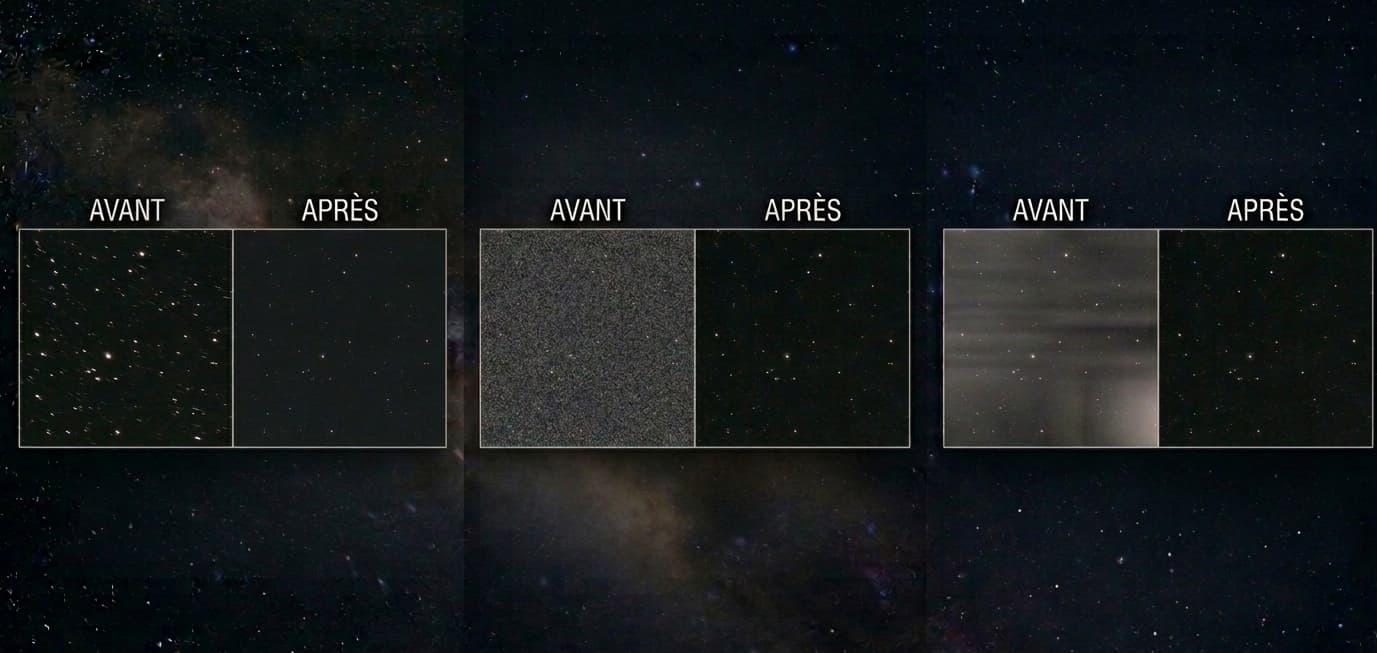
Last point, exposure: a low sky/black-point margin (2.19) and 9.24% dark clipping reveal a background close to the black point and a slightly tight offset. This is not strictly an image defect on a raw frame, but raising the offset and stacking enough subs will gain processing latitude and SNR on the nebula's faint outer regions.
Priority actions
- Remove the background gradient after stacking (GraXpert or DBE)
- Raise the offset to eliminate dark clipping (9.24%)
- Enable dithering to ease background and noise removal
- Stack more subs to improve SNR on M97