Astrophotography diagnosis of Ngc 6960: Astigmatism, noise / underexposure and 2 others
ProcessedL'extrême
The Doc examined this image of Ngc 6960 (processed, L'extrême). Estimated overall technical quality: 5/10. 4 defects found: Astigmatism (severity 3/5), Noise / underexposure (severity 3/5), Background chroma noise (severity 3/5), Oversaturation (severity 2/5).

Info
- Cible
- Ngc 6960
- Site
- Bortle 3 · rural peu pollué (VIIRS)
- Position
- 20h51m22s · +31°20'19"
The conditions were excellent and you have nothing to blame on them: new moon at 0 percent and a Bortle 3 sky, the ideal scenario even for broadband. On the Veil with an L-eXtreme you are doubly protected, since the filter already blocks most of the residual light pollution. The direct consequence: the background noise seen here is not down to the sky but to total integration time. Under Bortle 3 with no moon, 180 to 300 s subs with a dual band on an emission target like NGC 6960 build signal quickly, and you can aim for 6 to 10 h without any risk of saturating the background. That is the most profitable lever here.
Setup
- Type d'image
- Traitée
- Télescope
- Askar 418
- Caméra
- Apl nikon d 5600
- Filtre
- L'extrême
- Monture
- Am5
- Phase de lune
- Nouvelle lune (0 %)
- FOV
- 3.06°
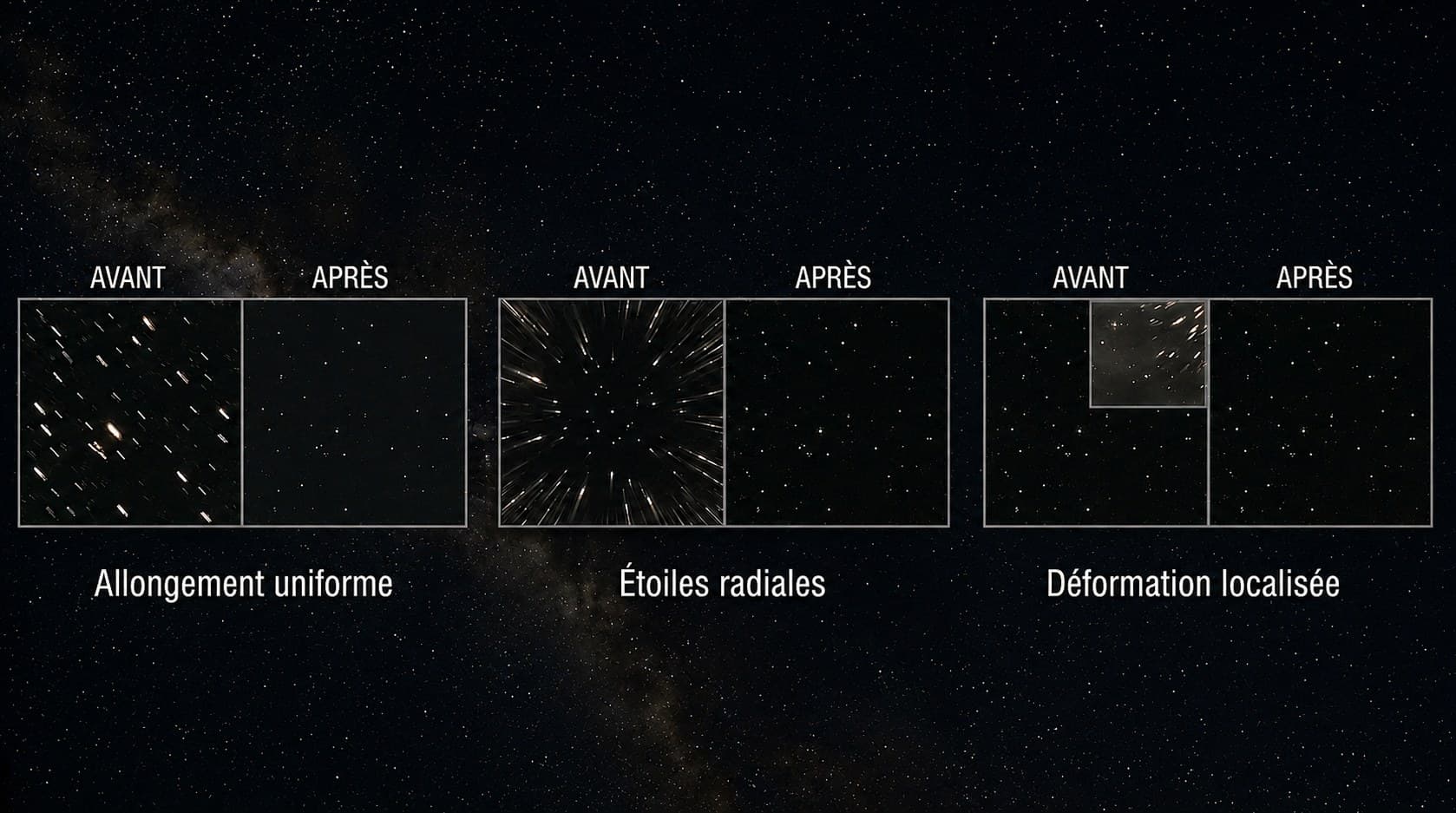
The target and setup match well. With a 3.06 deg field, the Askar 418 frames both arcs of the Veil in full, margins included: the focal length choice is sound and the framing needs no correction. The L-eXtreme is the right filter on a supernova remnant rich in Ha and OIII, and it justifies the bicolor palette obtained. The point to watch is mechanical: the APS-C sensor of the D5600 uses the full image circle, that is the area most sensitive to field aberrations, which explains the stretched edge stars while the center is flawless. Fine tuning the backfocus and checking ring tightness should clean up the corners noticeably.
The diagnosis in detail
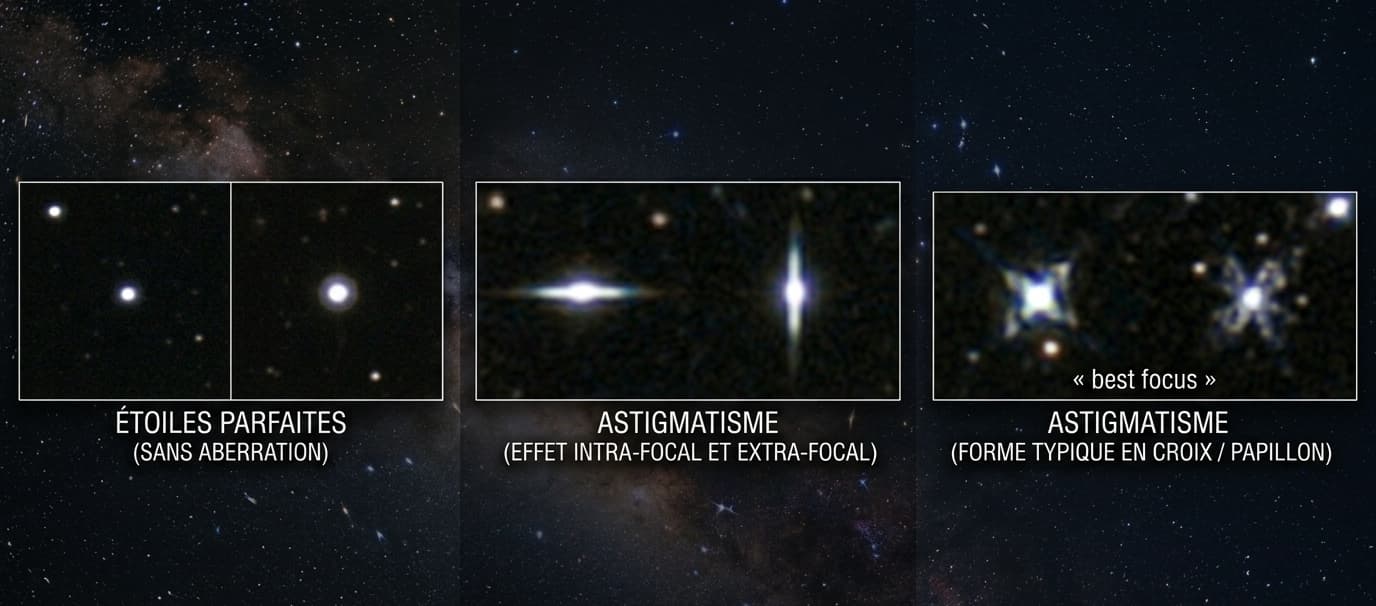
The optical diagnosis is clear and measured. The center of the field is faultless, elong 1.04 exactly at the measured floor, so neither poor tracking nor a global defect: the AM5 is doing its job and focus is good, FWHM 4.5 px at center. Edges and corners however show elongations of 3 to 4.3 with no FWHM increase at all, the corner/center ratio even dropping to 0.85. That is the signature of field astigmatism, not a simple backfocus error: a wrong spacing would spread the corners, not thin them. The automatic pre verdict leaned toward field curvature, the numbers settle on astigmatism.
The second axis is signal to noise. The measured background to black point margin of 1.89 shows the background stayed very close to the black point, so integration is short relative to the stretch applied. This noise appears in two forms: a general luminance grain that drowns the faint extensions, and red/cyan chroma mottling in the dark areas between filaments.
The strongly pushed HOO saturation visually amplifies both: the harder the color is pulled, the more readable the background chroma noise becomes. The three points therefore hang together: more subs, then a more restrained color treatment, and the image will gain a lot without touching the optics.
Priority actions
- Increase total integration to 6-10 h, the most profitable lever on this image
- Fine tune backfocus in 0.5 mm steps and check ring tightness to correct edge astigmatism
- Apply targeted chrominance noise reduction on the sky background before any saturation boost
- Lower global saturation by 15 to 25 percent to recover tonal nuance in the filaments