Astrophotography diagnosis of Sh2-101: Tracking drift and backfocus error
Processed
The Doc examined this image of Sh2-101 (processed). Estimated overall technical quality: 7/10. 2 defects found: Tracking drift (severity 2/5), Backfocus error (severity 2/5).
&w=1920&q=75)
Info
- Cible
- Sh2-101
Waning crescent Moon at 12%: a negligible factor, especially in narrowband where moonlight veiling is strongly rejected. Conditions explain none of the observed defects, which are mechanical/optical in nature. No light-pollution data provided, but narrowband on an emission target like Sh2-101 stays largely insensitive to sky background: the right filter choice for this context.
Setup
- Type d'image
- Traitée
- Phase de lune
- Waning crescent (12 %)
The histogram reads UNDER-EXPOSED (e_margin 0.72, Bowley skew 0.67), but that is expected in mono narrowband where the background stays naturally low even on long exposures: don't worry about it as long as final SNR holds. Monochrome camera, fine sampling (center FWHM ~1.7 px, well-resolved stars) consistent with the target. The only mechanical setting to watch is sensor spacing, slightly off backfocus given the corner FWHM rise.
The diagnosis in detail
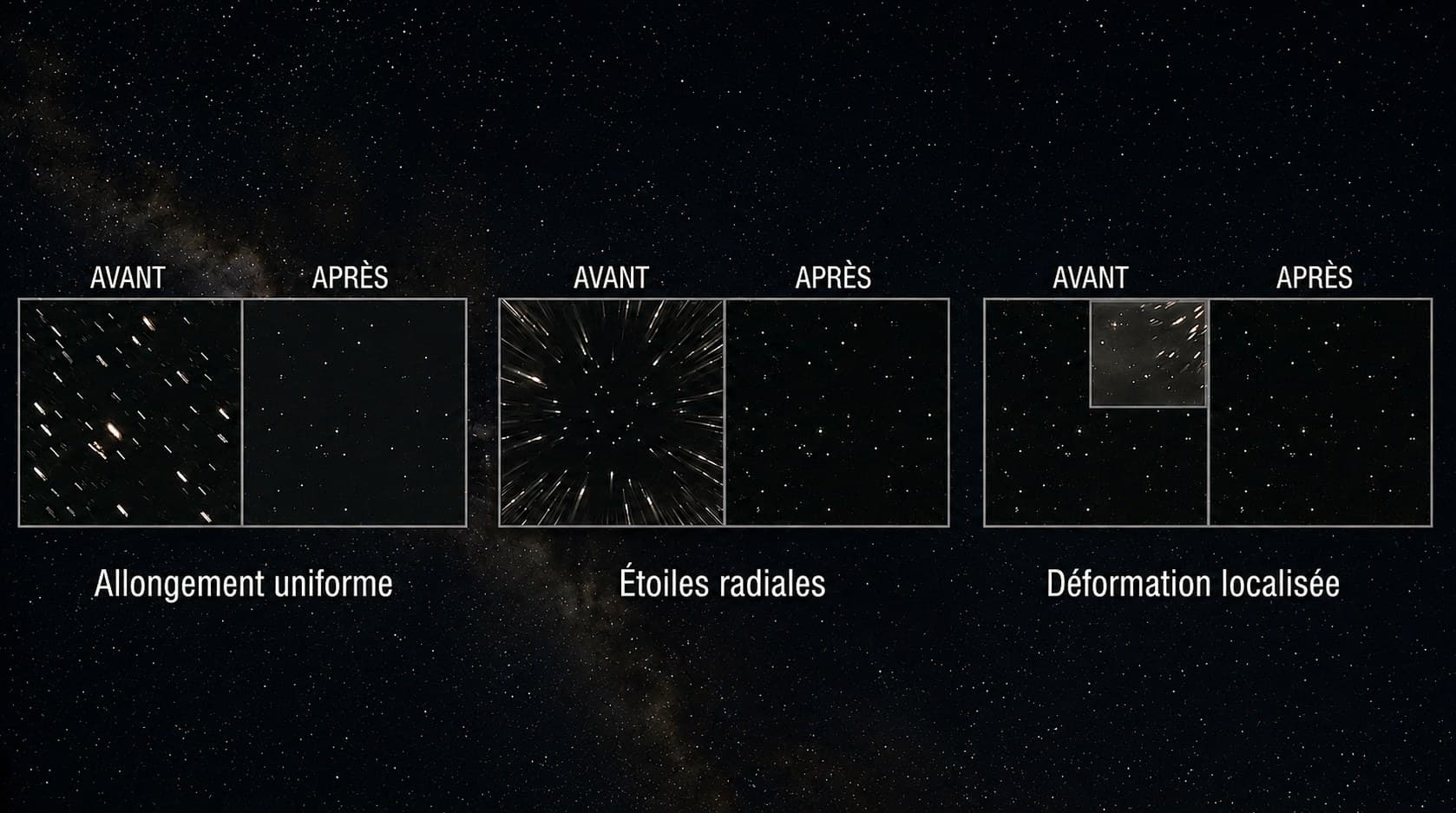
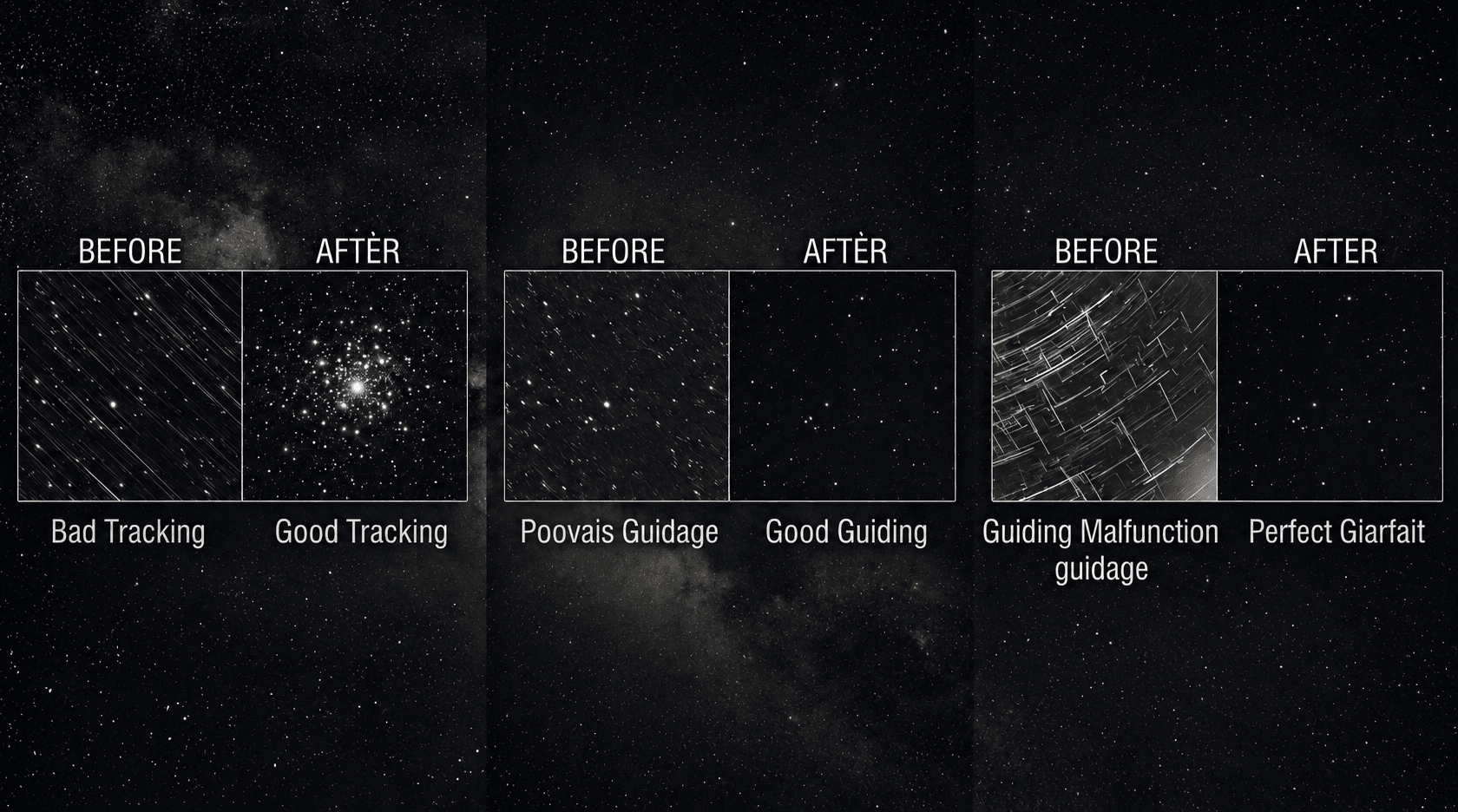
The PSF analysis is the source of truth here and it tells two distinct stories. First: a center elongation of 1.17 while the field floor is 1.03, with a consistent major-axis orientation across zones (PA spread of only 24deg). Elongation that persists at the field center cannot come from edge optics; it signals a tracking component, guiding drift or imperfect polar alignment. Mild but real.
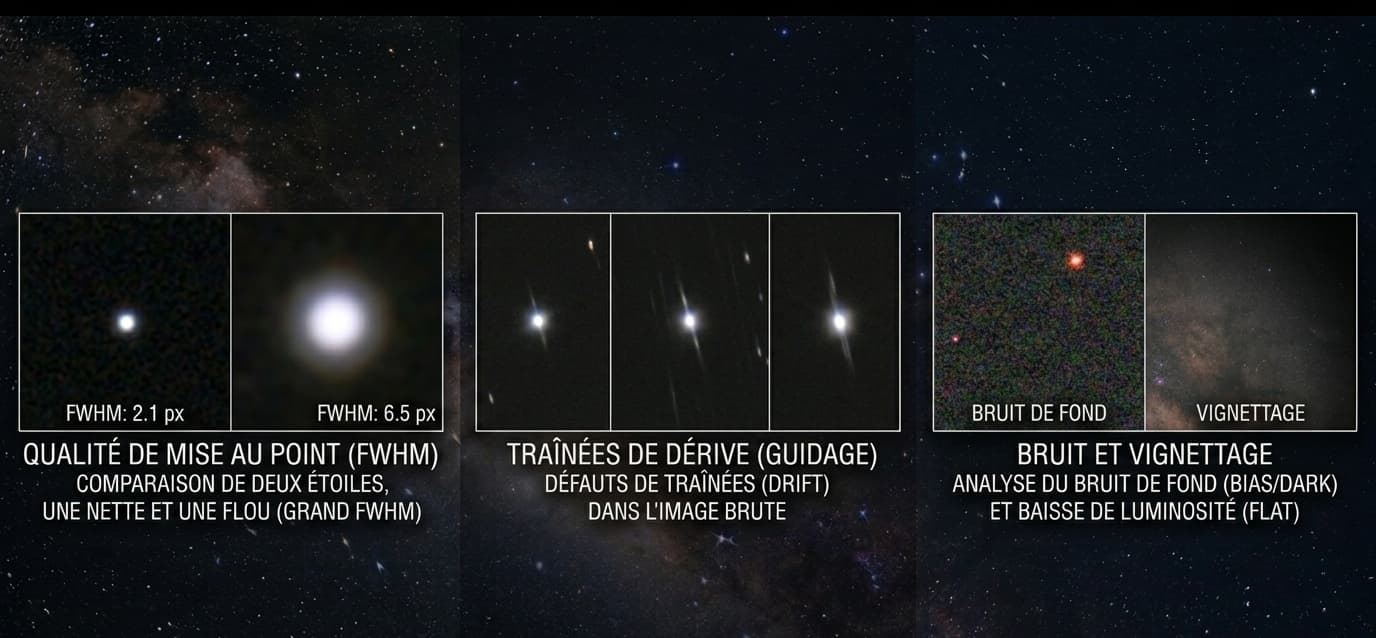
Second: superimposed on that, FWHM climbs from center (1.66 px) toward the lower corners (1.9-2.0 px), roughly symmetrically and without clear radial comet shapes. That is the signature of a small backfocus/field-curvature issue rather than coma or tilt (no marked diagonal asymmetry). Both effects are modest and the final image, a dense, colorful SHO of Sh2-101, stays at a very good level.
The background map confirms the +112% variation matches the nebulosity itself, not a gradient or vignetting: nothing to fix on background calibration. The priority is mechanical: tighten guiding and set the spacing.
Priority actions
- Check and tighten guiding (RMS) and polar alignment to remove the central elongation
- Set sensor spacing to the corrector's nominal backfocus (to half a millimeter) to even out corner FWHM
- Compare corner/center FWHM after each adjustment to validate the correction