Astrophotography diagnosis of Fireworks: Tracking drift and sensor tilt
RawL15s28 juil. 2024
The Doc examined this image of Fireworks (raw, L, 15s). Estimated overall technical quality: 6/10. 2 defects found: Tracking drift (severity 2/5), Sensor tilt (severity 2/5).
&w=1920&q=75)
Info
- Cible
- Fireworks
- Date
- 28 juil. 2024, 01:02
- Lune
- Premier quartier 49.4% (21.5° d'alt., 74.3° de la cible)
- Site
- Bortle 5 · banlieue résidentielle (VIIRS)
- Position
- 20h33m36s · +60°23'27"
Bortle 5 with a 49% first-quarter Moon, fairly high (21.5°) but well separated from the target (74°): acceptable conditions for a galaxy/cluster field in luminance, with no marked lunar gradient (the background map shows only a 2% plane, negligible). The Moon is not a problem at this distance, but for broadband L in Bortle 5 the SNR of NGC 6946 will stay sky-limited: prefer a moonless night for the luminance channel, or multiply exposures to compensate.
Setup
- Type d'image
- Brut
- Télescope
- Altair 102EDT F/5.6 APO
- Caméra
- ZWO ASI2600MM Pro
- Filtre
- L
- Exposition
- 15s
- FOV
- 2.35°
The Altair 102EDT at F/5.6 (570mm) with the ASI2600MM Pro gives ~2.35° of field and ~1.35"/px, a comfortable sampling under typical seeing and a sound framing that places NGC 6946 and the NGC 6939 cluster in the same field. The 15s sub is very short for this faint galaxy: it limits SNR and demands a very large number of subs. Gain 101 (unity) and -10°C are healthy. If the mount is unguided, 15s is a reasonable compromise, but with guiding you would gain a lot by lengthening exposures.
The diagnosis in detail
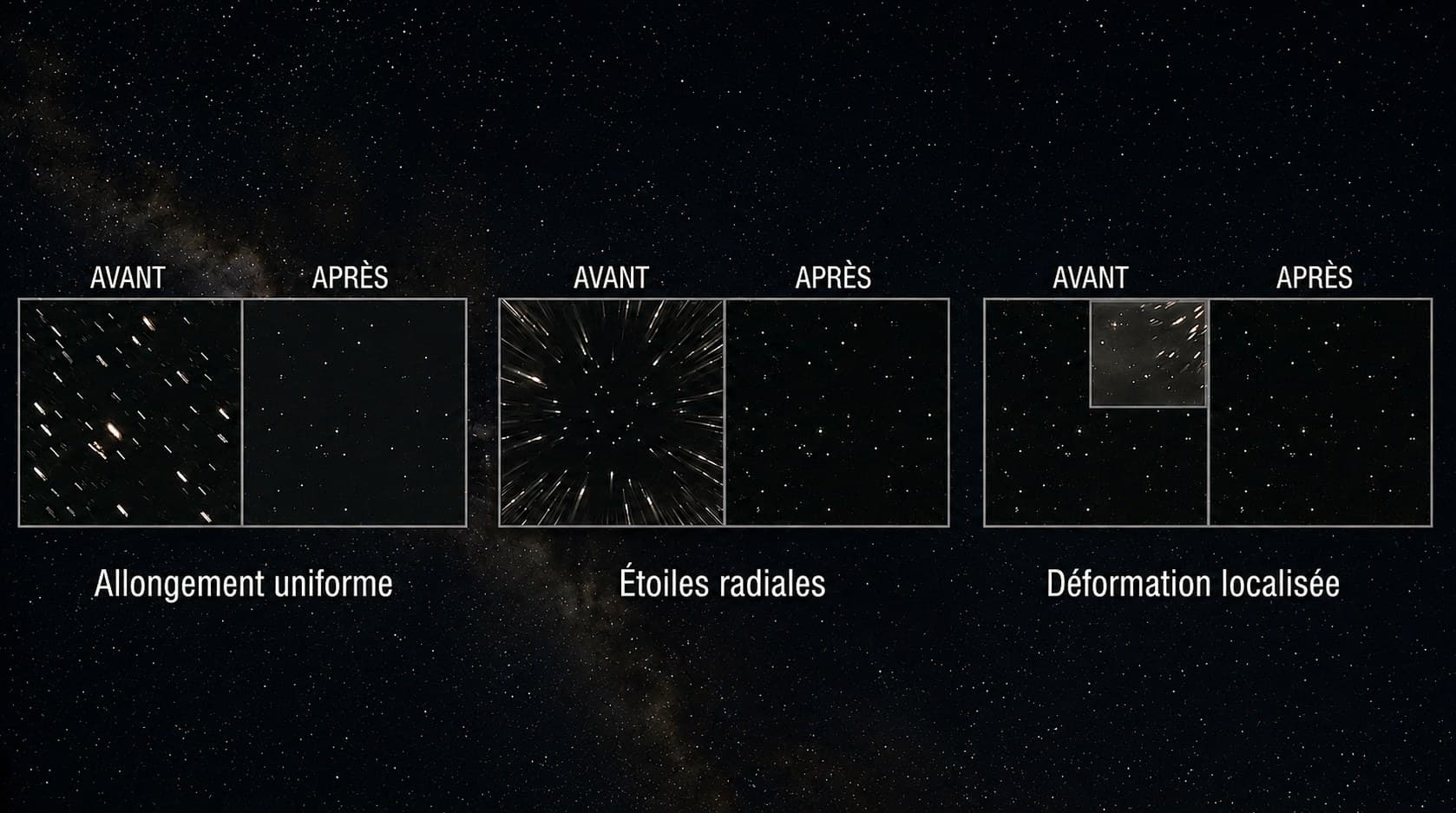
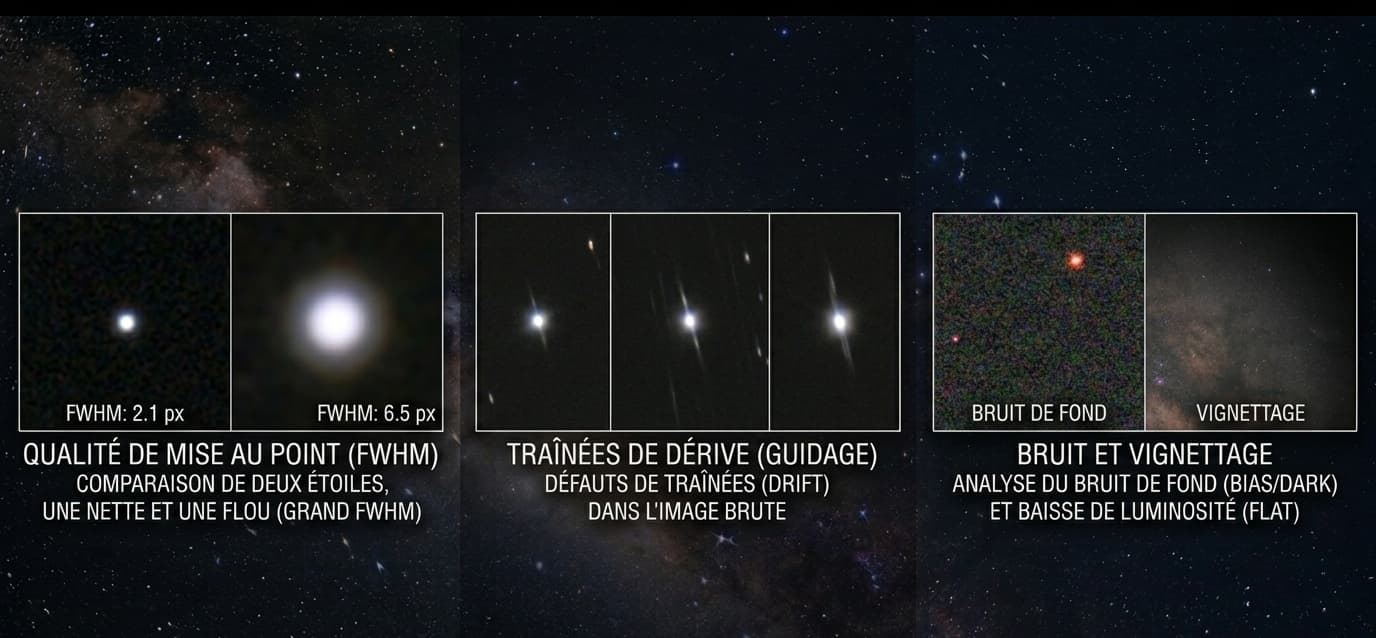
The PSF panel is modest: FWHM 1.8-2.5 px everywhere, a moderate corner/center ratio of 1.34, but above all an elongation present from the center (1.29 vs a field floor of 1.11) with a very consistent PA orientation from zone to zone (spread 16.3°). This is the classic signature of a tracking component: if it were field optics (tilt, backfocus), the center would stay round. I therefore discard the sensor-tilt candidate despite its measurement: the horizontal asymmetry (0.14) exists but is dominated by the global drift, not by a clear diagonal asymmetry between opposite corners. On 15s the streak stays short and thin, the impact is minor (severity 2).
The background is healthy: radial map at +13% from center to edges (mild optical vignetting, normal before flats, not retained on a sub), a plane of only 2% with no notable light gradient, near-zero anisotropy. No sign of lunar gradient or light pollution despite Bortle 5, consistent with the 74° Moon separation.
The galaxy NGC 6946 and the cluster NGC 6939 are already detected on this sub, confirmed by the DSS. No saturation, no abnormal noise for a luminance frame. The key work remaining is tracking accuracy and accumulating exposures to bring out the target.
Priority actions
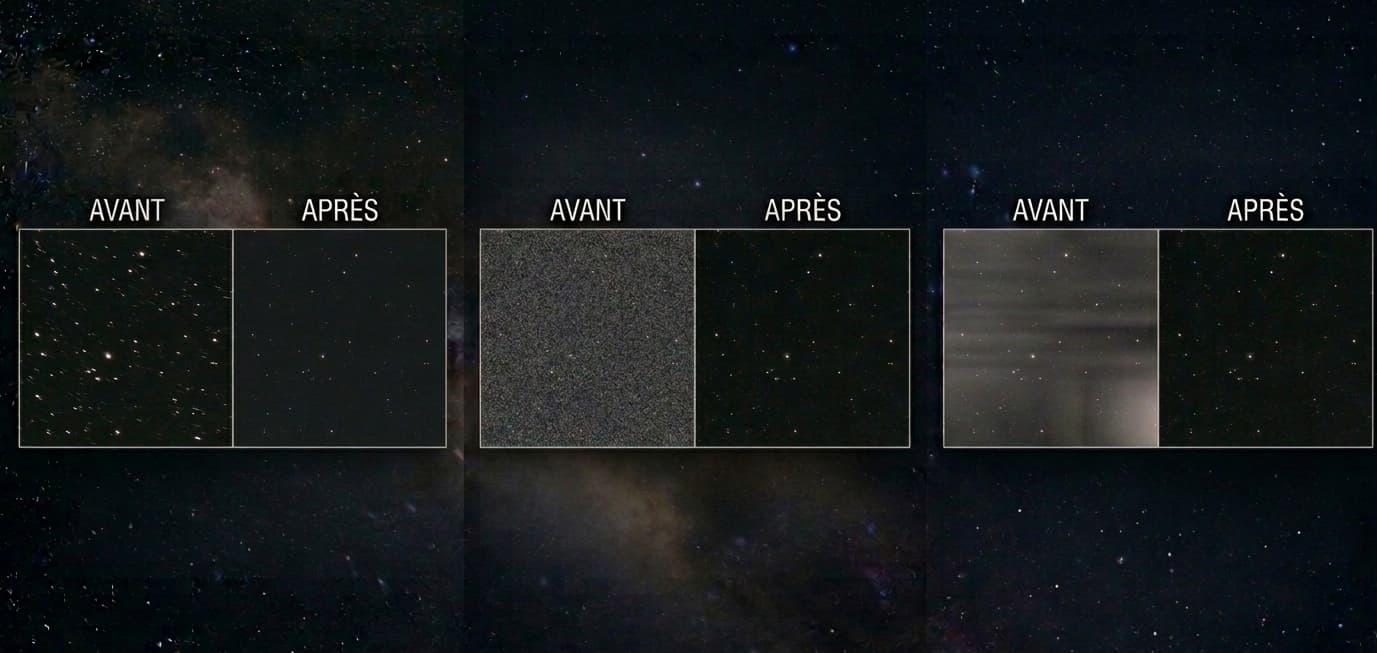
- Fix the tracking drift: refine polar alignment, add autoguiding
- Stack a large number of subs to compensate for the short 15s exposure and reveal NGC 6946
- Acquire flats to correct the optical vignetting present on the sub