Astrophotography diagnosis of IC1805: Backfocus error, filter halo and 1 other
ProcessedMULTIBANDL : 39×45s / MULTIBAND : 27×600s14 oct. 2023
The Doc examined this image of IC1805 (processed, MULTIBAND, L : 39×45s / MULTIBAND : 27×600s). Estimated overall technical quality: 7/10. 3 defects found: Backfocus error (severity 2/5), Filter halo (severity 2/5), Background chroma noise (severity 2/5).
&w=1920&q=75)
Info
- Cible
- IC1805
- Date
- 14 oct. 2023, 00:00
- Position
- 2h32m48s · +61°27'00"
Not enough information for an opinion from the Doc.
Setup
- Type d'image
- Traitée
- Télescope
- TS-Optics ED 70mm f/6
- Caméra
- Canon EOS 600D / Rebel T3i / Kiss X5
- Filtre
- MULTIBAND
- Monture
- Sky-Watcher EQ3-2
- Exposition
- L : 39×45s / MULTIBAND : 27×600s
- Notes
- Logiciels : ASIAIR
- FOV
- 2.80°
The ED 70mm f/6 provides a 2.80° field that comfortably frames the entire Heart Nebula with margin, a relevant choice for this extended target. Paired with the Canon 600D (APS-C sensor) it gives sampling well suited to this short focal length (420mm), comfortable under typical seeing. The multiband filter is consistent on an emission nebula like IC1805, rich in Halpha, and allows shooting under polluted skies. The main point of attention is the apparent lack of a dedicated flattener on this doublet ED: the FWHM rise in the corners suggests a corrector/flattener at the correct backfocus would clearly improve field consistency.
The diagnosis in detail
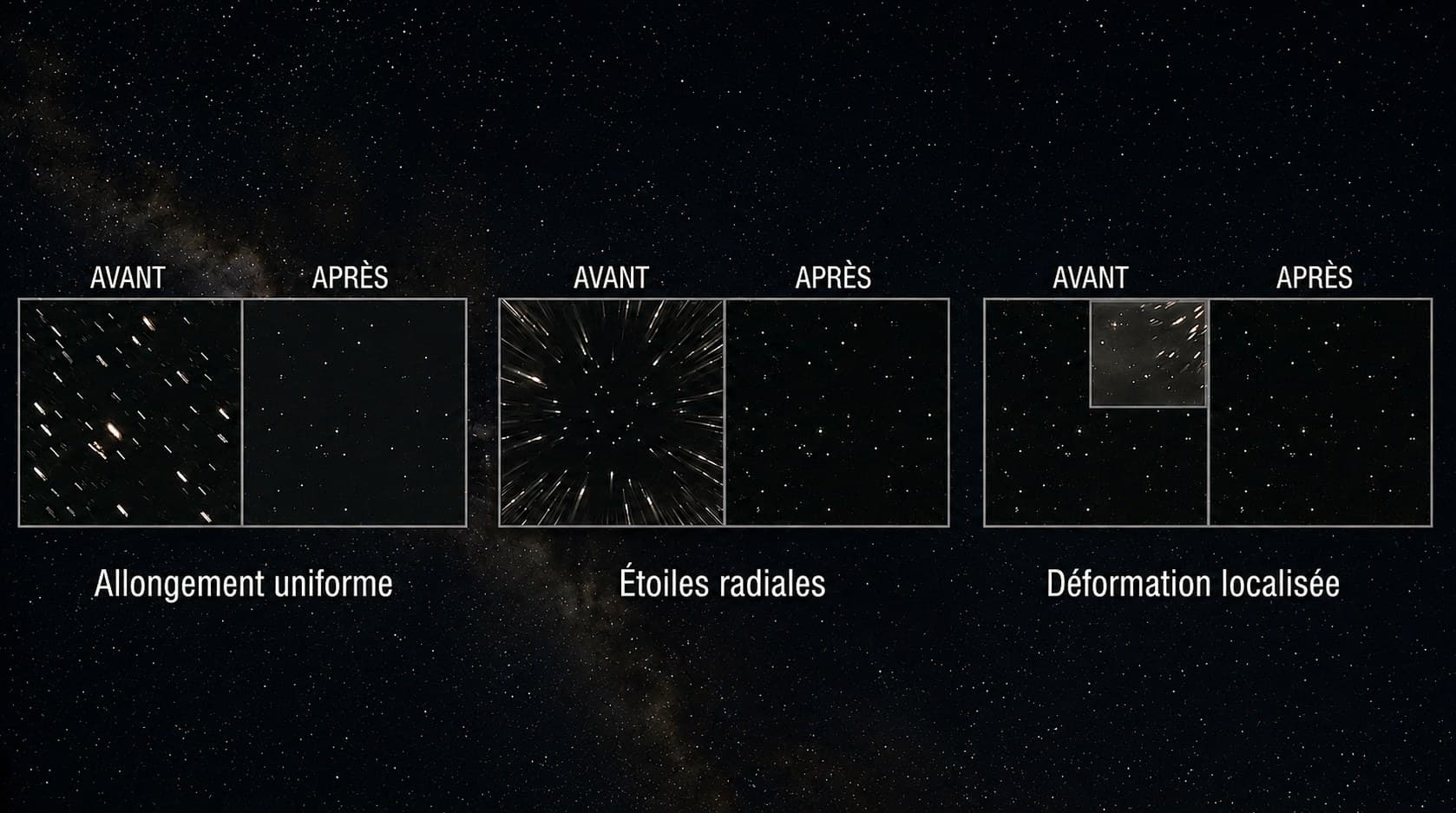
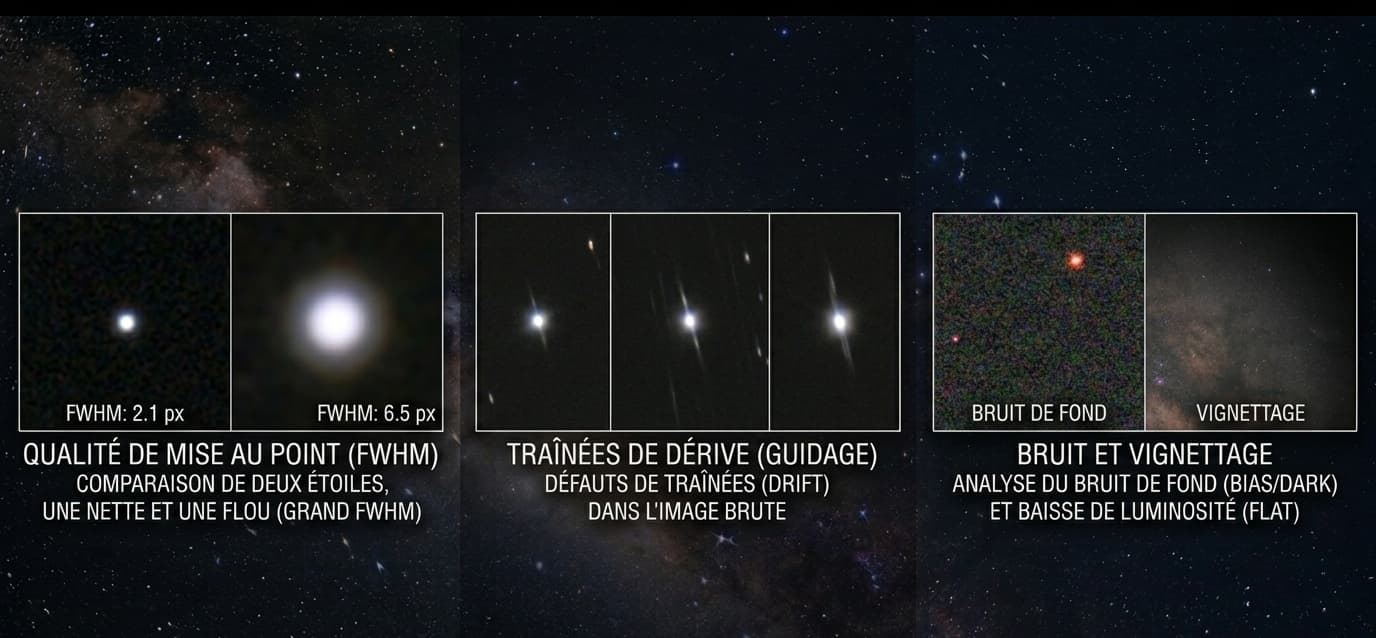
Star shape is broadly healthy: the center and lateral edges stay tight (L elong 1.06, FWHM ~2px), evidence of correct focus and clean tracking on the modest EQ3-2. The only recurring pattern is a symmetric FWHM rise toward the four corners (TR/R/BR around 2.5-2.6px, elong 1.32-1.39), with a corner/center ratio of 1.275: the classic signature of field curvature or backfocus slightly out of tolerance on an ED 70mm doublet without an optimal flattener. The high measured center elong (1.39) is mostly due to the dense star field within the nebula, not a coherent directional defect (PA dispersion 56°), so no tracking component is to blame.
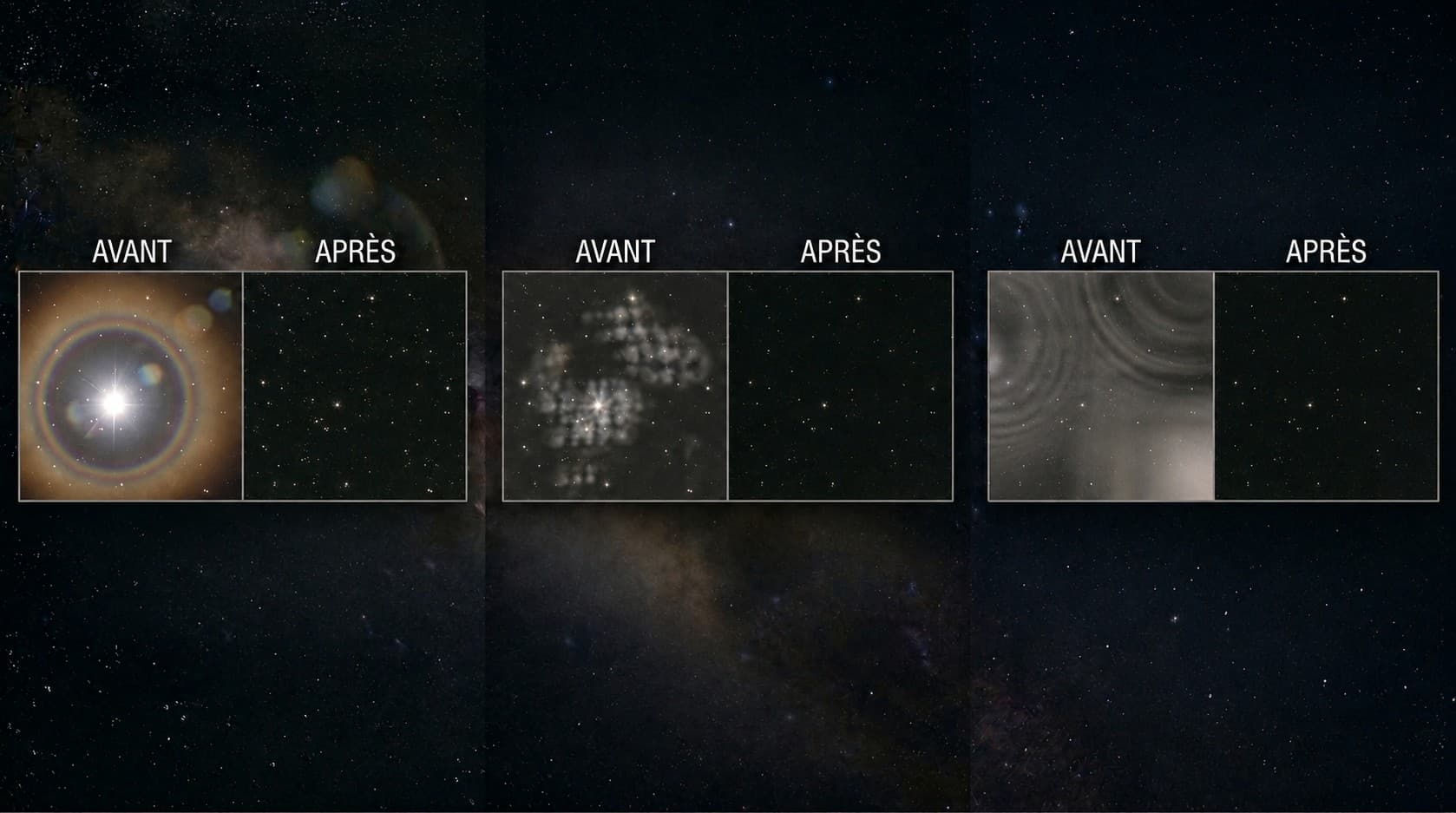
On the processing side, the image is well balanced. The red halos around bright stars come from the multiband filter (narrow Halpha response) and are recoverable through separate star processing. The sky background, dark and generally clean, reveals under aggressive stretch some mild chroma noise (mottling) in the corners, a consequence of still modest integration. Nothing prohibitive: these are finishing points, not major acquisition flaws.
Priority actions
- Add or adjust a field flattener/corrector at the correct backfocus to reduce star spread in the corners
- Reduce the filter's red halos by processing stars separately (StarXTerminator + mask)
- Apply chroma noise reduction on the background and neutralize the background before stretching
- Increase integration time to improve background SNR and smooth the mottling