Astrophotography diagnosis of IC5070: Flat frame mismatch, backfocus error and 1 other
ProcessedHOO 1 composite7440s
The Doc examined this image of IC5070 (processed, HOO 1 composite, 7440s). Estimated overall technical quality: 6/10. 3 defects found: Flat frame mismatch (severity 3/5), Backfocus error (severity 2/5), Clipped stars (severity 2/5).
&w=1920&q=75)
Info
- Cible
- IC5070
- Site
- Bortle 6 · banlieue dense (VIIRS)
- Position
- 20h54m48s · +44°23'60"
Bortle 6 with a 32% crescent: fine conditions for an emission target like the Pelican in HOO, where the narrowband filter isolates the Ha/OIII signal and tolerates moderate light pollution and this faint moon well. The background stays usable and SNR on the red regions is good. No moon gradient expected at this illumination. Background calibration (flat) is more limiting here than the sky itself: at this Bortle, a good flat plus gradient extraction is enough for a neutral background.
Setup
- Type d'image
- Traitée
- Télescope
- Skywatcher 200/800
- Caméra
- FUJIFILM XT-3
- Filtre
- HOO 1 composite
- Monture
- EQ6R
- Exposition
- 7440s
- Phase de lune
- Premier croissant (32 %)
- FOV
- 1.00°
200/800 Newtonian on an EQ6R: a solid, coherent combo. The 1.0 degree field frames the dense part of the Pelican well, with the Ha ridge centered on the right, a successful composition. At f/4 the Newtonian demands a perfectly spaced coma corrector: the corners show slight symmetric elongation (elong ~1.2 versus 1.08 at center), a sign the backfocus deserves a fine sub-millimeter tweak. HOO narrowband is the right choice for this emission target under Bortle 6. Central FWHM ~4.9 px: decent, with headroom on the seeing/collimation side.
The diagnosis in detail
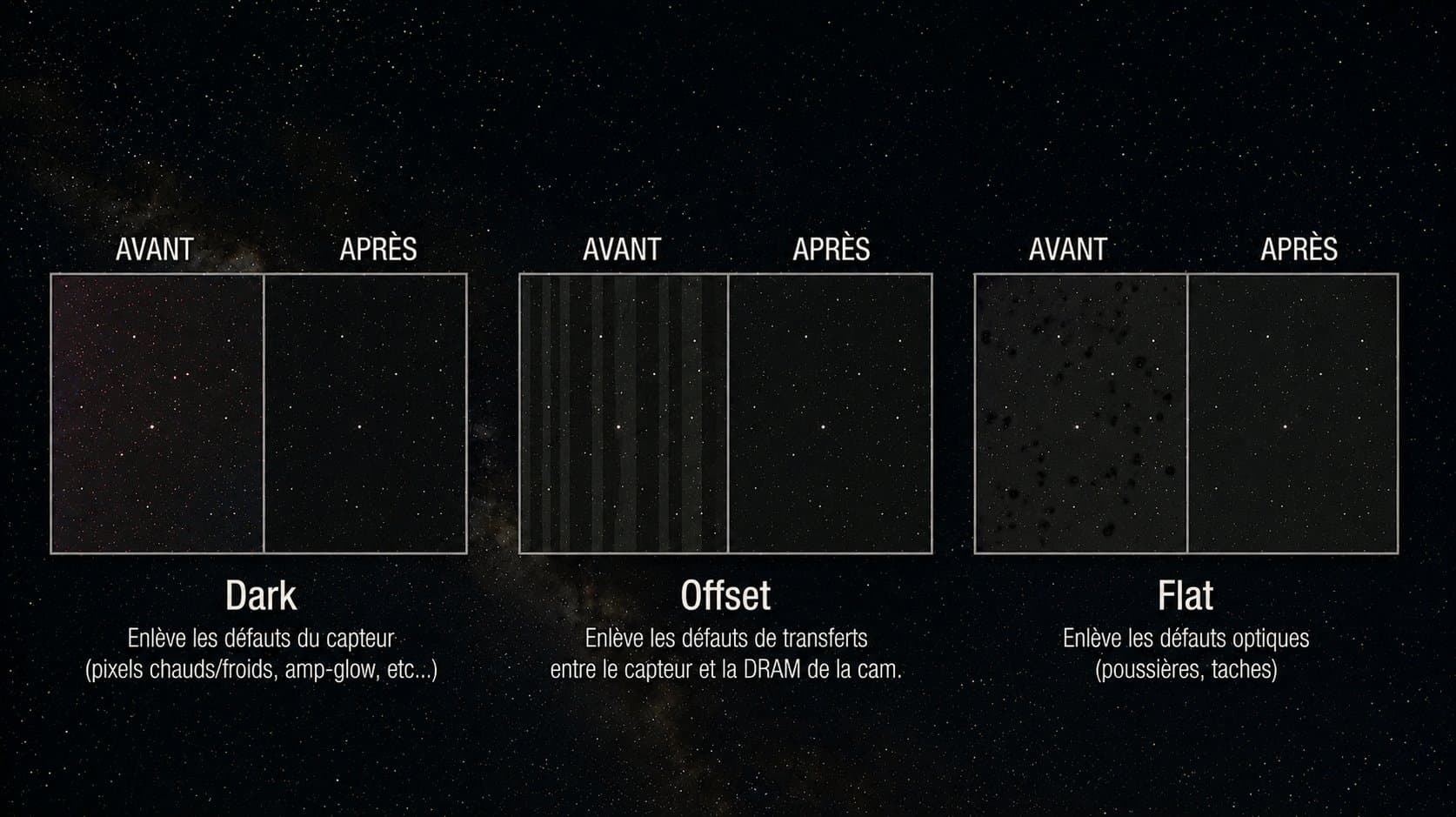
The image is of good quality and the diagnosis is dominated by background calibration rather than optics or tracking. The background map measures an illumination dipole (top-right corner +2.8 sigma, opposite -0.4 sigma) with a dirty plane (R2=0.35), and the DSS shows no bright nebulosity there: this is a mismatched flat, not real signal. It is the first item to fix, since it drives background neutrality and the readability of faint Ha extensions.
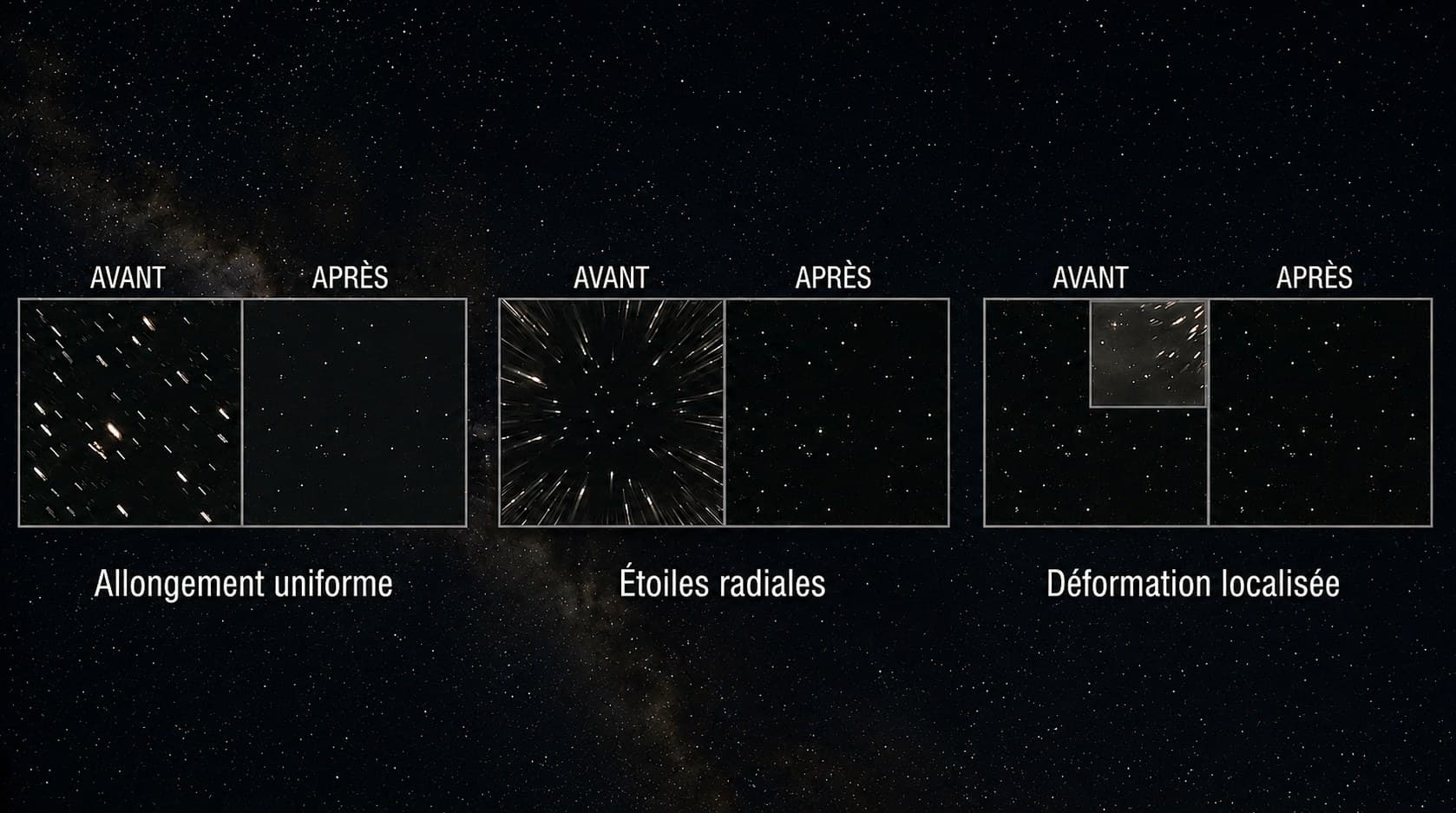
On the stars, the PSF panel is reassuring: the center is round (elong 1.08, floor 1.06) and FWHM barely rises toward the edges (corner/center ratio 1.038). The moderate symmetric corner elongation (1.16 to 1.20) without diagonal asymmetry points to mild field curvature / corrector backfocus, not tilt. It is a fine adjustment, not a major defect.
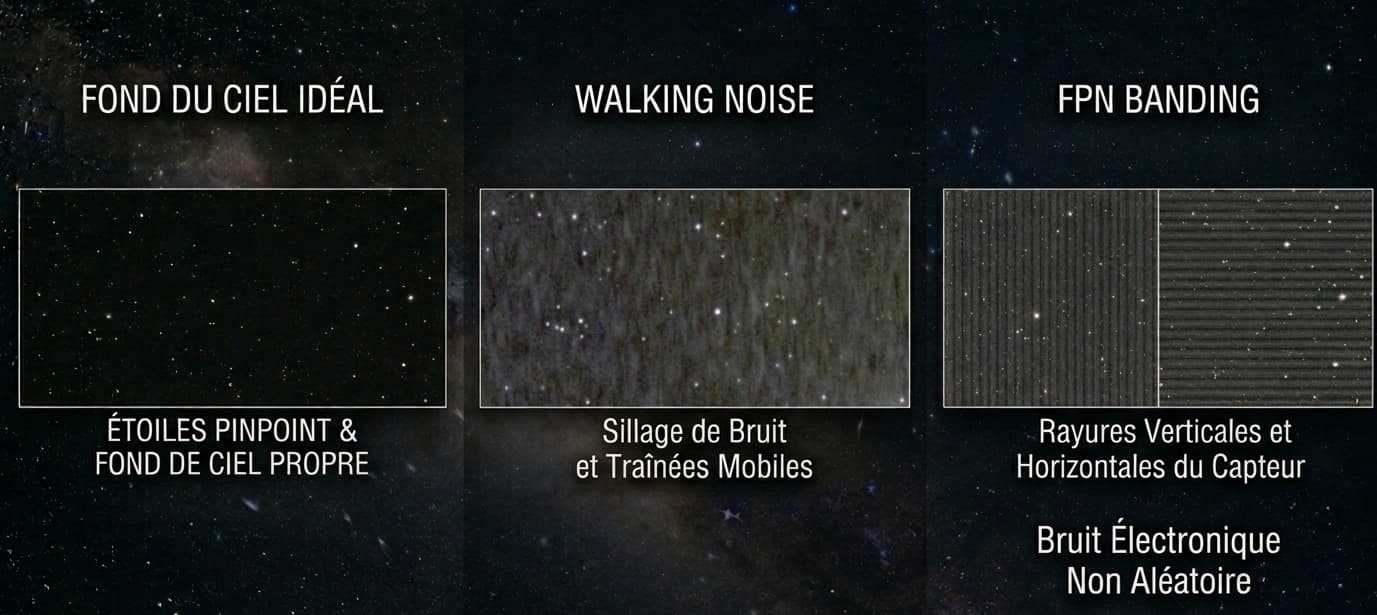
Finally a few bright stars have clipped white cores; this is minor and mostly cosmetic, recoverable via a short-exposure star layer or separate star processing. The spikes are normal on this Newtonian.
Priority actions
- Reshoot flats in the exact light configuration, then extract the residual gradient (GraXpert/DBE) to neutralize the top-right corner excess
- Fine-tune the coma corrector backfocus (0.5-1 mm steps) and retest corner-star shape
- Add a few short subs or process stars separately to recover the bright-star cores