Astrophotography diagnosis of NGC 7380: Flat frame mismatch, tracking drift and 1 other
MasterO180s23 sept. 2026
The Doc examined this image of NGC 7380 (master, O, 180s). Estimated overall technical quality: 4/10. 3 defects found: Flat frame mismatch (severity 4/5), Tracking drift (severity 3/5), Noise / underexposure (severity 3/5).

Info
- Cible
- NGC 7380
- Date
- 23 sept. 2026, 22:00
- Lune
- Croissant décroissant 8.6% (33.5° d'alt., 72.4° de la cible)
- Site
- Bortle 2 · rural typique (VIIRS)
- Position
- 22h47m36s · +58°05'24"
Conditions are excellent for this target. A Bortle 2 sky and a Moon at 8.6 percent illumination, 72.4 degrees from NGC 7380, place no constraint on the sky background, and the measured oriented gradient is negligible (19 percent amplitude but R2=0.02, so unstructured). The O filter under such a sky is in the best possible conditions: the limitation is not atmospheric, it is instrumental (tracking, flats) and tied to integration time. With this sky you can afford much longer OIII subs, which is exactly what is missing here to lift the background off the black point.
Setup
- Type d'image
- Master
- Télescope
- EQMod Mount
- Caméra
- ZWO ASI2600MM Air
- Filtre
- O
- Exposition
- 180s
- Phase de lune
- Gibbeuse croissante (92 %)
- FOV
- 1.49°
Framing NGC 7380 within 1.49 degrees is comfortable, the cluster and nebula sit centered with margin. On the other hand the 0.464 arcsec/px sampling is heavily oversampled: with measured FWHM around 11 px, you are resolving far beyond what seeing and tracking allow, and you pay for that oversampling in per-pixel SNR. A software 2x2 binning at stacking would bring you back to about 0.93 arcsec/px, more coherent, with a direct signal-to-noise gain. On the settings side, the very low gain (0.243) combined with 180s narrowband subs leaves the background stuck against the black point: move to unity gain and lengthen the subs.
The diagnosis in detail
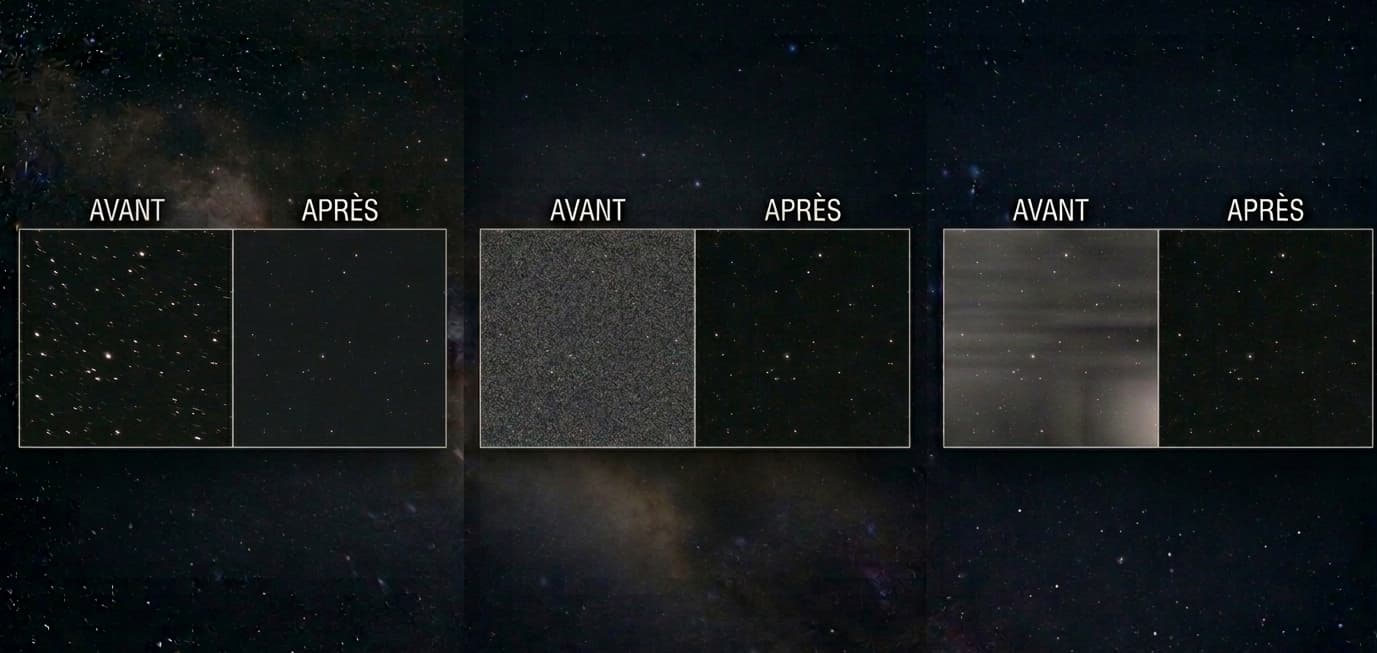
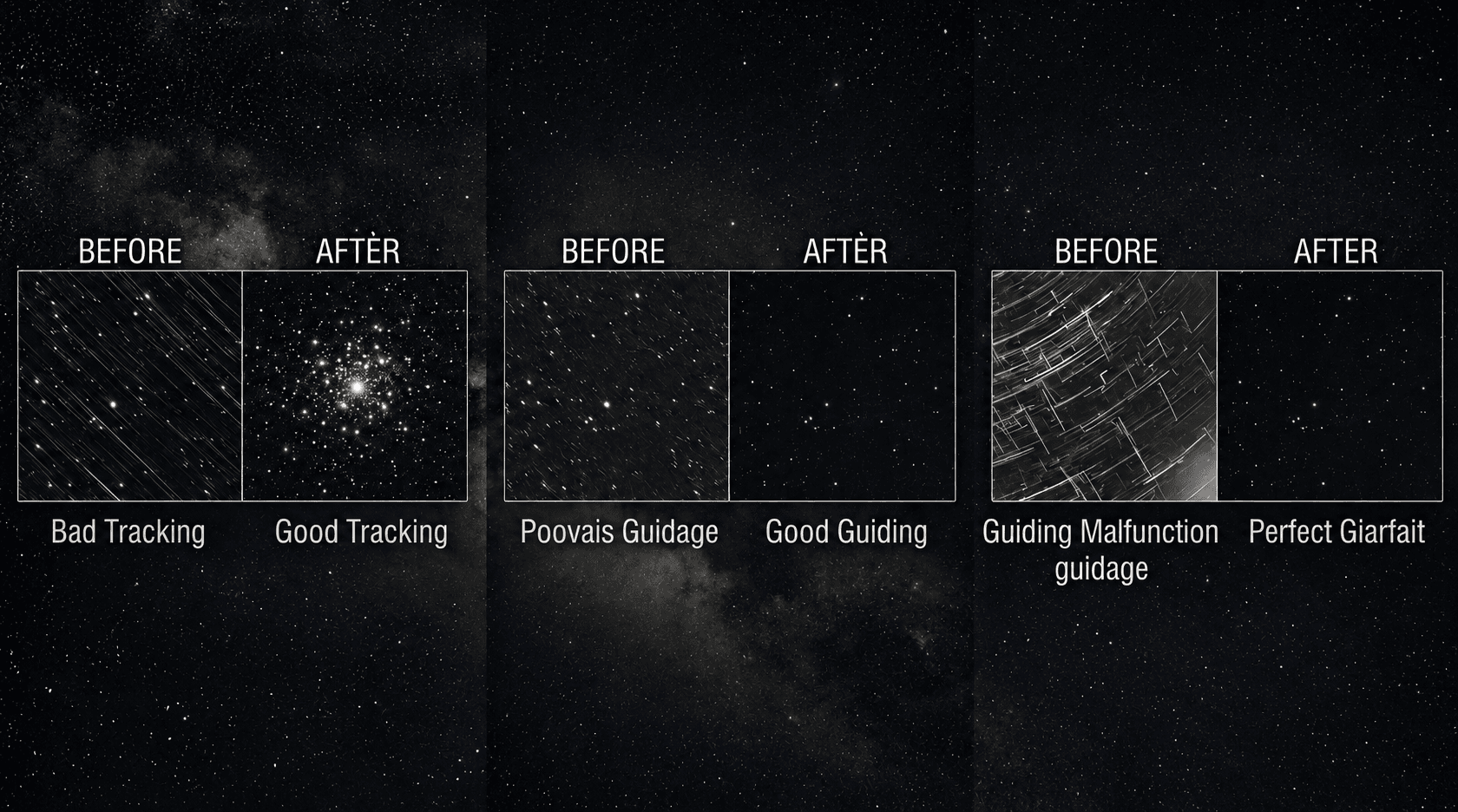
The two measured defects have independent origins but stack up in the final look. First the tracking: elongation is already 1.30 at the center while the field floor is 1.21, and PA dispersion across the nine zones is only 10.2 degrees. In other words every star, from center to corners, stretches in the same direction. The 1.077 corner/center FWHM ratio and the 0.065 asymmetry are far too low to blame tilt, backfocus or coma: field optics are healthy, it is the mount drifting during the 180s subs.
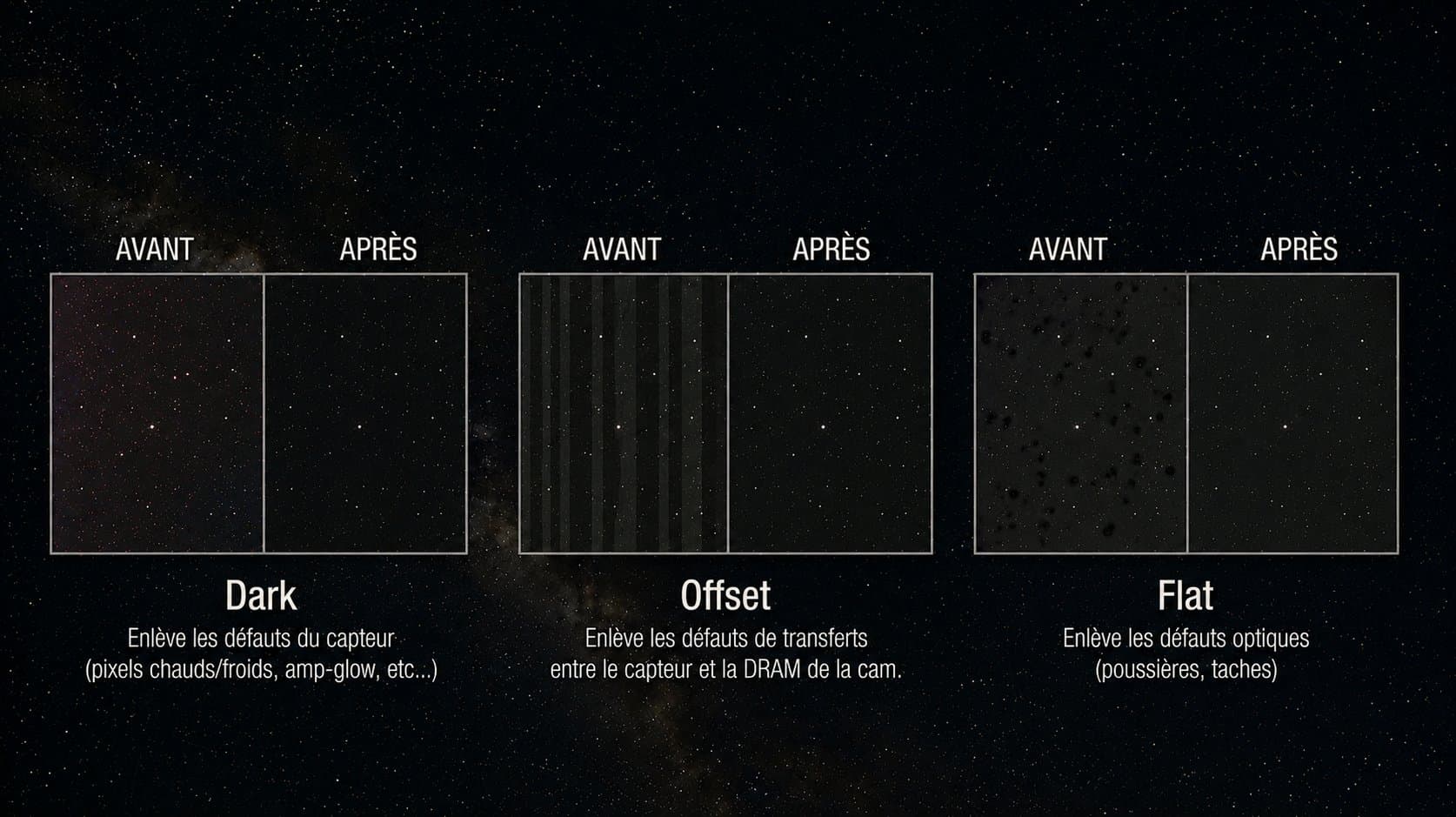
Then calibration: the measured radial profile rises 196 percent from center to edges with an excellent R2 of 0.92 and near-zero azimuthal anisotropy. This rotationally symmetric signature, edges brighter than center, can only come from a flat that corrects too much. The oriented gradient is negligible (R2=0.02), consistent with the Bortle 2 sky and the very low Moon illumination.
Finally the signal level. The OIII channel of NGC 7380 is intrinsically weak, but here the background is pinned to the black point and the nebulosity stays at veil level. Combined with the 0.464 arcsec/px oversampling, this caps per-pixel SNR. Fix the tracking and the flats first, because they determine how usable all the extra hours you add will be.
Priority actions
- Redo polar alignment and stabilize guiding to bring central elongation under 1.20
- Shoot a full new set of flats without changing the optical configuration, with matched dark flats, then recalibrate the master
- Add several more hours of OIII integration with 300 to 600s subs once tracking is stable
- Switch to unity gain and check the offset to lift the background off the black point
- Consider 2x2 binning at stacking to offset the 0.464 arcsec/px oversampling