Astrophotography diagnosis of M33: Noise / underexposure, sensor tilt and 1 other
Master4016s
The Doc examined this image of M33 (master, 4016s). Estimated overall technical quality: 4/10. 3 defects found: Noise / underexposure (severity 3/5), Sensor tilt (severity 2/5), Satellite trail (severity 1/5).
&w=1920&q=75)
Info
- Cible
- M33
- Position
- 1h33m50s · +30°39'36"
Not enough information for an opinion from the Doc.
Setup
- Type d'image
- Master
- Télescope
- Unistellar Odyssey
- Caméra
- Unistellar Odyssey
- Exposition
- 4016s
- FOV
- 1.50°
The 1.50 degree field is well suited to M33: the galaxy fills the frame comfortably without being clipped, with margin for the extended halo. The Odyssey is a bonded-sensor smartscope, so the tilt measured in the corners is not user-adjustable, a structural limit to accept or work around with a slight crop. The weak point here is not the setup but exposure time: 4016s (about 1h07) is insufficient to cleanly bring out the arms and HII regions of such an extended, low-surface-brightness galaxy. Aim for several hours to lift the signal above the noise.
The diagnosis in detail
M33 is centered and usable, but the diagnosis converges on a dominant issue: lack of signal. The histogram is clear (e_margin=1, dark clipping 10.5%, Bowley skew 0.67), the 4016s integration is too short for this low-surface-brightness galaxy. The result is a grainy background where the spiral arms and HII regions, clearly present in the DSS reference, remain buried. This is the number one lever: more cumulative hours will transform this image.
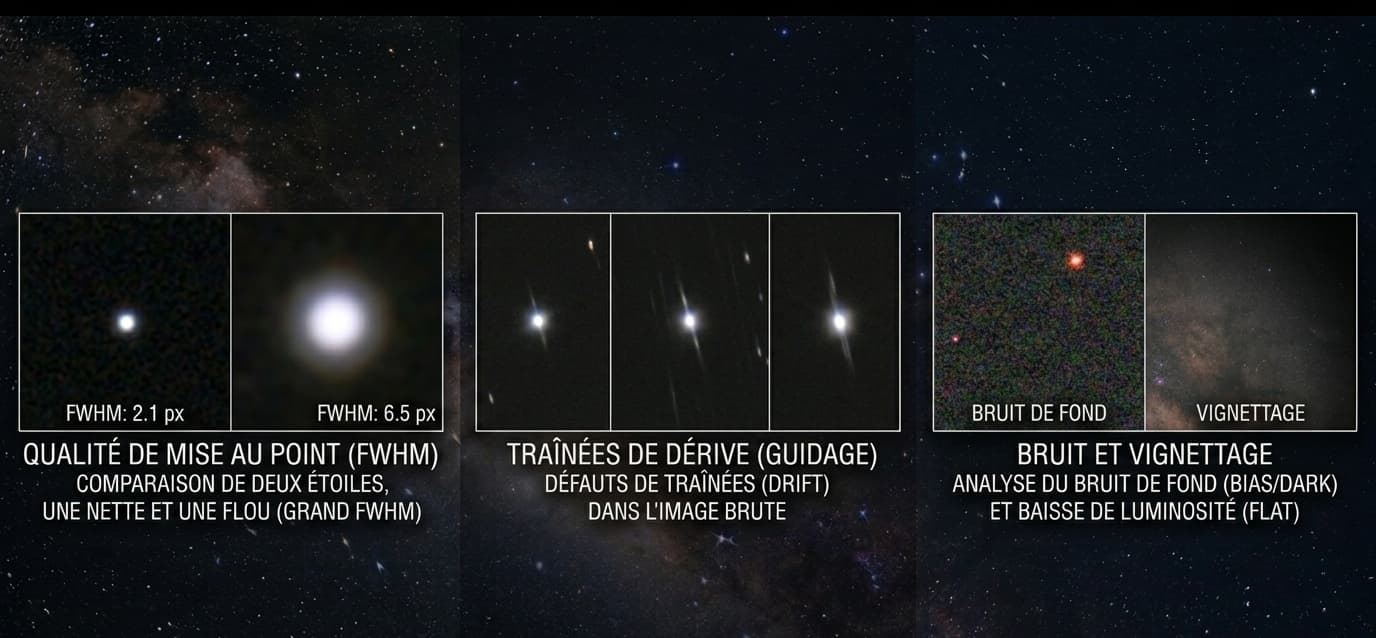
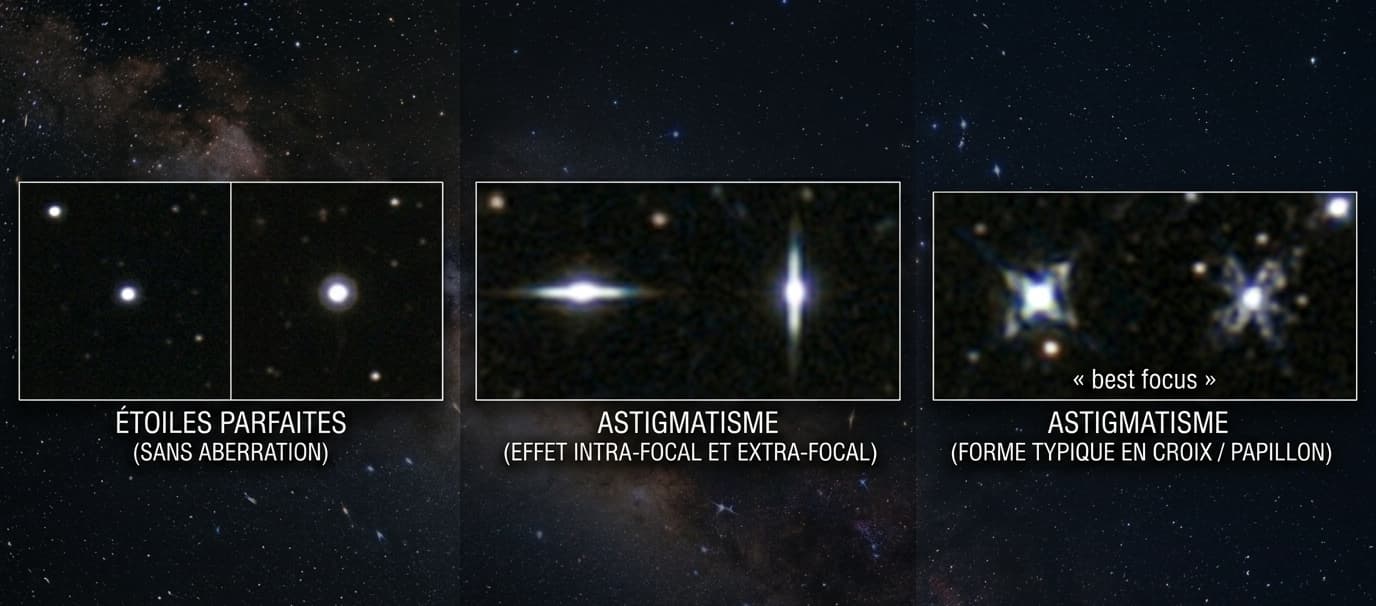
Optically, the PSF panel confirms a residual tilt: center C is sharp and round (FWHM 4.6 px, elong 1.05) while the diagonally opposed TL and BR corners degrade (elong 1.23 and 1.20), corner/center ratio of 1.41. On a factory-bonded-sensor Unistellar Odyssey, this defect is not correctable, you must work with it or crop.
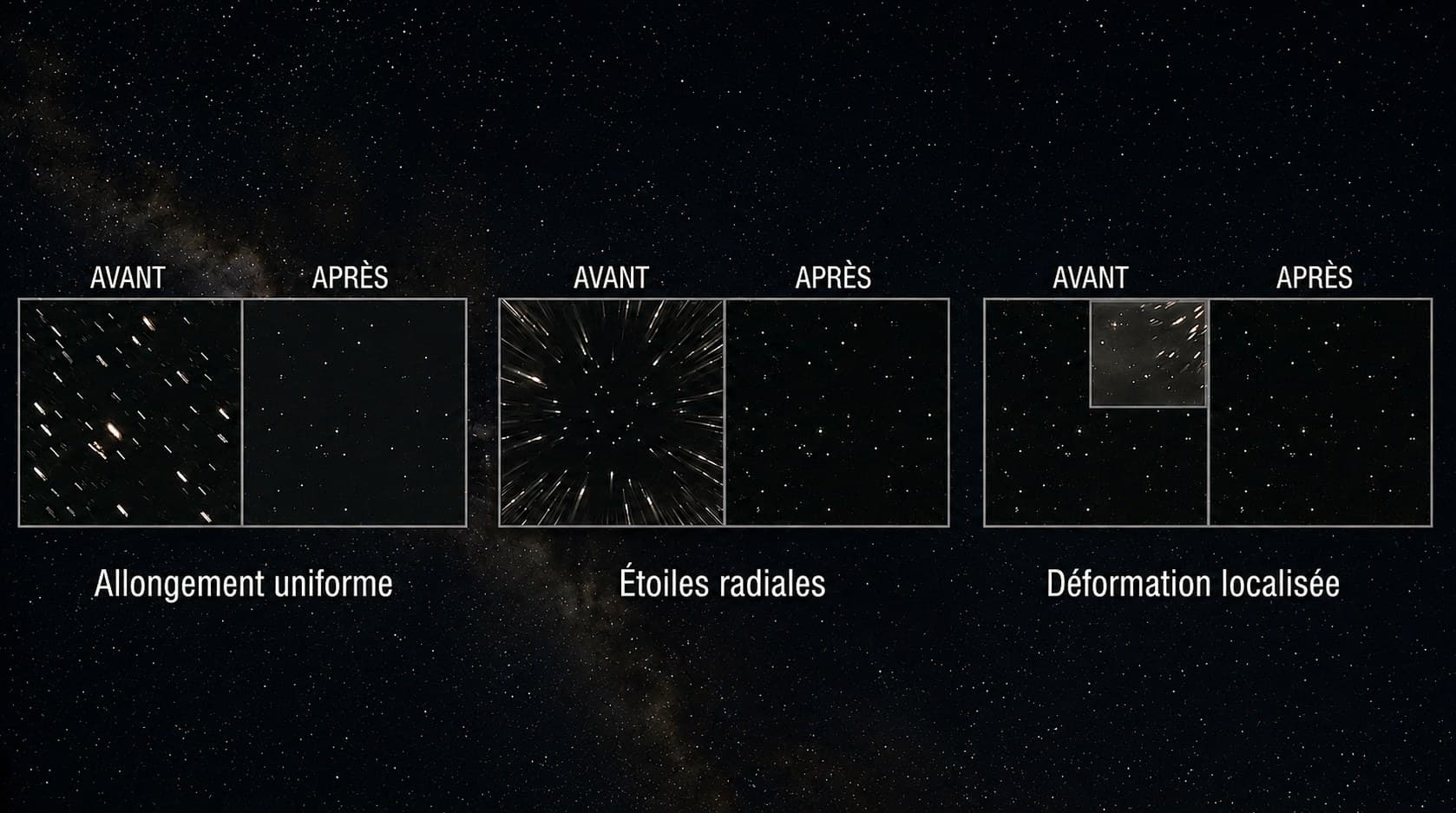
Finally, a thin satellite trail crosses the upper part of the field, just above the bulge; it will be automatically rejected at integration once the number of subs is sufficient. Tracking is generally good, with no uniform directional elongation signaling drift.
Priority actions
- Accumulate several additional hours of integration to lift M33's signal above the background noise
- Increase the number of subs so sigma rejection removes the satellite trail
- Crop slightly to exclude the corners degraded by the non-correctable sensor tilt