Astrophotography diagnosis of ngc6883: Astigmatism and background chroma noise
Processed30x300s
The Doc examined this image of ngc6883 (processed, 30x300s). Estimated overall technical quality: 7/10. 2 defects found: Astigmatism (severity 2/5), Background chroma noise (severity 2/5).

Info
- Cible
- ngc6883
Moon at 0 percent, so no lunar pollution to worry about: these 30 subs of 300 seconds fall in the best possible window for a faint nebular field like the NGC 6883 region. The measured background stays close to the black point (e_margin 1.9), which points to a dark sky rather than insufficient exposure as such, but also means you are not truly sky limited: on this kind of H-alpha field, read noise still weighs in. If the sky allows, slightly longer subs, or simply more cumulative hours, will strengthen the faint signal of the dark filaments.
Setup
- Type d'image
- Traitée
- Exposition
- 30x300s
- Phase de lune
- 0%
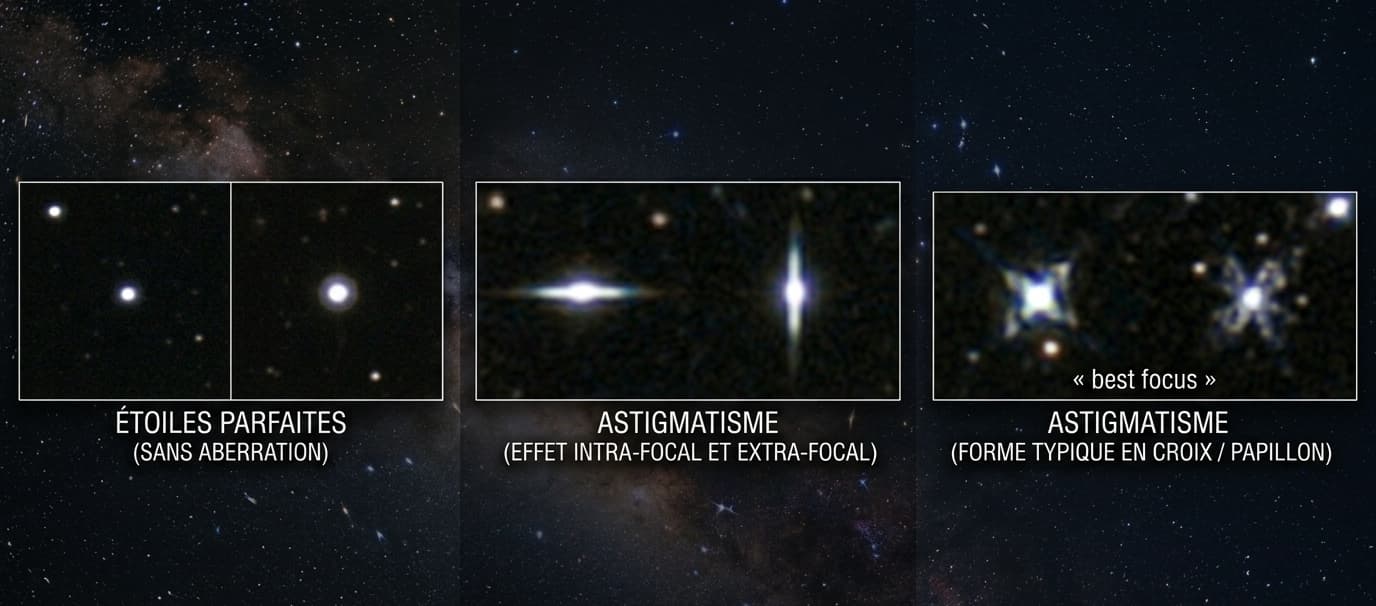
A 2072x1410 monochrome sensor on a very wide Cygnus field: the framing takes in a large nebular region with no single object cut off, which is coherent. The central FWHM of 4.2 pixels is a little high for a processed image, pointing either to tight sampling or to average seeing that night. The item to watch remains the imaging train: elongation of 1.53 in the bottom left corner against 1.19 at centre betrays a mechanical tolerance at the end of travel. Measure your backfocus precisely and check the tightening before the next session, that is the most immediate gain on this setup.
The diagnosis in detail
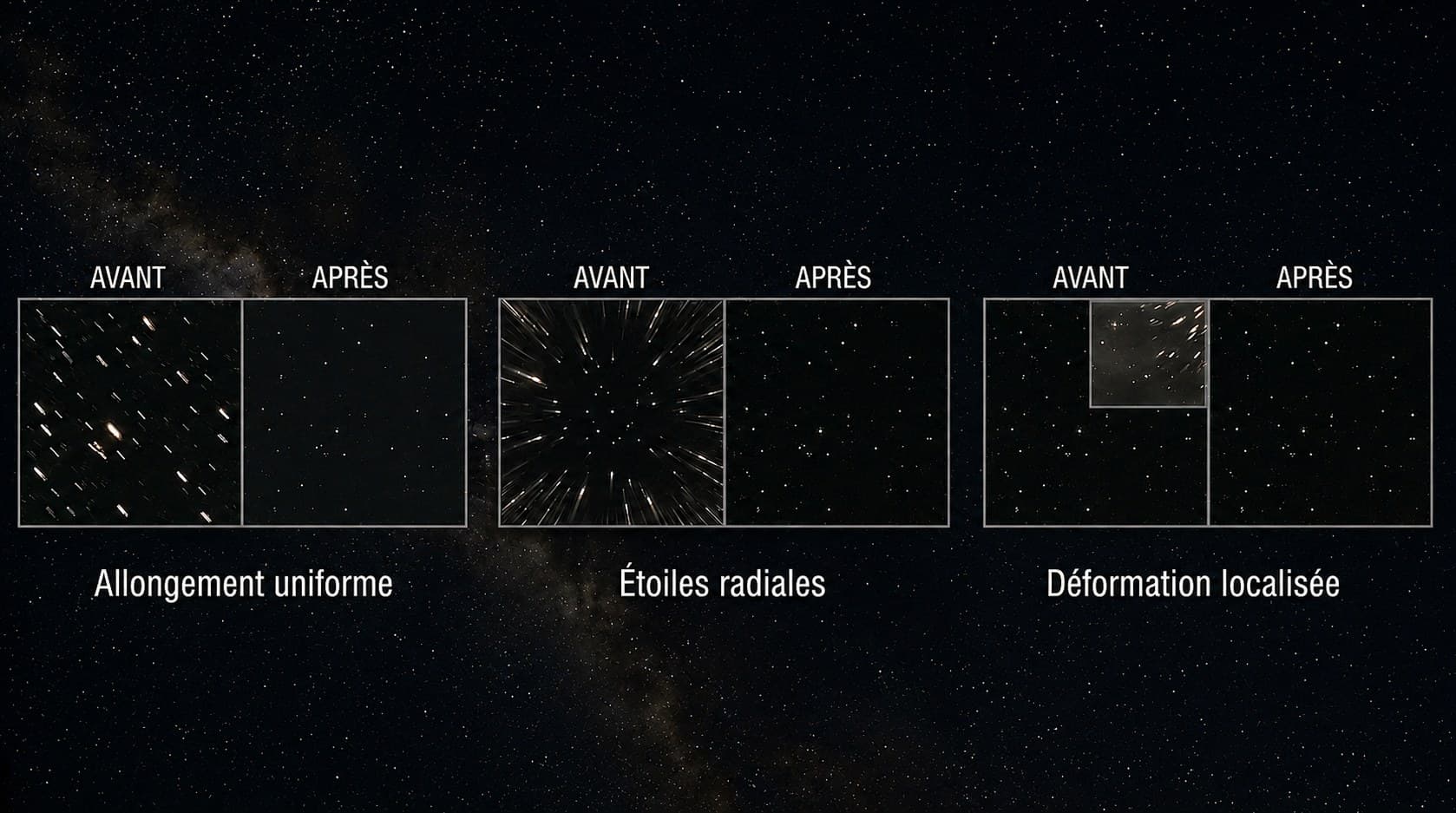
The diagnosis comes down to one dominant point: star shape at the edges. The centre is fine with an elongation of 1.19 against a field floor of 1.02, but the four corners rise between 1.28 and 1.53 while the corner to centre FWHM ratio stays at 1.024. In other words, edge stars are not bigger, they are stretched. That is the classic signature of field astigmatism, not a backfocus error, which would inflate FWHM radially, nor a tracking drift, which would impose a single direction across the whole field. The 29 degree scatter in position angles and the opposed orientations between corners confirm this.
The second observation concerns the sky background. The dark areas of the top left corner show coloured mottling measured at 0.110 chroma sigma, typical of signal still a bit thin for the stretch applied. It does not degrade the readability of the nebulosity, but it limits how far you can push saturation and local contrast.
The two defects are independent: one is fixed mechanically before the next session, the other through more integration and separate chrominance processing. The image remains good and the H-alpha rendition is convincing.
Priority actions
- Measure backfocus precisely with calibrated spacers and check the tightening of the imaging train to reduce field astigmatism
- Re-run an aberration inspector plate after adjustment, aiming for elongation under 1.20 in all four corners
- Add integration hours on this faint field to strengthen background SNR
- Process chrominance separately from luminance and apply masked colour noise reduction on the background