Astrophotography diagnosis of SH 2-73: Light pollution gradient, green cast and 1 other
MasterIDAS LPS D260s15 mai 2026
The Doc examined this image of SH 2-73 (master, IDAS LPS D2, 60s). Estimated overall technical quality: 5/10. 3 defects found: Light pollution gradient (severity 3/5), Green cast (severity 3/5), Background chroma noise (severity 2/5).
&w=1920&q=75)
Info
- Cible
- SH 2-73 - SH 2-73
- Date
- 15 mai 2026, 21:22
- Lune
- Pleine lune 98.4% (sous l'horizon)
- Site
- Bortle 3 · rural peu pollué (VIIRS)
- Position
- 16h10m11s · +21°52'04"
Favorable conditions: Bortle 3 and full moon below the horizon (132° from target, so no lunar contribution). The sky is dark, which explains why the measured gradient is moderate and likely instrumental (flat/illumination) rather than strong light pollution. On SH 2-73, a faint diffuse target, this dark sky is an asset: the challenge isn't the background but integration time. Take advantage of the absent moon to stack many subs and bring out the nebulosity.
Setup
- Type d'image
- Master
- Télescope
- Askar SQA70 Pro
- Caméra
- ATR585C
- Filtre
- IDAS LPS D2
- Exposition
- 60s
- FOV
- 1.86°
The SQA70 Pro (1.86° field) frames SH 2-73 generously, fitting for this extended diffuse nebula. The sampling yields ~3 px FWHM stars, a sign of good optics/sensor match and clean tracking. The IDAS LPS D2 is a gentle anti-pollution filter: under Bortle 3 its benefit is limited and it causes no issue here. The 60s exposure remains short for a faint target: e_margin=2.24 shows the background is barely lifted off the black point, meaning longer subs or more frames would clearly improve SNR.
The diagnosis in detail
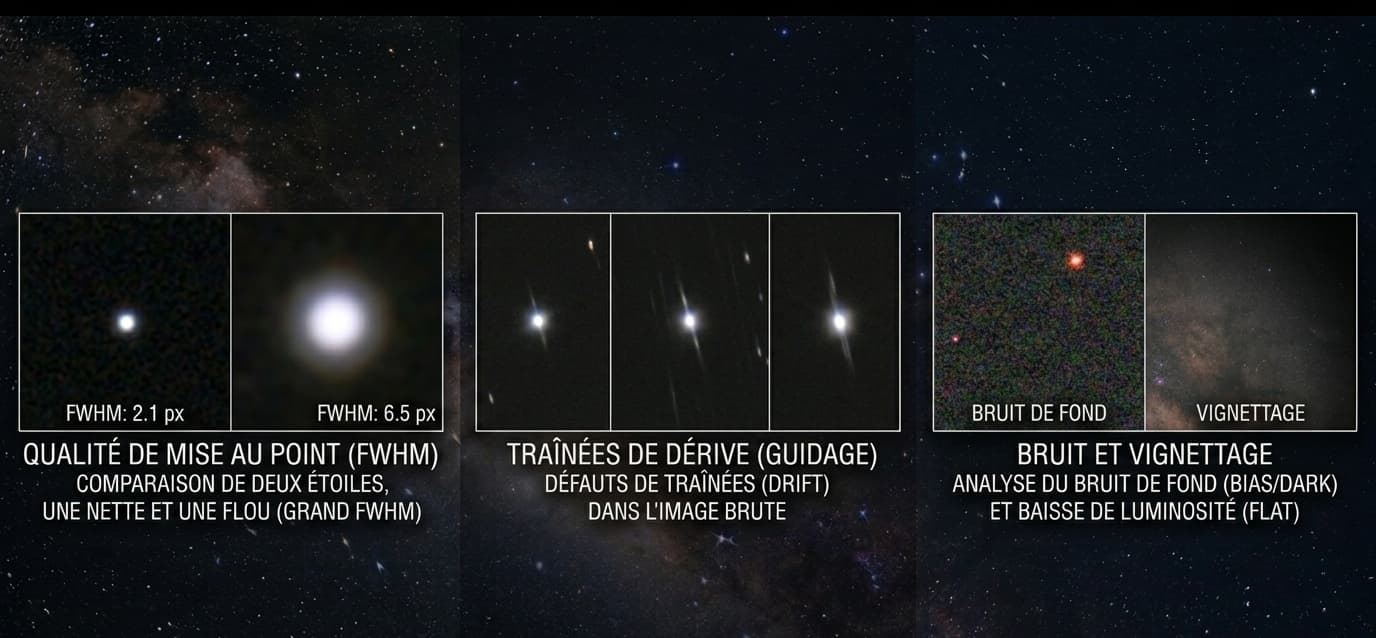
On star shape, this master is exemplary: the PSF panel gives a center elongation of 1.03 (field floor 1.02), a PA dispersion of only 8.6° and a corner/center FWHM ratio of 1.166. The automatic 'clean' pre-verdict is confirmed: no tilt, no coma, no astigmatism, no tracking defect. The slight FWHM increase in the bottom-left (3.7 px) stays cosmetic. The SQA70 and mount are doing their job.
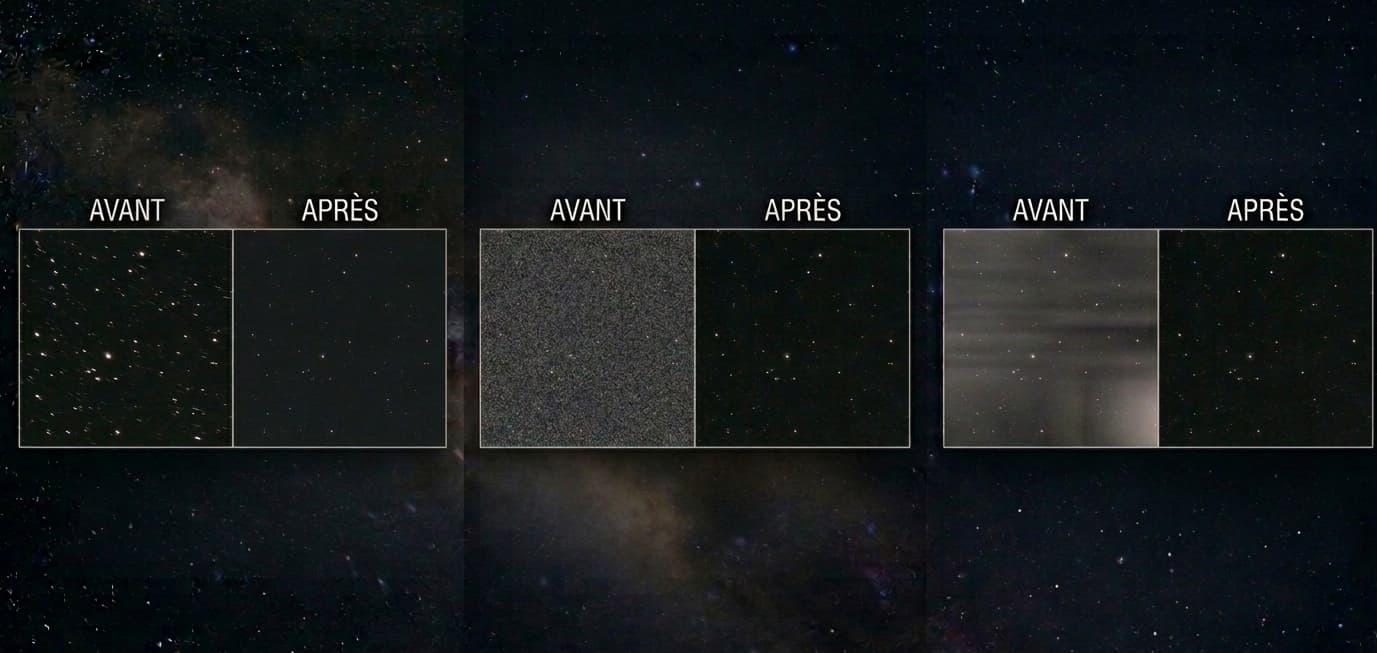
The real improvement points are downstream. The background carries a marked green cast, classic for an OSC master not run through SCNR or color calibration: fully recoverable in processing. There is also a measured oriented gradient at 29% (plane R²=0.76) to extract before any background neutralization. Be careful to preserve the faint central nebulosity, which is real since the DSS shows the same diffuse structure.
Finally, the chromatic mottling in the background betrays still-short integration (60s subs). More total time and dithering will smooth this noise and better reveal SH 2-73.
Priority actions
- Extract the background gradient (GraXpert / DBE) while preserving the real central nebulosity
- Neutralize the green cast (green SCNR) then color-calibrate (SPCC/PCC)
- Increase total integration time and enable dithering to reduce chromatic mottling
- Consider longer exposures (background barely lifted off black point, e_margin 2.24)