Astrophotography diagnosis of SH2-119: Light pollution gradient, noise / underexposure and 3 others
ProcessedL-pro35x300s
The Doc examined this image of SH2-119 (processed, L-pro, 35x300s). Estimated overall technical quality: 6/10. 5 defects found: Light pollution gradient (severity 3/5), Noise / underexposure (severity 3/5), Tracking drift (severity 2/5), Backfocus error (severity 2/5), Background chroma noise (severity 2/5).

Info
- Cible
- SH2-119
A 5% crescent: the Moon is not a factor here, you can ignore it entirely for this session. What weighs is the sky itself: the measured background to black point margin of 1.74 is very low, and the 20% linear gradient oriented 227 degrees betrays a ground light source on that side. On a faint Ha target like SH2-119, an L-Pro helps against urban continuum but is no substitute for a dark sky. If you stay at this site, favour moonless nights (which this is) and shoot the target at its highest culmination to reduce airmass and gradient amplitude.
Setup
- Type d'image
- Traitée
- Télescope
- evostar 72 ed
- Caméra
- ZWO ASI294MC Pro
- Filtre
- L-pro
- Monture
- am3
- Exposition
- 35x300s
- Phase de lune
- Premier croissant (5 %)
The Evostar 72ED paired with the ASI294MC Pro gives a wide field well suited to SH2-119, which is very extended: the framing encloses the filaments without clipping them. Sampling with the 294 in binned mode remains comfortable, and the measured FWHM around 2.5 to 2.8 px at centre confirms the optics are working properly. Two useful adjustments: check backfocus at 55 mm accounting for the L-Pro thickness, since the corners show FWHM about 20% above centre; and consider a dual-band such as an L-eXtreme on this emission target, which would clearly raise Ha contrast compared with the general-purpose L-Pro.
The diagnosis in detail
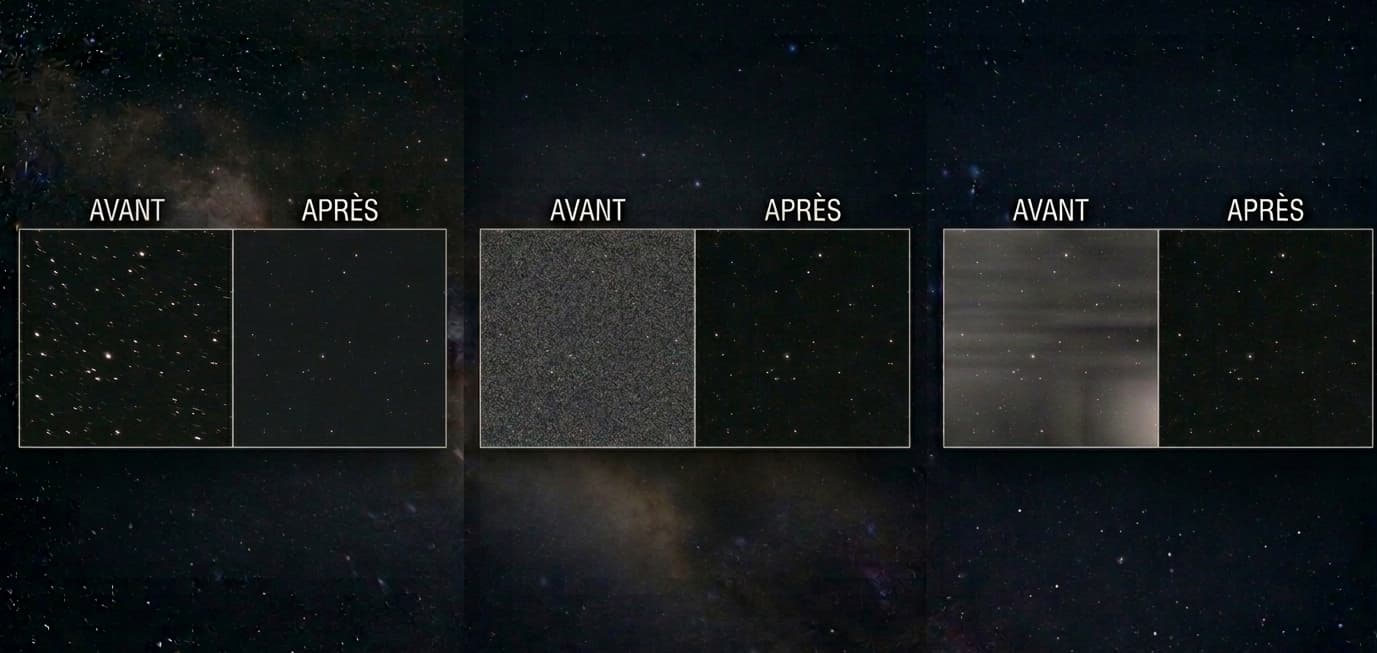
The main finding is a signal shortfall rather than a serious instrumental fault. With 35x300s, just under three hours, on a nebula as diffuse as SH2-119, the background stays grainy and the measured margin between background and black point (1.74) shows you are not comfortably sky-limited. That lack of SNR also shows in colour, with chroma mottling visible in the dark areas.
On the sky side, the 20% linear gradient oriented 227 degrees clearly dominates the radial profile (factor 56), which rules out a flat problem and points to directional light pollution. It is fully recoverable in processing, which makes it the most profitable immediate action.
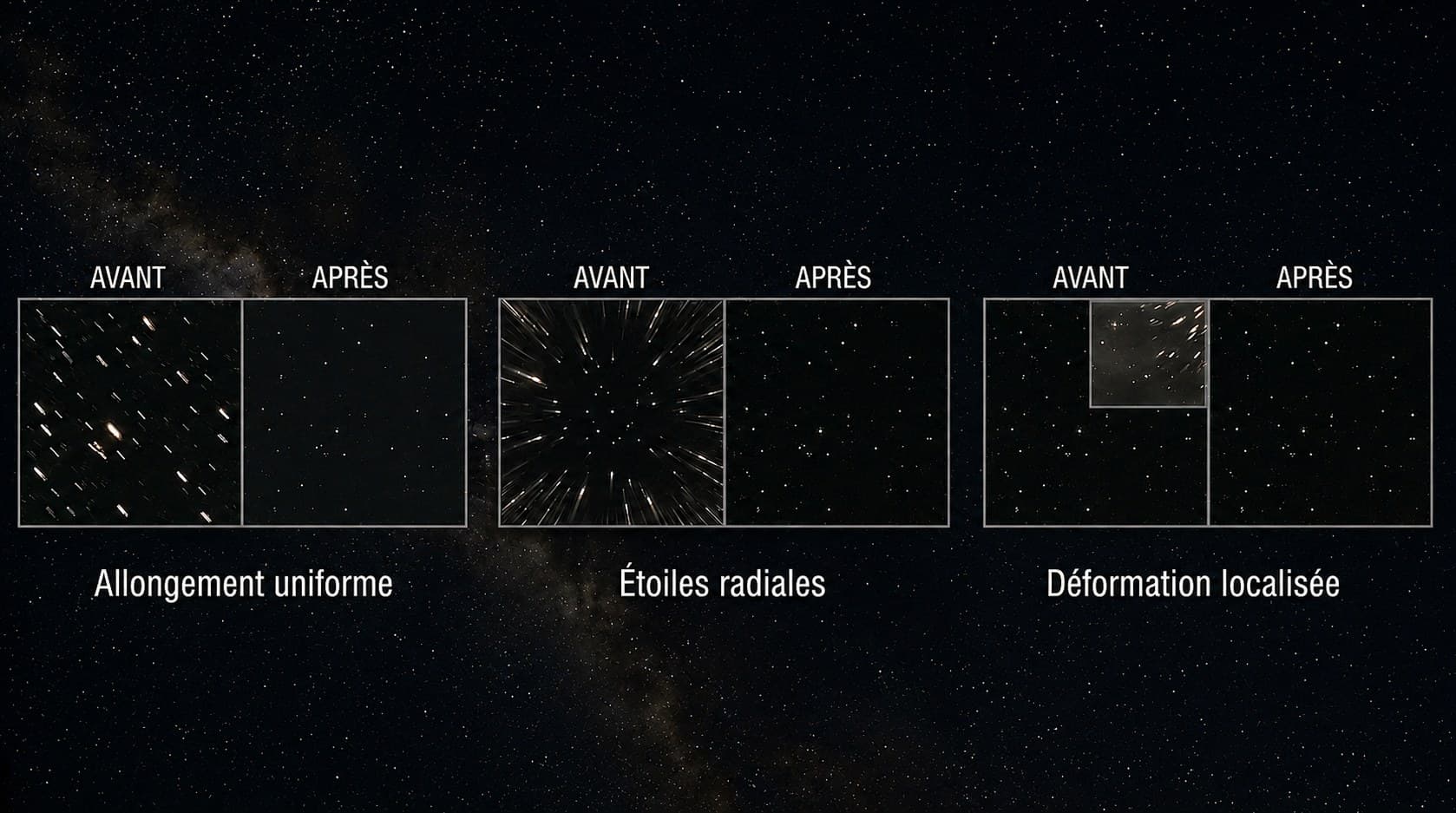
On the stars, two effects overlap. Elongation present right to the centre (1.14 against a 1.07 floor) with consistent position angles around -25 degrees, the signature of slight tracking drift. And a FWHM rise at all four corners (ratio 1.215, peaking at BL with elong 1.51), consistent with residual field curvature. Neither is blocking, but together they explain slightly soft stars toward the edges.
Priority actions
- Remove the gradient with GraXpert AI or DBE before any stretch, the most immediate visual gain
- Accumulate more integration on SH2-119, aim for 8 to 12 hours to lift the nebulosity out of the noise
- Check AM3 polar alignment and guiding RMS to eliminate the residual drift
- Set backfocus to 55 mm compensating for the L-Pro filter thickness
- Try a dual-band filter to improve Ha contrast from this light-polluted site