Astrophotography diagnosis of SH2-199: Astigmatism, clipped stars and 1 other
ProcessedANTLIA tri band RGB Ultra 262x300s
The Doc examined this image of SH2-199 (processed, ANTLIA tri band RGB Ultra 2, 62x300s). Estimated overall technical quality: 8/10. 3 defects found: Astigmatism (severity 2/5), Clipped stars (severity 2/5), Background chroma noise (severity 2/5).

Info
- Cible
- SH2-199
- Site
- Bortle 7 · périurbain pollué (saisi)
- Position
- 2h32m48s · +61°27'00"
Conditions were broadly favorable for this target. With a 3 percent waning crescent, the Moon is a non-issue: no lunar contribution to the background, you picked your window well. Bortle 7 remains the real limiting factor, but SH2-199 is an emission nebula rich in Ha, and your Antlia tri-band cuts sodium and mercury lines effectively: exactly the right tool for this sky. The result confirms it, the background is clean with no marked urban gradient. The only residual effect of Bortle 7 shows in background signal to noise, which stays modest despite 5 h 10 of integration. Under this kind of sky, aiming for 10 to 15 h on this target would erase the residual chroma noise.
Setup
- Type d'image
- Traitée
- Télescope
- skywatcher 80ED avec reducteur 0.85x
- Caméra
- ZWO ASI2600MC AIR
- Filtre
- ANTLIA tri band RGB Ultra 2
- Monture
- MLAStro SAL-33
- Exposition
- 62x300s
- Phase de lune
- Dernier croissant (3 %)
- FOV
- 2.50°
A very coherent setup for SH2-199. The 80ED reduced at 0.85x gives a 2.50 degree field, which frames the whole Soul complex with margin at the edges: the framing is right, the nebula is complete and well placed. Sampling lands around 1.4 to 1.5 arcsec/px with the ASI2600's 3.76 um pixels, well matched to typical seeing, and the measured FWHM of 2.2 to 2.9 px confirms it: you are at the right balance point, neither over nor undersampled. The tri-band is relevant on an emission target under Bortle 7. On settings, the background sits very close to the black point (margin 0.96) with no shadow clipping, which is normal in narrowband at 300 s, but you have room to lengthen the exposure or raise the gain if the mount allows.
The diagnosis in detail
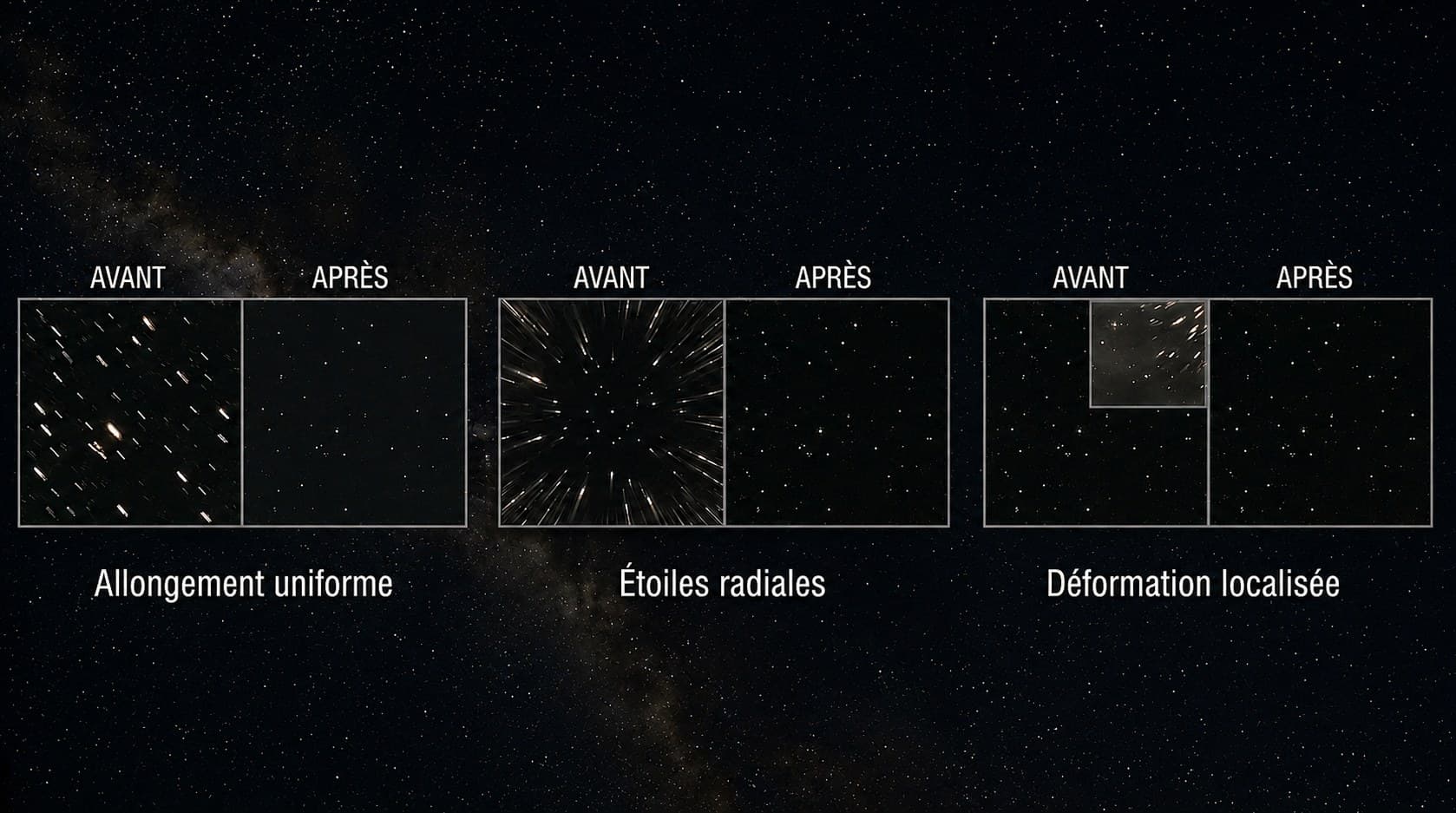
The main finding is positive and deserves numbers. The field center shows an elongation of 1.07 against a field floor of 1.05: the stars are round, which rules out any tracking, periodic error or guiding oscillation component on 300 s subs. That is notable performance from the SAL-33 over five hours of integration. The corner to center FWHM ratio is 0.806, below 1: the corners are actually tighter than the center, which formally rules out sensor tilt, backfocus error and residual coma. The imaging train is well set.
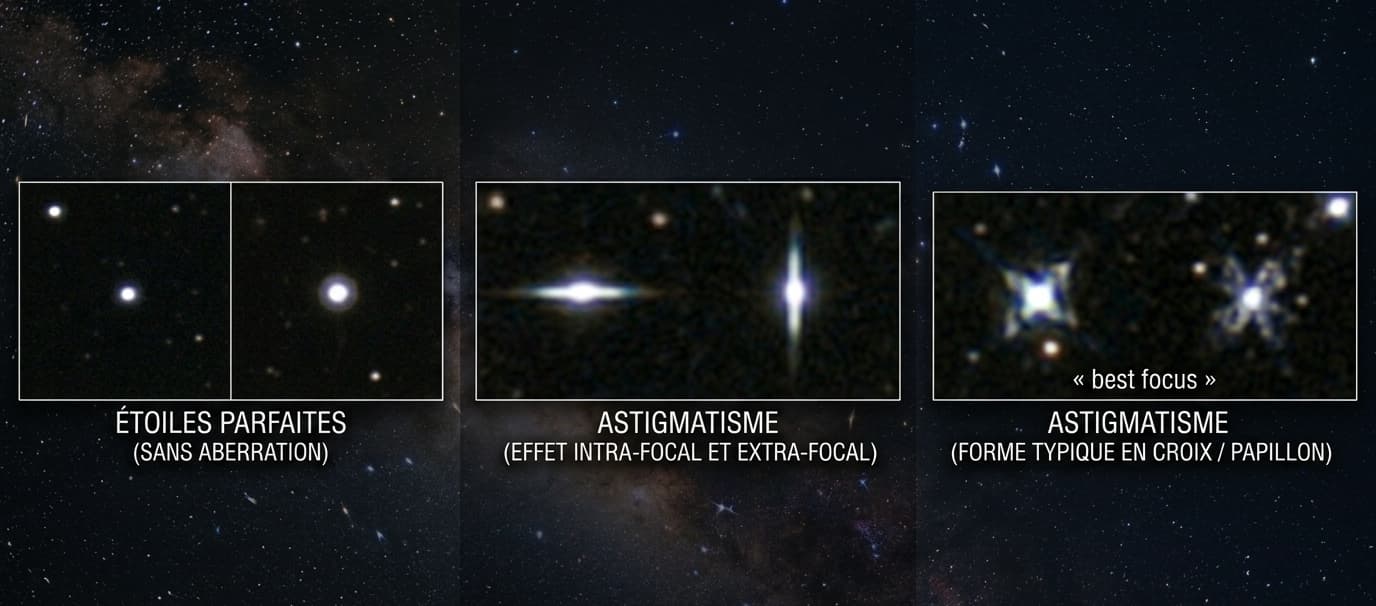
The only measured deviation is local: the left edge zone comes out at 1.42 elongation with a PA of -69 degrees, isolated within an otherwise homogeneous field. FWHM barely rises there, which points to field astigmatism rather than a focus or sensor distance issue. The panel also shows this value rests largely on a single strongly stretched star, the three others in the zone being correct: treat the number with caution, it may be partly inflated by a blend. Check the imaging train tightness before concluding.
On the processing side, the cores of the brightest stars are clipped to neutral white and the background keeps a discreet chromatic granulation in the dark areas. Both are fixable, one with a short-exposure HDR layer, the other with more integration and targeted chroma denoising.
Priority actions
- Extend total integration toward 10 to 15 h to bring down background chroma noise under Bortle 7
- Check the tightness and orthogonality of the imaging train on the reducer side, then re-run an aberration panel to confirm or rule out the left edge astigmatism
- Add a set of short subs (10 to 30 s) and blend stellar cores in HDR to recover bright star color
- Apply targeted chroma denoising on the sky background before final saturation