Astrophotography diagnosis of IC 1396: Astigmatism and sensor tilt
ProcessedAntlia HSORGB
The Doc examined this image of IC 1396 (processed, Antlia HSORGB). Estimated overall technical quality: 8/10. 2 defects found: Astigmatism (severity 2/5), Sensor tilt (severity 1/5).
&w=1920&q=75)
Info
- Cible
- IC 1396
- Position
- 21h37m30s · +57°34'45"
Full Moon at 100%: normally a dealbreaker, but you are shooting narrowband (HSO) on an emission target, which neutralizes most of the lunar pollution. The result confirms it: clean sky background, preserved contrast, no measured moon gradient (the +85% background variation matches the object, not an artifact). This is exactly the use case where a full Moon stays usable. For the RGB stellar layer of the HSORGB, however, the Moon hurts more: favor those subs on moonless nights if the stars look noisy.
Setup
- Type d'image
- Traitée
- Télescope
- Redcat 91
- Caméra
- ZWO ASI2600MM Duo
- Filtre
- Antlia HSORGB
- Monture
- AM5N
- Phase de lune
- Full moon (100 %)
- FOV
- 2.89°
Coherent, well-sized setup. The Redcat 91 (396 mm) with the ASI2600MM gives ~1.95''/px and a 2.89deg field, framing IC 1396 with margin and surrounding nebulosity: an excellent target/instrument match. Sampling is comfortable under typical seeing and the measured FWHM (1.4-1.9 px) show generally sharp optics. The Antlia HSORGB filter is appropriate here to build an SHO palette and recover RGB stars. Only optical caveat: mild field astigmatism on the lateral edge, worth watching on the imaging train.
The diagnosis in detail
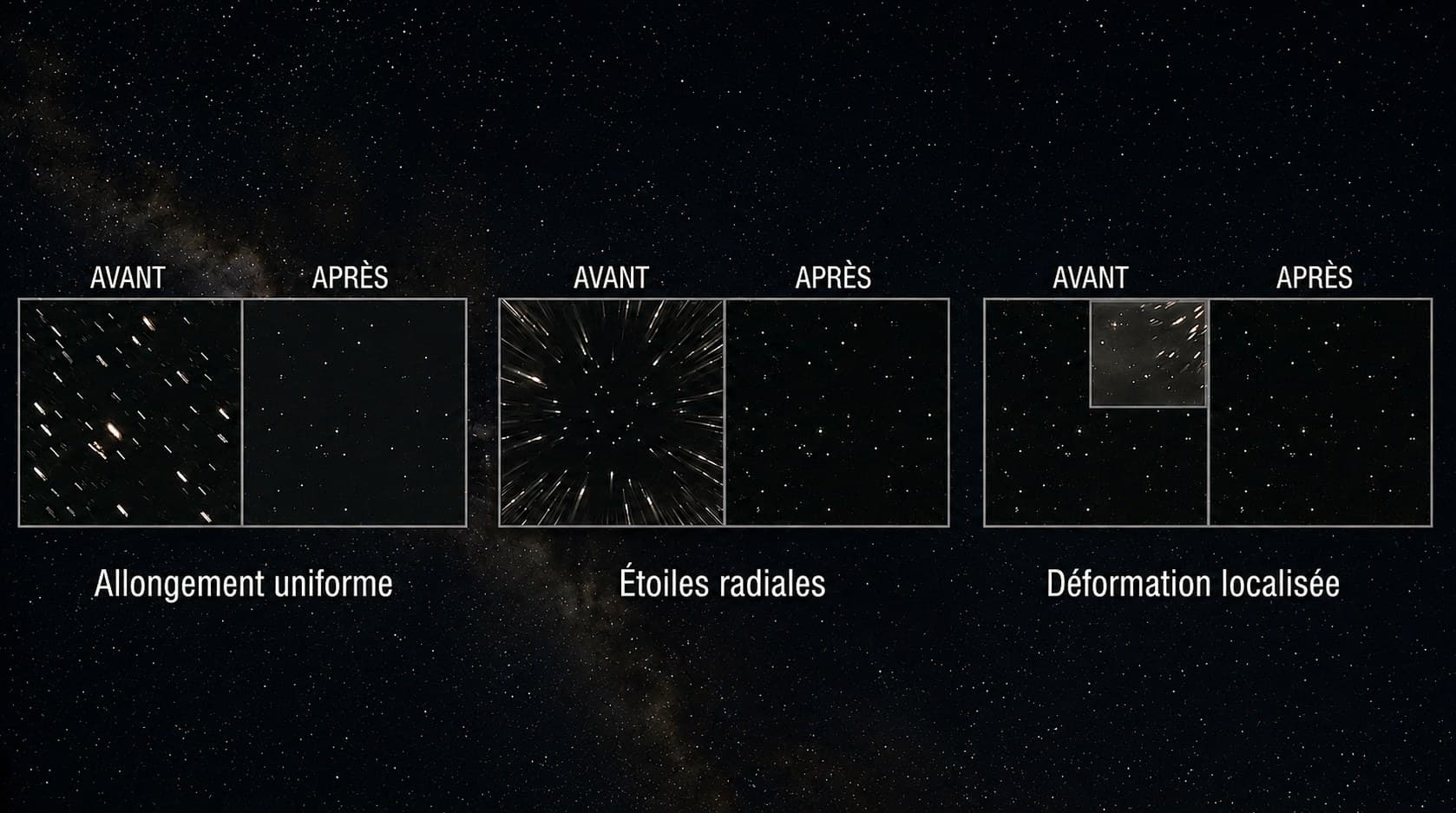
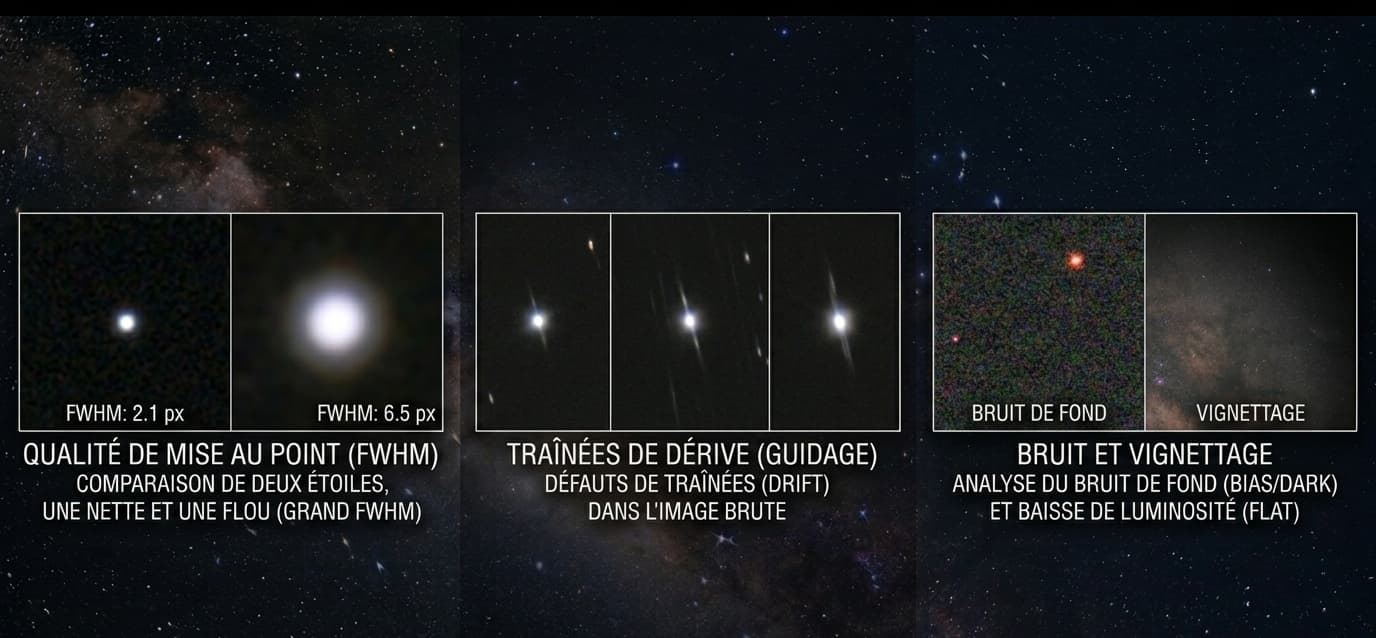
This is a high-quality image. AM5N tracking is flawless: no coherent directional elongation, 39deg PA scatter, and the central elongation is explained by nebular contamination of the fit, not a mount defect. Stars are tight and regular over most of the field (FWHM 1.4-1.6 px, elongation near the 1.02 floor in most zones).
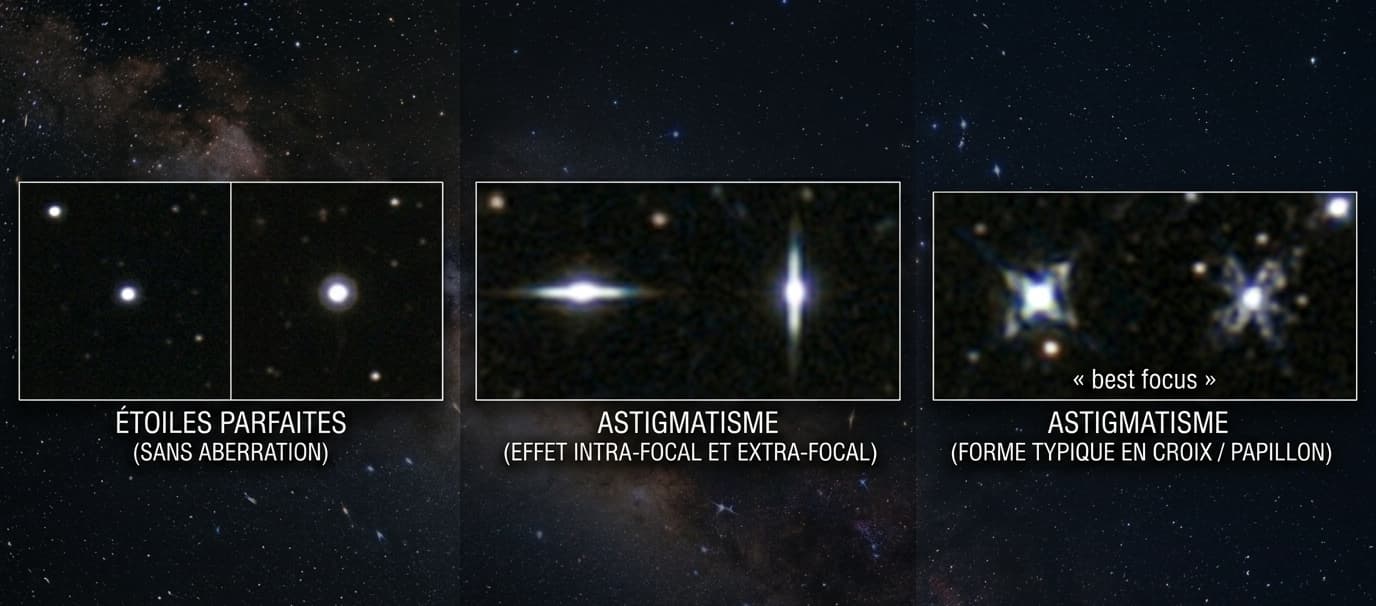
The only optical point is mild field astigmatism: elongation rises on the lateral edges (L 1.18, R 1.14) while the corners stay excellent (1.03-1.09). This is typical of a very small corrector residual or slightly improvable optical spacing, with no visible consequence at image scale. The tilt component suggested by horizontal asymmetry stays marginal and should be checked on a raw sub to rule out the nebula's effect on central measurements.
On background and processing: the full Moon is well handled thanks to narrowband, the background is clean and the diffuse structure is real (validated by DSS). The SHO palette is well controlled, with no green cast or oversaturation to report.
Priority actions
- Re-run the aberration inspector on an uncalibrated sub to confirm/rule out tilt without central nebular contamination
- Check optical spacing and stress-free tightening of the imaging train to reduce edge astigmatism
- Reserve the RGB stellar layer for moonless nights, keeping the HSO layers under the full Moon