Astrophotography diagnosis of IC 5070: Sensor tilt
Raw300s12 juin 2026
The Doc examined this image of IC 5070 (raw, 300s). Estimated overall technical quality: 6/10. 1 defect found: Sensor tilt (severity 3/5).
&w=1920&q=75)
Info
- Cible
- IC 5070
- Date
- 12 juin 2026, 23:20
- Lune
- Gibbeuse croissante 92.9% (sous l'horizon)
- Site
- Bortle 2 · rural typique (VIIRS)
- Position
- 20h53m07s · +44°28'47"
Excellent conditions for this target. Bortle 2 gives a very dark background, ideal for an emission nebula, and the Moon (92.9% gibbous) is below the horizon at 77.7 degrees from the target: no lunar pollution possible that night. The Ha narrowband did not need it anyway, but the dark sky maximizes SNR on the Pelican's faint filaments. Nothing to fault on the sky side: it is the ideal context to stack long exposures on diffuse signal.
Setup
- Type d'image
- Brut
- Télescope
- EQMod Mount
- Caméra
- ZWO ASI585MM Pro
- Exposition
- 300s
- Phase de lune
- Dernier croissant (5 %)
- FOV
- 1.70°
Setup consistent with the target. At 375mm focal length, the 1.70 degree field frames the northern part of the Pelican (IC 5070) with comfortable margin. The 1.595 arcsec/px sampling is well matched to typical seeing, neither over- nor under-sampled. On settings: gain 252 is high but consistent with the ASI585MM at 300s, offset 15 with no dark clipping (0%), sensor at -19C, all healthy. The background-to-blackpoint margin (e_margin 1.57) is low but that is NORMAL in narrowband Ha: the faint background is not a sign of underexposure here.
The diagnosis in detail
The sub is well made: controlled exposure, no clipped black point, dark background thanks to Bortle 2 and the absent Moon. The Pelican nebulosity is fully present and structurally matches the DSS, confirming the visible background variations are real Ha signal and not an instrumental or light-pollution gradient: no background defect is retained despite a background map measuring an oriented plane, which here corresponds to the nebulosity itself.
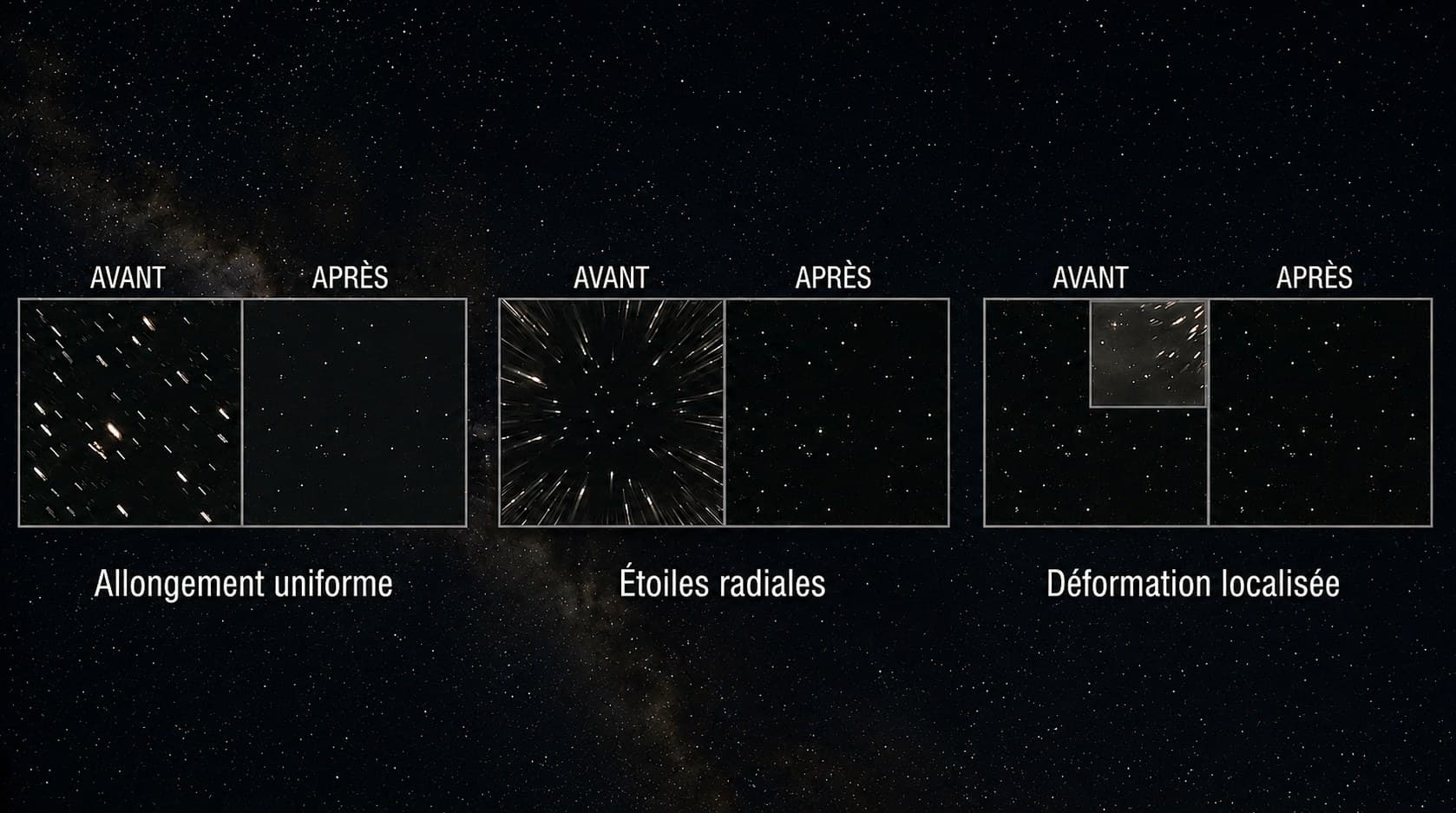
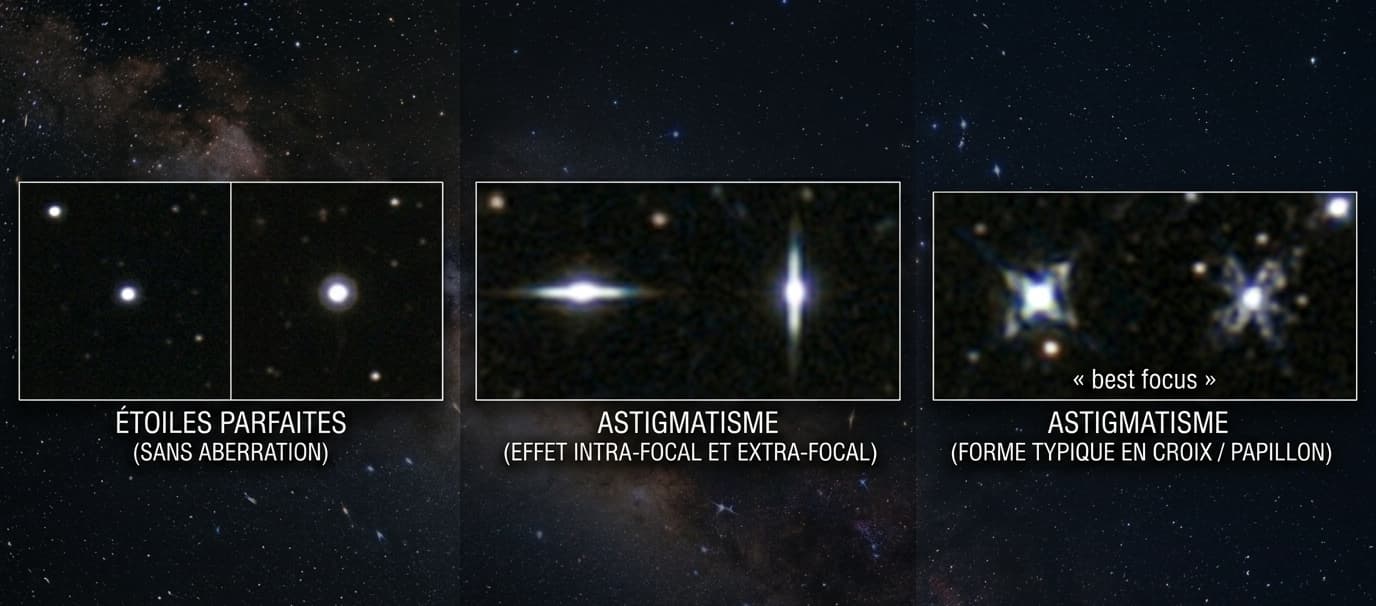
The dominant defect is optical: the aberration panel reveals a clear sensor tilt. Left-edge stars (elong 2.2 to 2.6, near-horizontal PA) are far more deformed than right-edge ones (elong 1.4 to 1.6), with an intermediate center at 1.45. This asymmetric elongation gradient between opposite sides, rather than symmetric radial degradation, rules out simple backfocus or coma and points to a tilted focal plane. It is mechanically correctable.
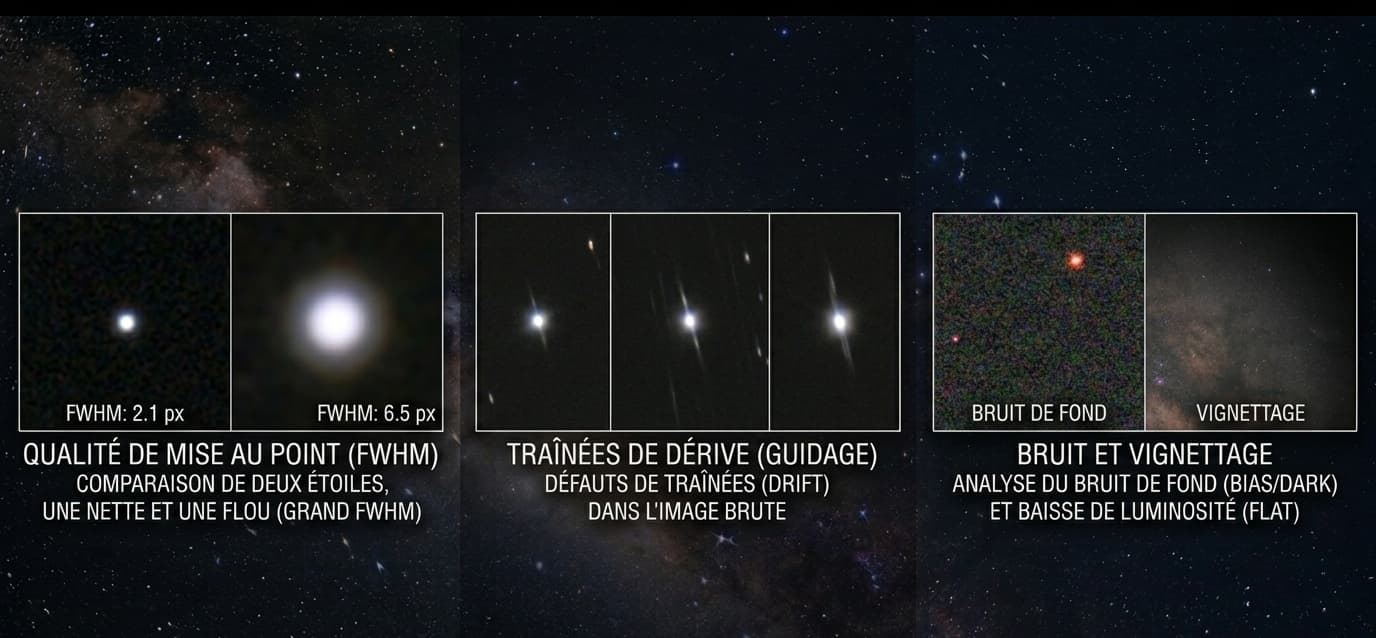
The generally broad FWHM (center about 4px) is partly due to single-sub noise and the tilt; I do not diagnose a focus miss, as the center remains usable. Priority: fix the tilt before capturing the full sequence.
Priority actions
- Correct the sensor tilt (tighten the optical train, then adjust the left side with a tilt plate) and validate with a new aberration panel
- Check nominal backfocus to ensure the corner residual is due to tilt alone
- Keep the current acquisition settings (gain/offset/temp/exposure), which are healthy for this sky and filter