Astrophotography diagnosis of NGC 6888: Tracking drift and sensor tilt
Raw300s21 juin 2026
The Doc examined this image of NGC 6888 (raw, 300s). Estimated overall technical quality: 6/10. 2 defects found: Tracking drift (severity 3/5), Sensor tilt (severity 2/5).
&w=1920&q=75)
Info
- Cible
- NGC 6888
- Date
- 21 juin 2026, 00:50
- Lune
- Gibbeuse décroissante 59.3% (sous l'horizon)
- Site
- Bortle 2 · rural typique (VIIRS)
- Position
- 20h10m35s · +38°14'21"
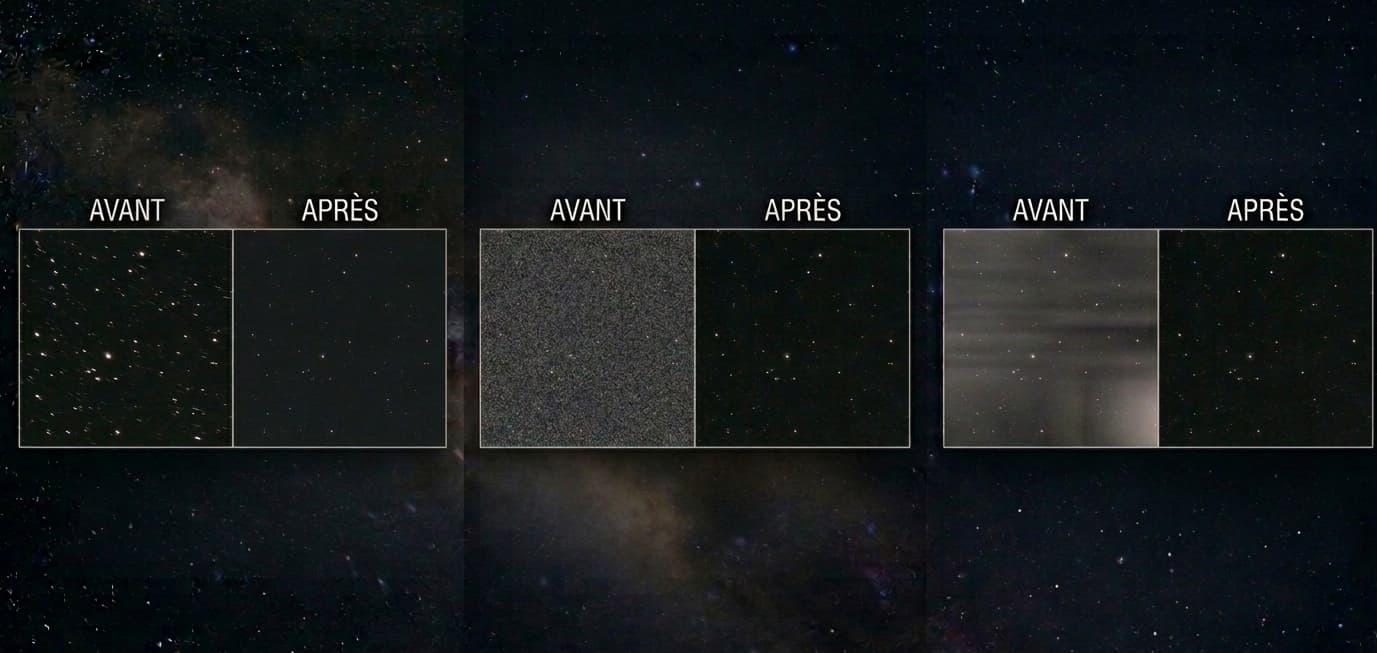
Excellent conditions: Bortle 2 with the moon (59%) below the horizon at 121deg from the target, so no lunar pollution and a very dark background, ideal for the Crescent. The background map confirms a clean sky (plane gradient of only 4%, low R2, no measured vignetting). The sky is not your limiting factor here: the only thing to fully exploit is tracking, since such a dark background lets you stack a lot of Ha signal without fighting gradients.
Setup
- Type d'image
- Brut
- Télescope
- EQMod Mount
- Caméra
- ZWO ASI585MM Pro
- Exposition
- 300s
- Phase de lune
- Premier croissant (34 %)
- FOV
- 1.70°
Setup well matched to the target. At 375mm and 1.595"/px, the Crescent (about 20') sits comfortably in the 1.70deg field with room for the Ha shell and surrounding OIII, and sampling suits typical seeing. The ASI585MM Pro at -14.5C is healthy (no amp glow expected). Settings: gain 220 is fairly high but reasonable for mono narrowband to lift faint signal; offset 15 with no dark clipping (0%). e_margin=1.85 is low but NORMAL in narrowband at 300s, not underexposure. Nothing to flag on settings.
The diagnosis in detail
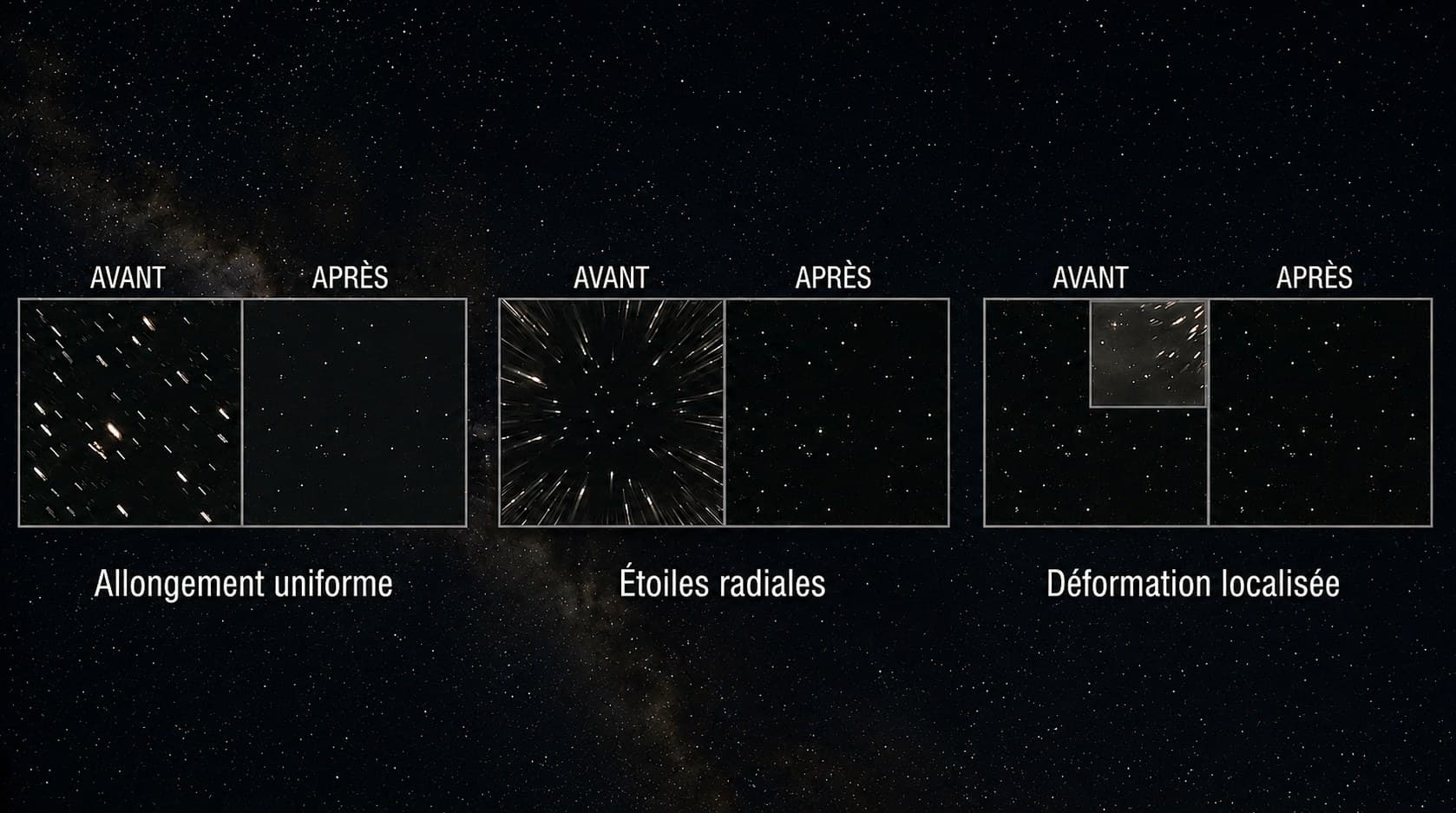
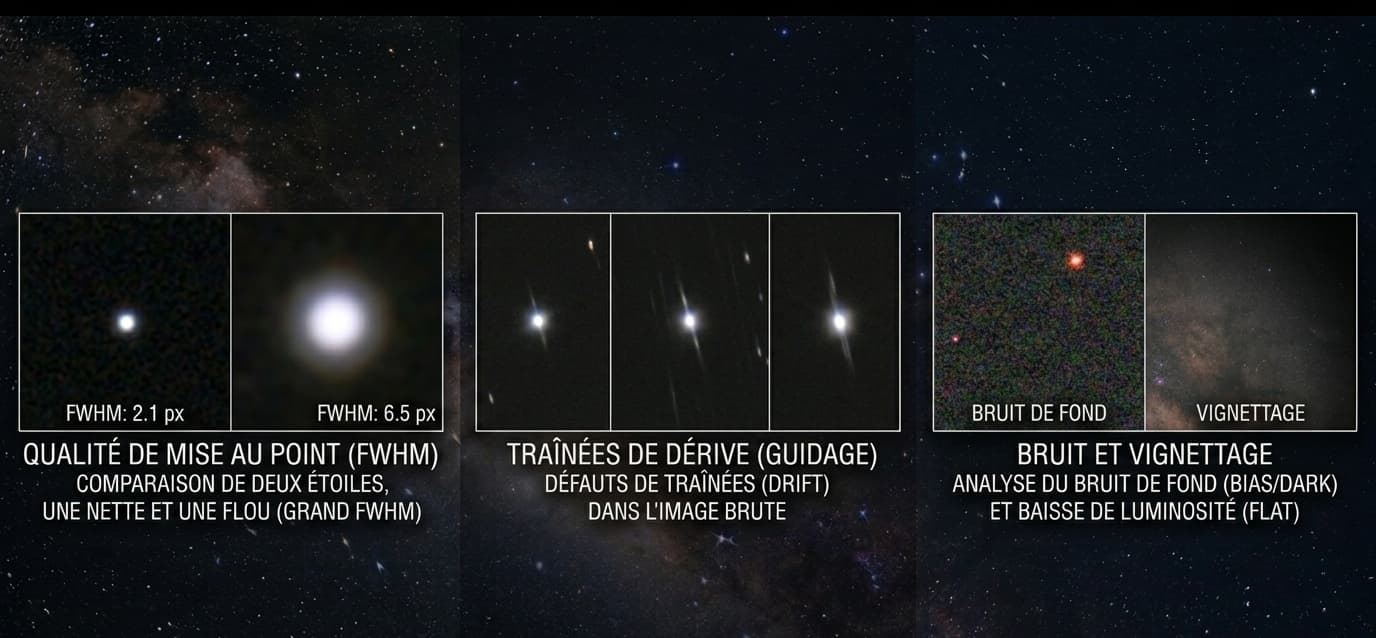
The image is a technically clean mono narrowband sub, so the diagnosis logically centers on star shape as measured by the aberration inspector. The verdict is clear: tracking drift. The elongation is consistent in direction across the whole field (PA dispersion of only 10.5deg) and, crucially, present AT THE CENTER (elong 1.30 vs a field floor of 1.29), which rules out a pure field-optics cause. Over 300s without perfect guiding, it is the mount talking. The corner/center FWHM ratio stays moderate (1.139): the optics are broadly fine, corners do not collapse. The only reservation is a slight single-axis asymmetry (BL more spread, elong 2.00) that could betray minor tilt, but this signal is weak and partly buried in the drift; it cannot be cleanly resolved until tracking is under control. On sky and calibration there is nothing to flag: dark Bortle 2 background, gradient measured at 4% with no vignetting, healthy exposure for a raw sub. The priority is therefore single and clear: fix guiding, then re-measure star shape on a master to confirm or dismiss tilt.
Priority actions
- Fix tracking: enable/refine autoguiding (PHD2) and improve polar alignment before stacking
- Shorten exposure to 120-180s if guiding stays limited, to freeze the drift
- Re-assess tilt on a master once tracking is clean, and adjust the optical train if confirmed