Astrophotography diagnosis of IC1396: Tracking drift
Processed
The Doc examined this image of IC1396 (processed). Estimated overall technical quality: 8/10. 1 defect found: Tracking drift (severity 2/5).
&w=1920&q=75)
Info
- Cible
- IC1396
- Position
- 21h38m60s · +57°30'00"
The session was run under a 96 percent waning gibbous Moon, that is to say the worst possible sky background conditions for broadband work. The narrowband choice (SHO palette) is exactly the right answer here: narrow filters cut most of the moonlight scatter, which explains a background that stayed dark and even despite the illumination. The background map indeed shows only a very weak modulation (6 percent plane amplitude, R squared 0.17), so nothing usable as a lunar gradient. IC 1396 being a very extended HII region, bright in H-alpha, it handles this context perfectly: keep reserving this kind of night for SHO and save RGB for moonless nights.
Setup
- Type d'image
- Traitée
- Phase de lune
- Gibbeuse décroissante (96 %)
- FOV
- 2.50°
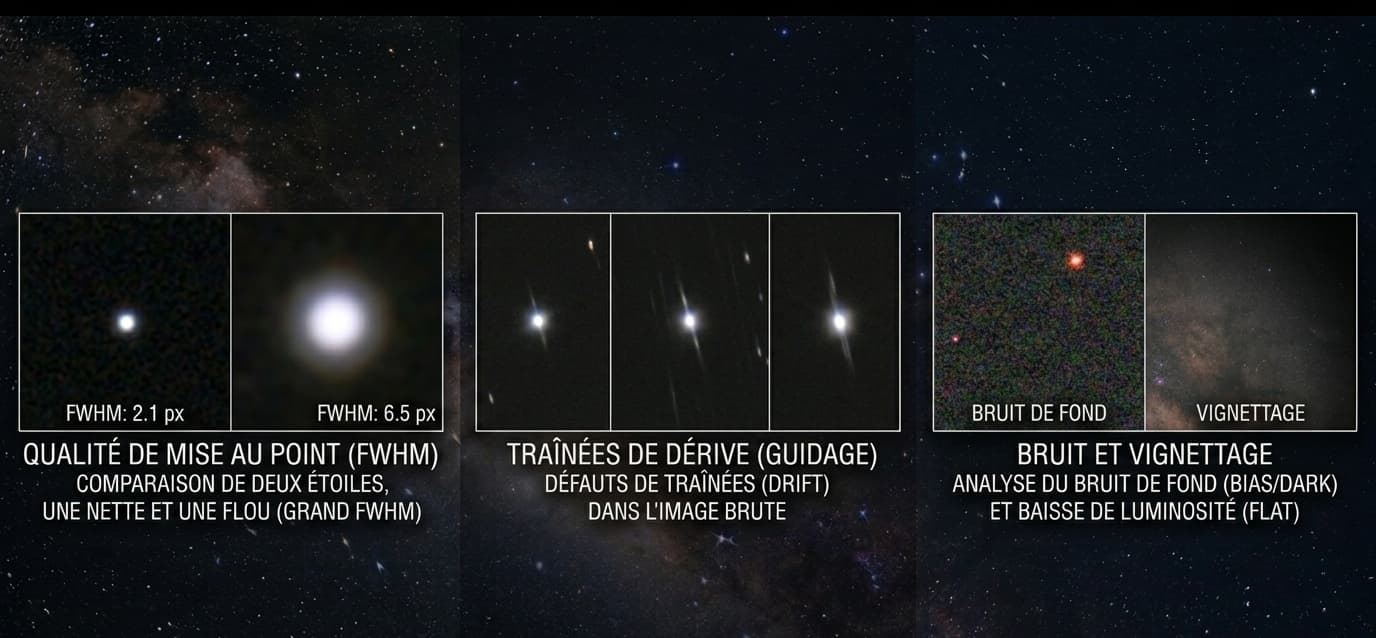
The 2.50 degree wide field is well sized for IC 1396: the nebula fills the central frame with breathing room all around, and the Elephant's Trunk stays readable without being cramped. A monochrome camera with narrow filters is the logical combination for this emission target, and the SHO rendering confirms a usable OIII signal, which is not a given on this region. On sampling, the measured FWHM run around 3.9 to 4.8 px depending on the zone, which stays reasonable but suggests slight oversampling or average seeing: bin 2 or shorter subs could tighten the stars with no real loss of detail.
The diagnosis in detail
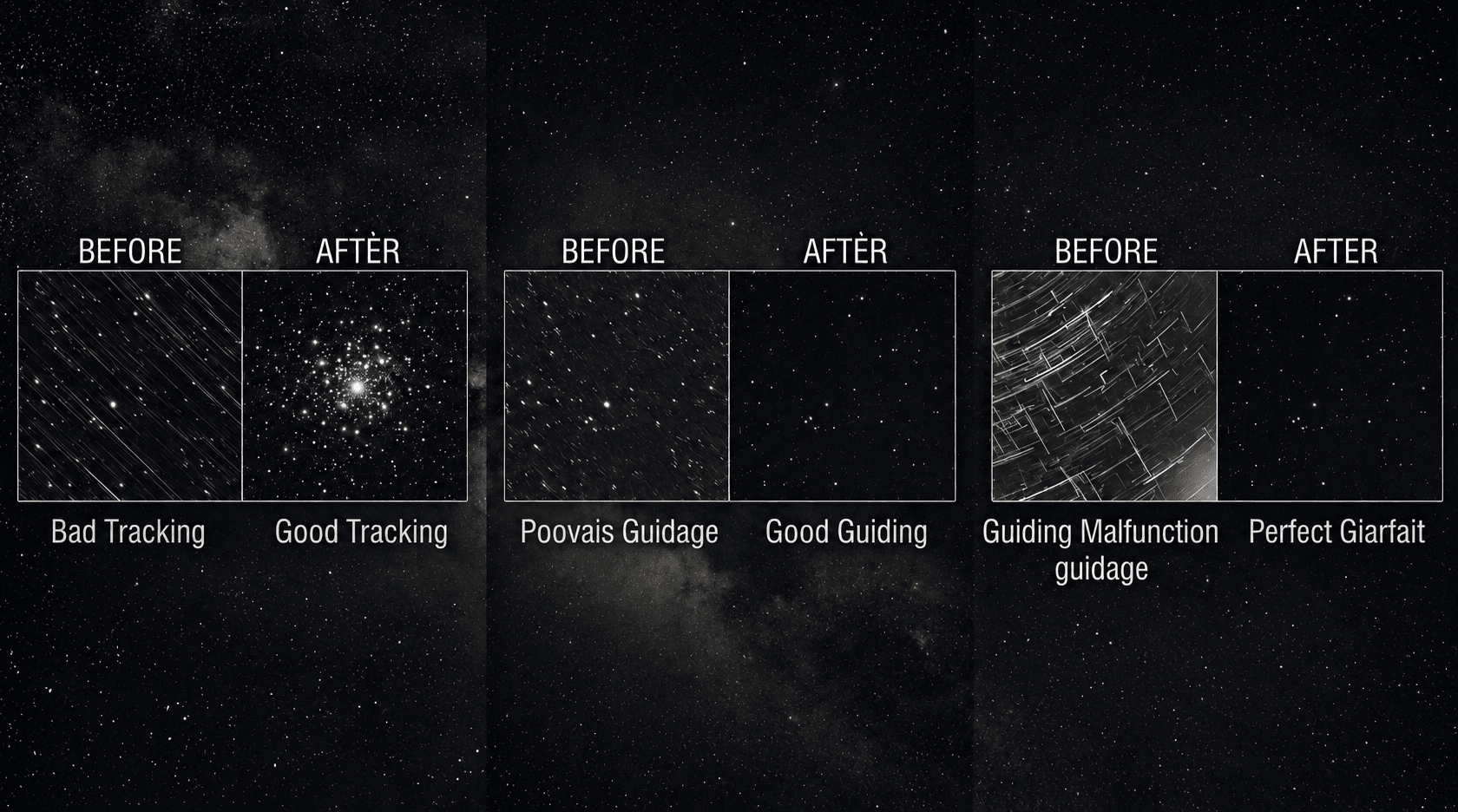
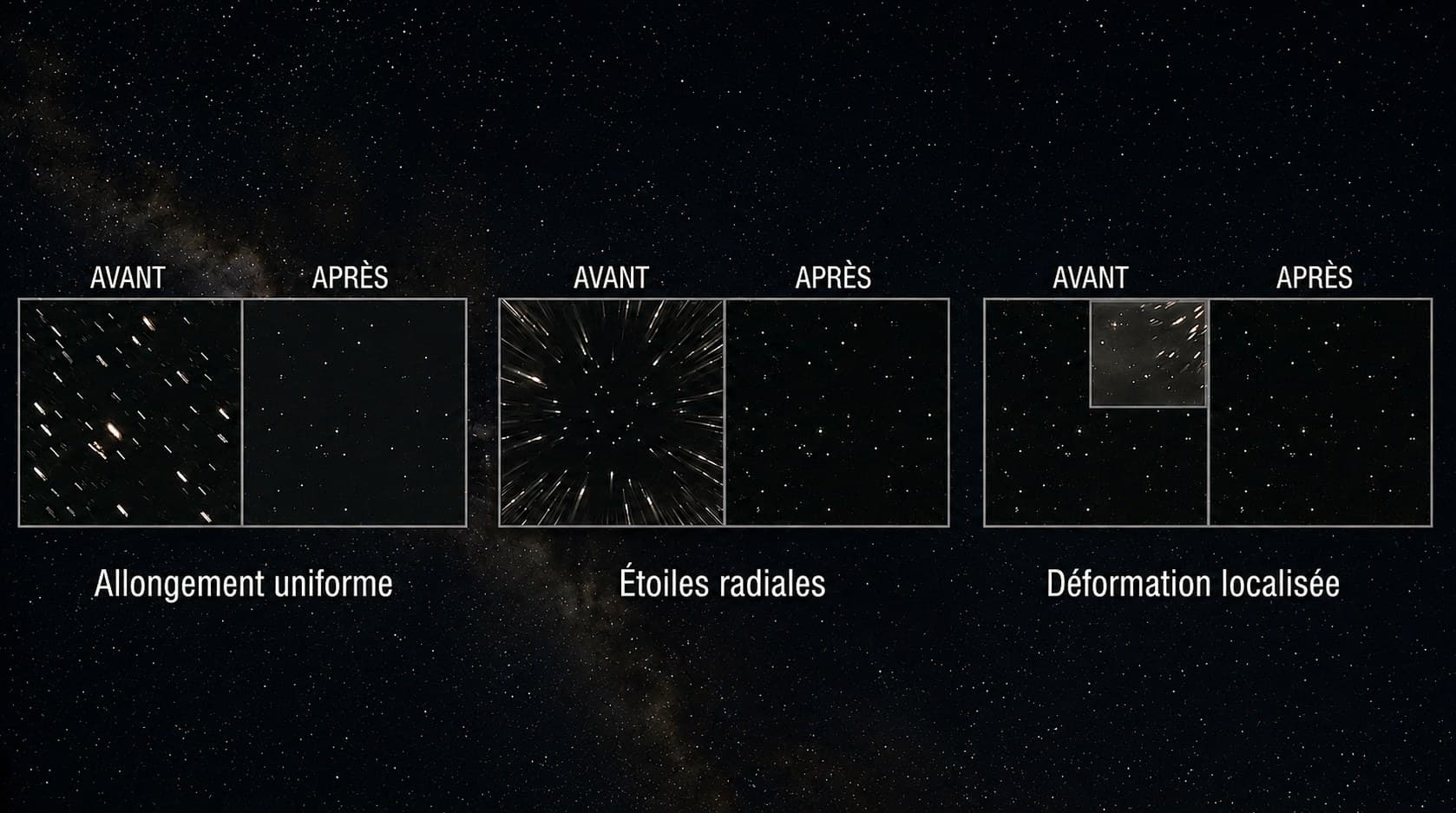
The diagnosis is simple because the image is healthy: only one anomaly comes out of the measurements, and it is modest. The aberration inspector gives a center at elong 1.19 for a field floor of 1.02, with a long axis oriented at 50 deg reproduced almost identically in the right zone (PA 51 deg). That signature, a deformation present AT THE CENTER and consistent in direction, rules out any field optical cause: tilt, backfocus or coma would leave the center round and degrade the edges, yet the corner/center ratio is 1.038, essentially flat.
So we are on a tracking component. The PSF sheet shows regular oval cores, no zigzag or doubling, which points to a slow drift rather than a guiding oscillation. The amplitude stays low: at 4.33 px on the major axis against 3.65 on the minor, the effect is visible under analysis but barely perceptible at full image scale.
The rest is clean. The sky background shows no usable gradient, no banding, no notable chroma noise, and the SHO processing keeps natural grain in the dark areas with no artificial smoothing. The bright star cores are not crushed into white plateaus, and no parasitic structure (filter halo, reflection, trail) stands out on examination.
Priority actions
- Tune the guiding: run a PHD2 Guiding Assistant to identify the source of the drift (aggressiveness, backlash, flexure) before the next session
- Check polar alignment at the start of the night with the NINA or SharpCap routine
- Weight subs at integration on eccentricity to discard the most drifted exposures