Astrophotography diagnosis of IC1396: Light pollution gradient, clipped stars and 1 other
ProcessedAltair 6nm Ha Oiii Dual Band120x180s
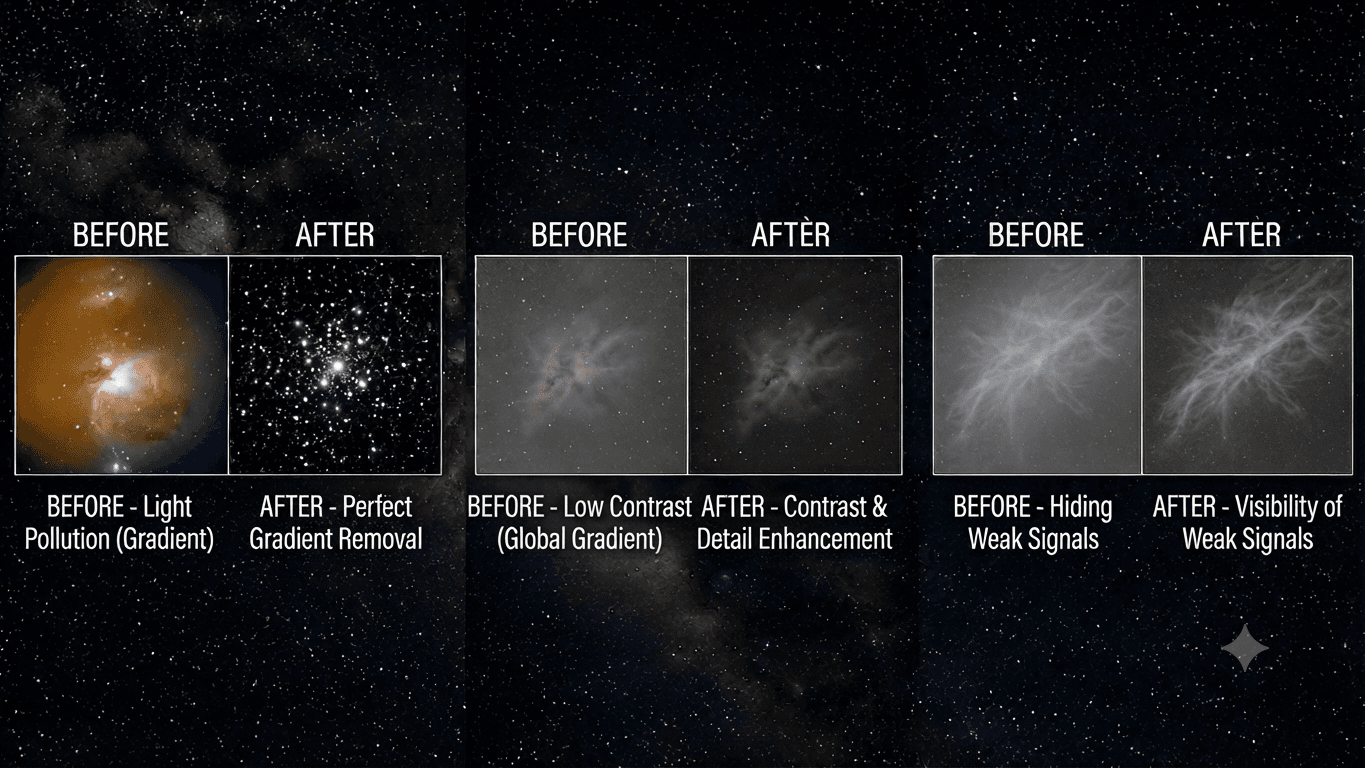
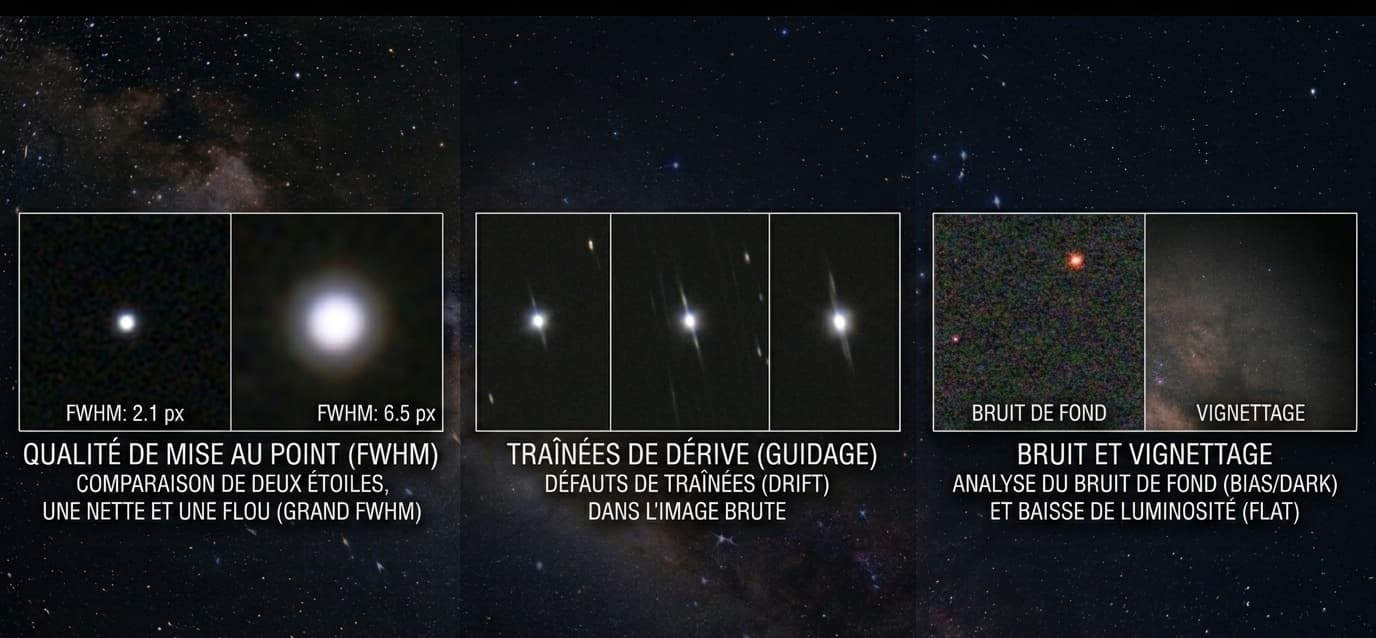
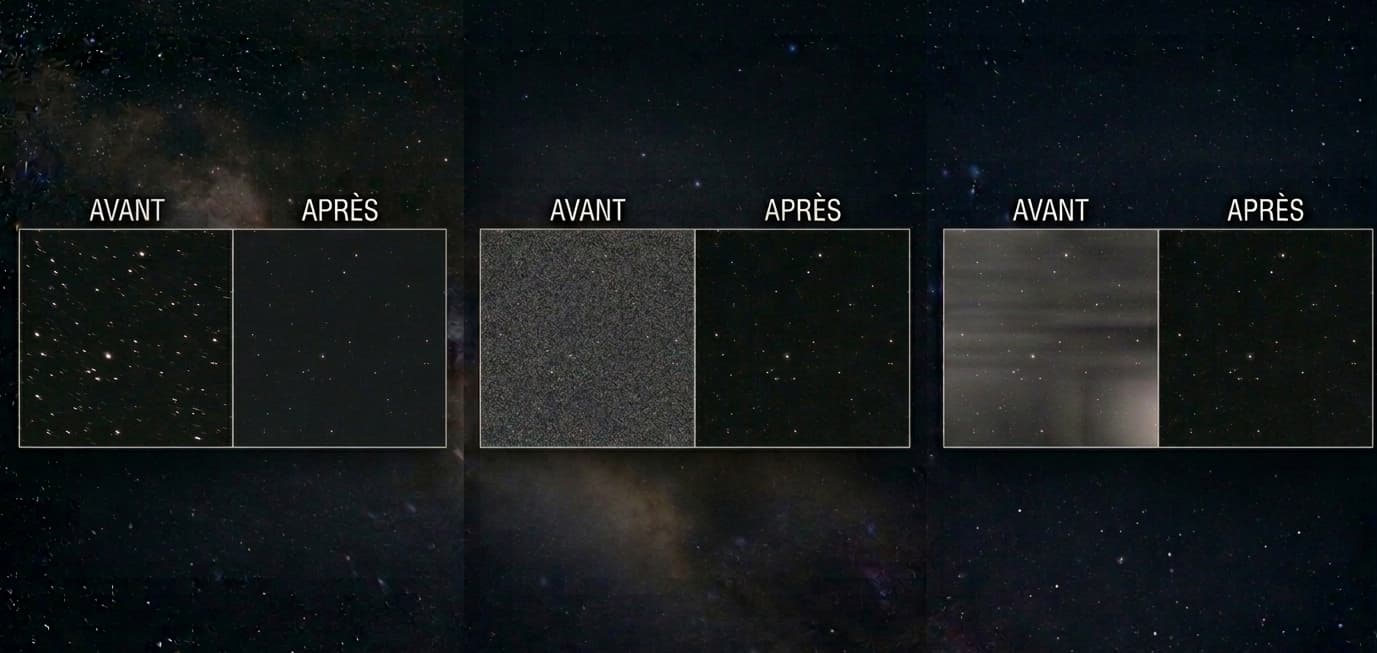
The Doc examined this image of IC1396 (processed, Altair 6nm Ha Oiii Dual Band, 120x180s). Estimated overall technical quality: 7/10. 3 defects found: Light pollution gradient (severity 3/5), Clipped stars (severity 2/5), Background chroma noise (severity 2/5).

Info
- Cible
- IC1396
- Site
- Bortle 6 · banlieue dense (saisi)
- Position
- 21h36m06s · +57°28'04"
Unfavourable conditions on paper, rescued by the filter choice. Full Moon and Bortle 6: in broadband the session would have been lost; on IC1396, an emission nebula, the 6nm Ha/OIII dual-band cuts most of the lunar and urban continuum, which is why the background remains usable. The price shows in the measurements: a 16% plane gradient remains, the classic signature of a strongly lit sky, and the background stays barely lifted off the black point (e_margin 2.25). With 120x180s you compensated through integration. To gain further, aim for a waning Moon or a target higher above the horizon, away from the dominant light source.
Setup
- Type d'image
- Traitée
- Télescope
- SkyWatcher Quattro 150P
- Caméra
- Player One Ares-C Pro
- Filtre
- Altair 6nm Ha Oiii Dual Band
- Monture
- EQ6-R Pro
- Exposition
- 120x180s
- Phase de lune
- 100%
- Seeing
- 3.5"
- FOV
- 1.23°
A coherent, well-mastered combination. The Quattro 150P gives 1.23deg of field, framing the Elephant Trunk (IC1396A) as a close-up without cutting it: a deliberate choice of detail over wide view, and it works. The measured FWHM around 3 px with round stars out to the corners shows the coma corrector and backfocus are well set, and that the EQ6-R Pro tracks cleanly over 180s. The 6nm dual-band is the right filter for this emission target under Moon. One point to watch: the background stays weakly lifted off the black point, suggesting slightly longer exposure or higher gain if the seeing allows.
The diagnosis in detail
The diagnosis is broadly positive. The aberration inspector finds nothing to fault: elong 1.12 at centre against a field floor of 1.07, corner/centre FWHM ratio of 1.125, horizontal and vertical asymmetries under 0.04, and a PA dispersion of 47.8deg that marks round stars with no preferred direction. In other words: no tilt, no backfocus error, no coma, no tracking drift. On an f/4 Newton with corrector, that is a clean result validating collimation, spacing and guiding over 180s at once.
What remains comes from the sky and the processing, and the three points are linked. The measured 16% gradient at 19deg is the direct trace of the full Moon and Bortle 6: the dual-band did its job but cannot neutralise such strong background illumination, and the extraction in processing did not flatten it all. That high background, barely lifted off the black point (e_margin 2.25), in turn explains why chromatic mottling surfaces when saturation is pushed. The clipped stellar cores are a separate, purely dynamic-range issue, and the easiest to fix.
Comparison with the DSS confirms that all the dark nebular structures and filaments are real: nothing flagged here is IFN mistaken for an artefact.
Priority actions
- Re-run gradient extraction on the master (GraXpert AI or DBE degree 2) to remove the 16% background tilt
- Soften the sky background: chroma noise reduction and slight desaturation below a luminance threshold
- Add a short-exposure set to rebuild the bright star cores in HDR
- Schedule future sessions away from full Moon to improve the starting SNR