Astrophotography diagnosis of NGC 2024 (Flame Nebula): Astigmatism and residual hot and cold pixels
MasterH-?300s28 juil. 2025
The Doc examined this image of NGC 2024 (Flame Nebula) (master, H-?, 300s). Estimated overall technical quality: 7/10. 2 defects found: Astigmatism (severity 2/5), Residual hot and cold pixels (severity 1/5).
&w=1920&q=75)
Info
- Cible
- NGC 2024 (Flame Nebula)
- Date
- 28 juil. 2025, 22:29
- Lune
- Gibbeuse décroissante 82.2% (sous l'horizon)
- Site
- Bortle 3 · rural peu pollué (VIIRS)
- Position
- 18h20m44s · -16°10'25"
Excellent conditions for this target. Bortle 3 delivers a very dark background and favorable SNR, and the 82% gibbous moon is below the horizon so without impact, all the more so since separation is 99.5 degrees. For an emission nebula shot in Hα, this context is near ideal: no lunar gradient or notable pollution, which explains the clean master background. Nothing to change on the conditions side; these nights should be prioritized for accumulating integration on light-pollution-resistant narrowband.
Setup
- Type d'image
- Master
- Télescope
- SkyWatcher 150 PDS Quattro
- Caméra
- ZWO ASI585MM Pro
- Filtre
- H-?
- Exposition
- 300s
- FOV
- 1.23°
Coherent, well-sized setup. The Newton 150 PDS Quattro f/4 with the ASI585MM (2.9 um pixels) gives fine sampling, and the 1.23 degree field frames NGC 2024 comfortably with room for surrounding nebulosity (IC 434/Horsehead nearby). The central FWHM ~3.5 px is decent but a touch soft for this resolution, pointing to the coma corrector adjustment: a perfect backfocus would tighten stars and reduce edge astigmatism. The 300s Hα exposure suits this dark sky.
The diagnosis in detail
This Hα master is well executed. Tracking is flawless (no directional elongation, scattered PA indicating fundamentally round stars at center) and the Bortle 3 sky with moon below horizon yields a clean, gradient-free background, confirmed by the background map (+60% variation attributed to the nebula, non-optical profile). The Flame Nebula is well resolved with its sharp central dark dust lanes.
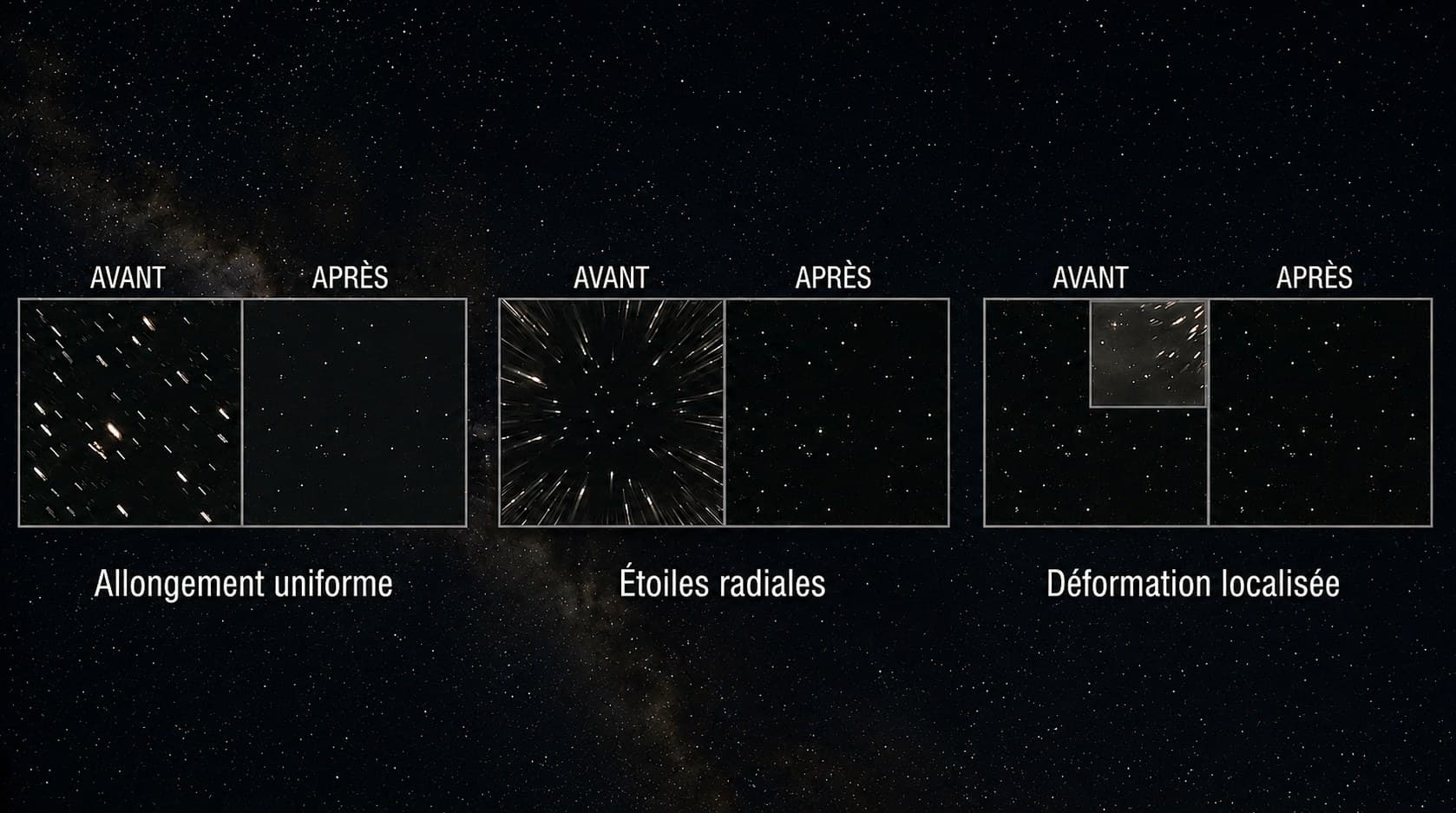
The only optical point is mild field astigmatism: the center is sharp (elong 1.06, FWHM 3.5 px) but stars progressively stretch toward the corners (elong 1.25 bottom-left) without strong FWHM increase, the typical signature of a slightly imperfect coma corrector spacing on an f/4. This is not tilt (no diagonal asymmetry) nor pure coma (no clear radial commas). The impact remains modest and correctable at acquisition.
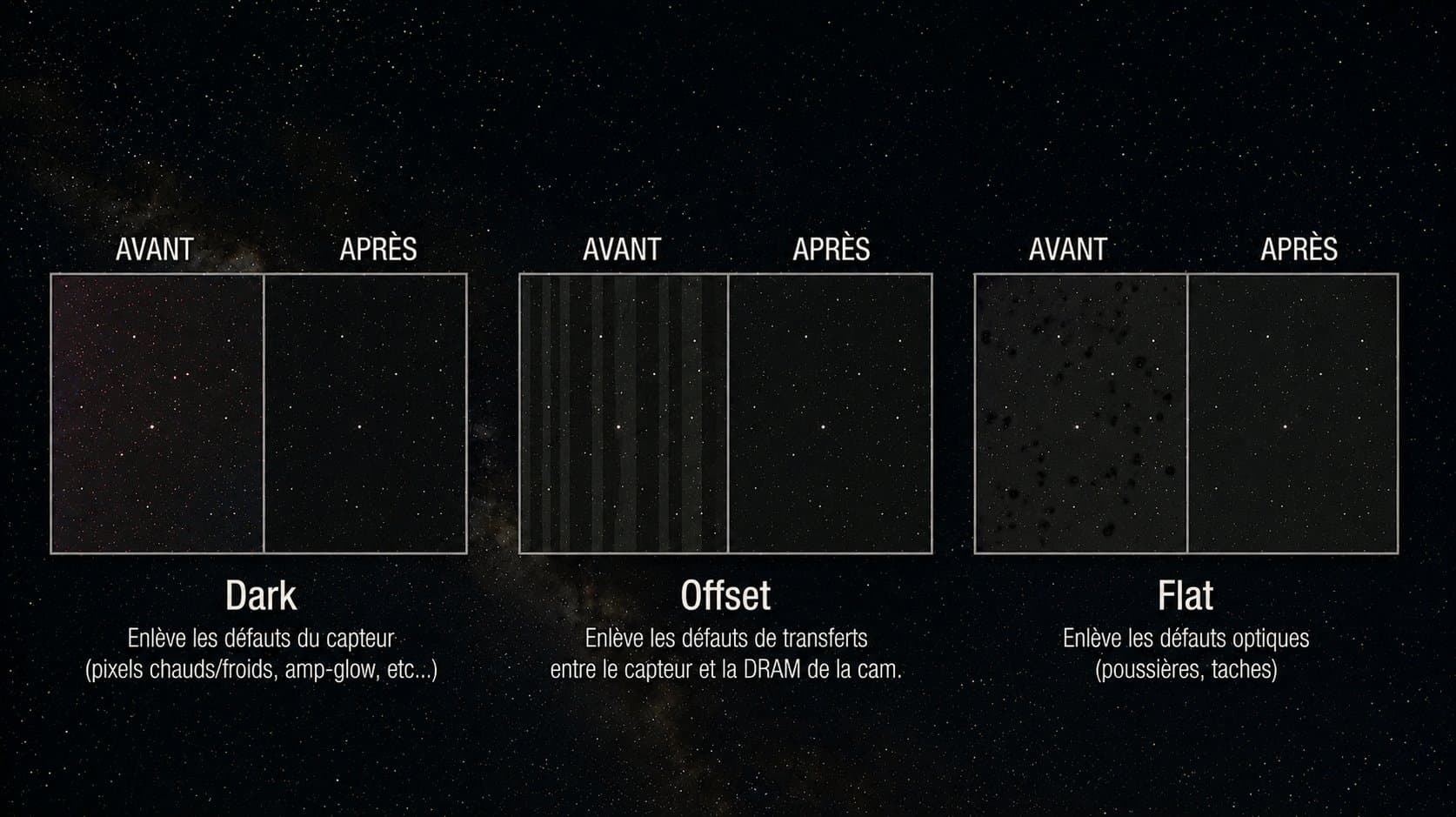
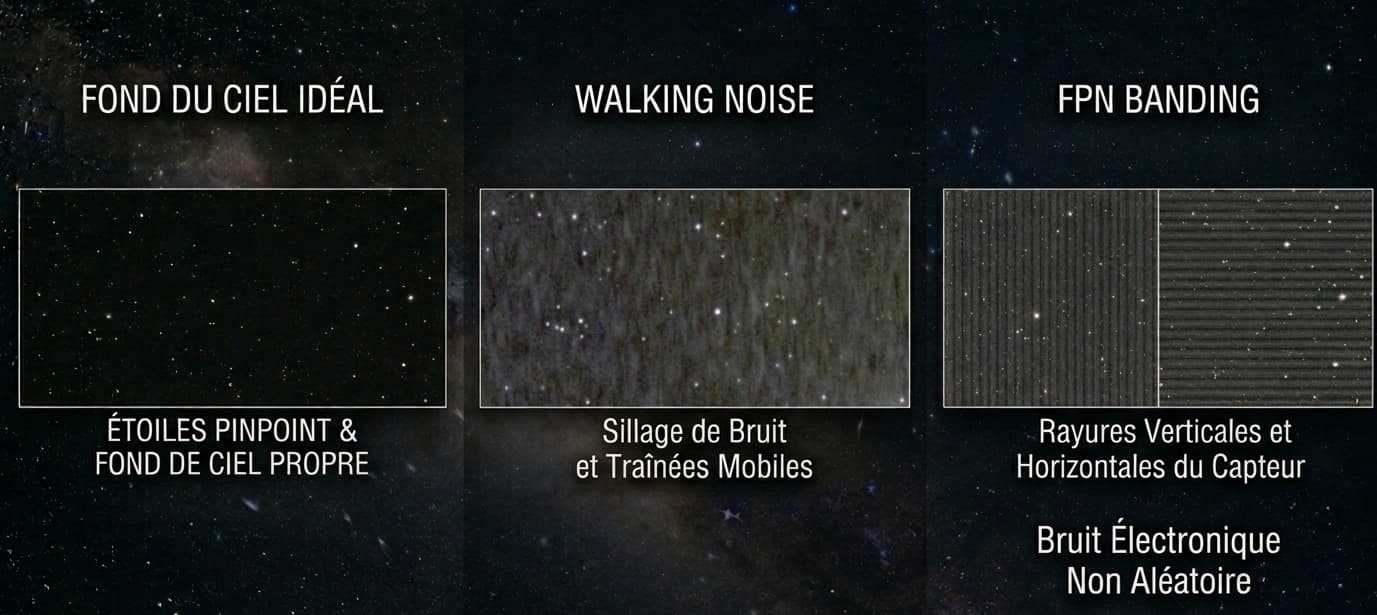
On calibration, a few residual hot pixels remain in the background, a sign of perfectible darks or insufficient dithering. Nothing blocking: the master is fully usable for SHO stacking or monochrome Hα work.
Priority actions
- Adjust the coma corrector backfocus spacing to the millimeter to tighten edge stars and reduce field astigmatism
- Rebuild a well-matched dark library (same temperature and 300s exposure) and enable dithering to eliminate residual hot pixels
- Keep exploiting these moonless Bortle 3 nights to accumulate narrowband integration