Astrophotography diagnosis of NGC 281: Tracking drift
RawH300s18 oct. 2025
The Doc examined this image of NGC 281 (raw, H, 300s). Estimated overall technical quality: 7/10. 1 defect found: Tracking drift (severity 2/5).
&w=1920&q=75)
Info
- Cible
- NGC 281
- Date
- 18 oct. 2025, 01:20
- Lune
- Gibbeuse croissante 89.5% (sous l'horizon)
- Site
- Bortle 3 · rural peu pollué (VIIRS)
- Position
- 0h52m44s · +56°40'57"
Excellent conditions for this target. Bortle 3 guarantees a dark background and good SNR, and the 89.5% gibbous Moon is below the horizon, so it has no impact despite its high illumination. The 114.9 deg separation would be comfortable anyway. In Ha at 300s the background naturally stays close to the black point (e_margin 1.69): this is expected for narrowband, not underexposure. You are making good use of a clean night, ideal for stacking Ha signal on this HII region.
Setup
- Type d'image
- Brut
- Télescope
- SkyWatcher 150 PDS Quattro
- Caméra
- ZWO ASI585MM Pro
- Filtre
- H
- Exposition
- 300s
- FOV
- 1.23°
Setup well matched to NGC 281. The 150 PDS Quattro (600mm focal length) with the ASI585MM yields a 1.23 deg field that frames the nebula comfortably with margin all around, a good compositional choice. Sampling lands around ~1.3"/px, ideal under typical seeing, confirmed by the measured ~3px FWHM (stars neither over- nor under-sampled). The Ha filter is perfectly suited to this emission region. Gain 252 is high but consistent with a narrowband exposure, sensor temperature at -10C is healthy, offset 15 with no dark clipping.
The diagnosis in detail
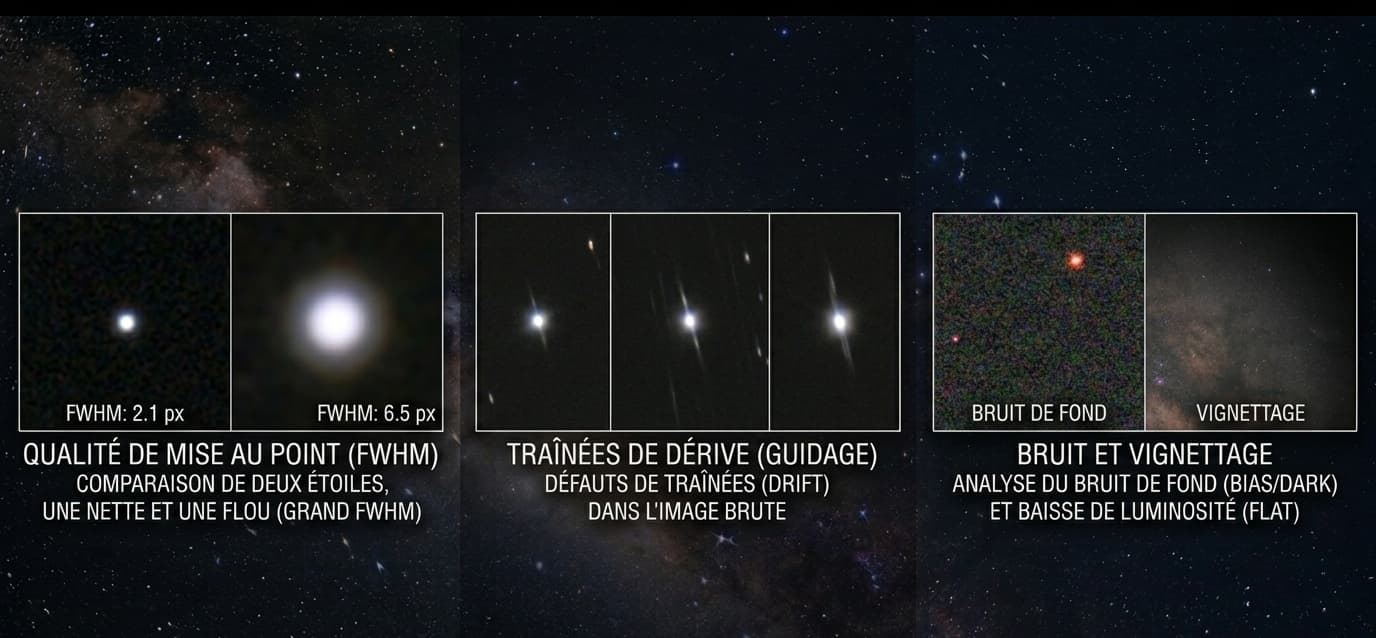
The PSF panel is reassuring: FWHM between 2.9 and 3.3px across the nine zones, a corner/center ratio of only 1.12 and negligible horizontal/vertical asymmetry. This rules out any field optics defect (no tilt, no backfocus, no coma) on this 150 PDS. The cyan ellipses fit the stars well, so the measurement is reliable.
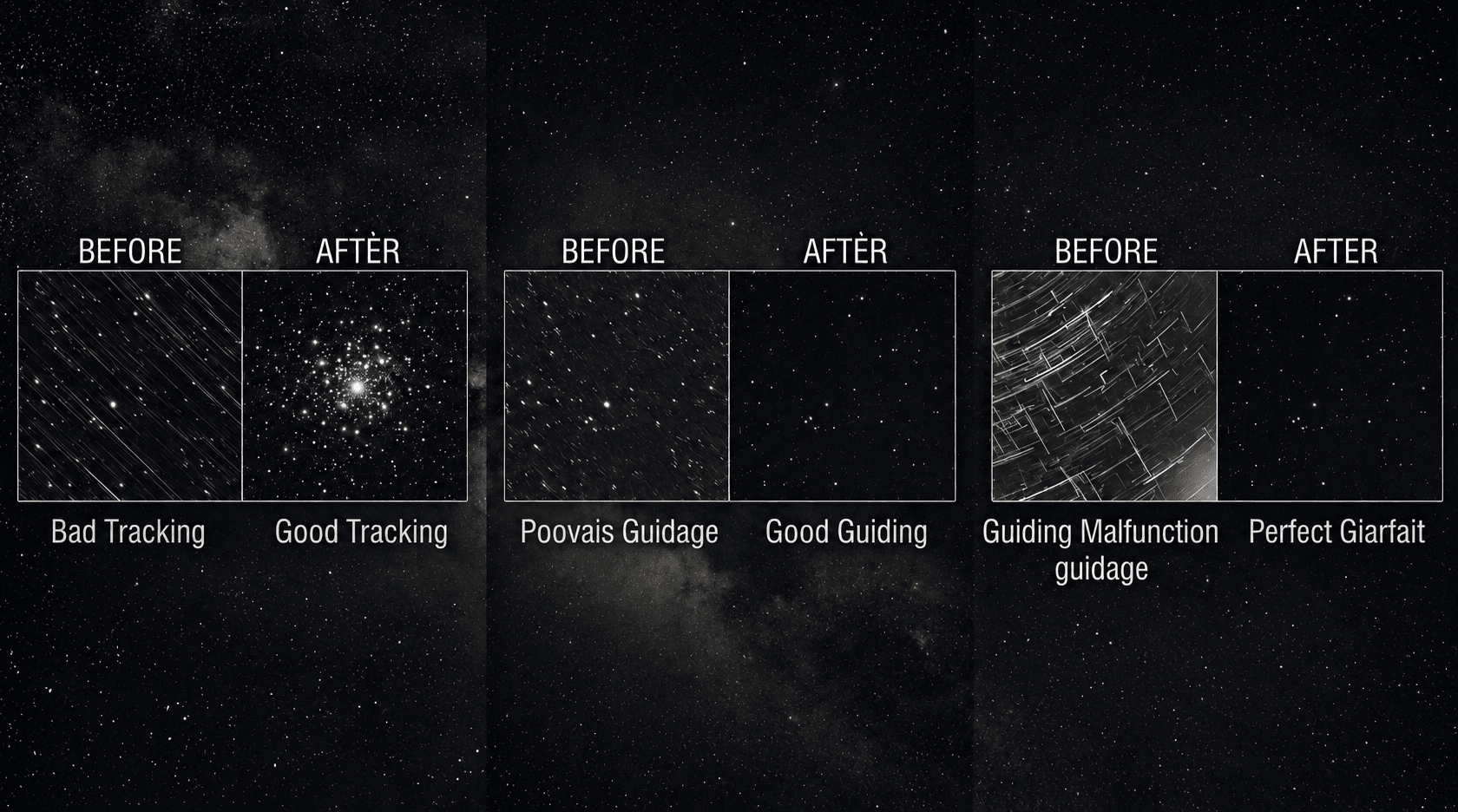
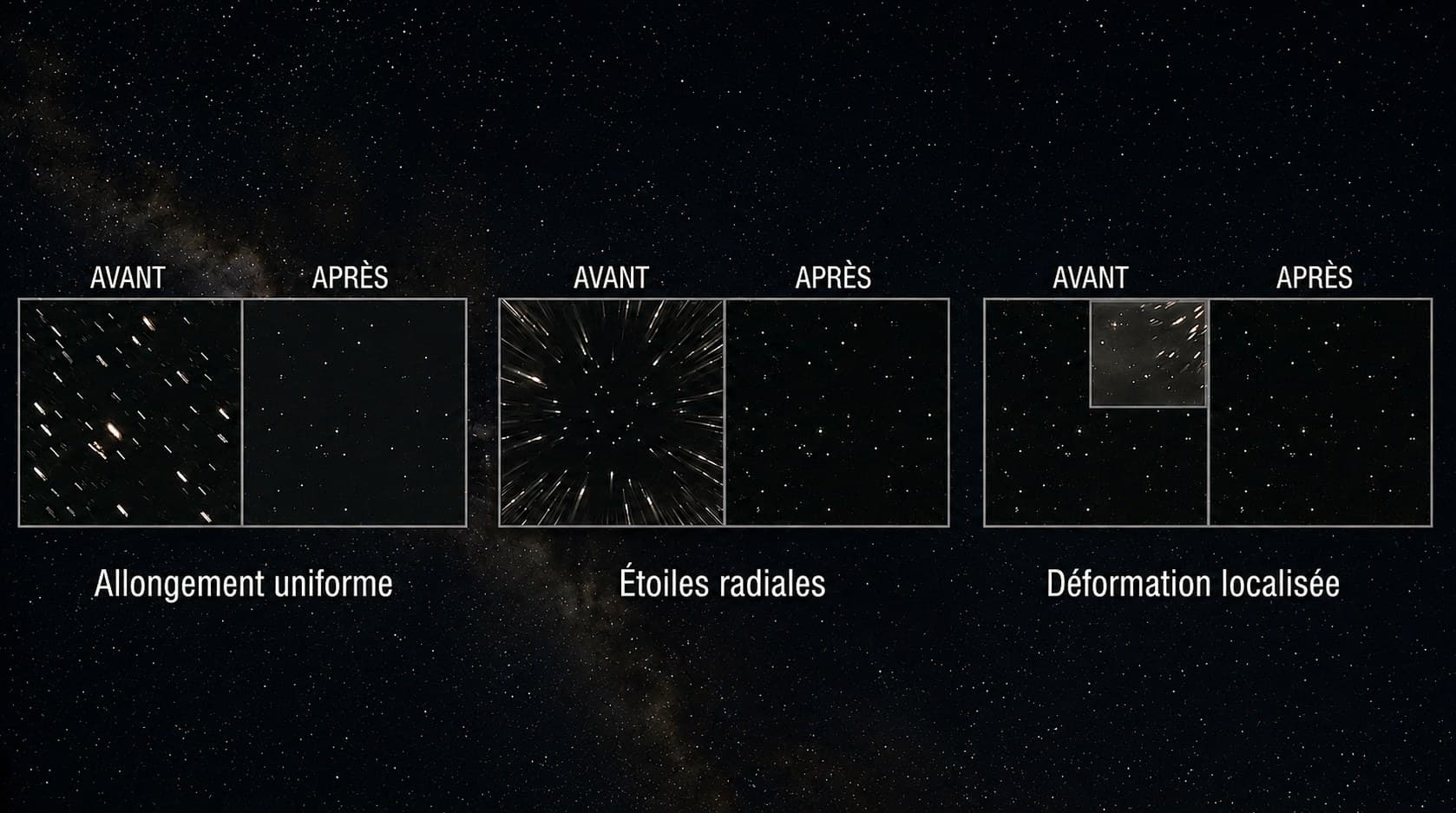
The only sign worth noting is a central elongation of 1.18 (field floor 1.10) with a very homogeneous PA from zone to zone (dispersion 8.1 deg). The fact that the elongation is present all the way to the center, in a single direction, excludes an optical cause and points to a slight tracking drift on the 300s exposure. It is mild and harmless on an isolated sub: sigma rejection during stacking and careful guiding will remove it.
On the background side, the +34% radial falloff with rotational symmetry is the normal optical vignetting of the tube, to be corrected with flats, not a defect. No significant oriented gradient. In short, a healthy sub that only needs a little attention on tracking.
Priority actions
- Tighten tracking: check polar alignment and autoguiding to eliminate the slight drift on 300s exposures
- Acquire flats to correct the tube's optical vignetting
- Stack enough subs with sigma rejection to mitigate residual drift and noise