Astrophotography diagnosis of NGC 6960: Tracking drift
RawH300s17 oct. 2025
The Doc examined this image of NGC 6960 (raw, H, 300s). Estimated overall technical quality: 6/10. 1 defect found: Tracking drift (severity 3/5).
&w=1920&q=75)
Info
- Cible
- NGC 6960
- Date
- 17 oct. 2025, 19:21
- Lune
- Gibbeuse croissante 87.5% (sous l'horizon)
- Site
- Bortle 3 · rural peu pollué (VIIRS)
- Position
- 20h46m10s · +30°36'54"
Excellent conditions for this target: Bortle 3 gives a very dark background and good SNR on an emission nebula. The Moon, though gibbous at 87.5%, is below the horizon and 131.6 degrees from the target, so it has no impact on this sub. In Ha, even a high Moon would have been tolerable, but here you are in ideal conditions. Nothing to fault about the sky: take advantage of this transparency to accumulate exposure and bring out the fine filaments of the Veil.
Setup
- Type d'image
- Brut
- Télescope
- SkyWatcher 150 PDS Quattro
- Caméra
- ZWO ASI585MM Pro
- Filtre
- H
- Exposition
- 300s
- FOV
- 1.23°
Well matched setup: the Quattro 150 PDS (600mm) with the ASI585MM gives a 1.23 degree field that frames the western segment of the Veil (NGC 6960 and its star 52 Cygni) properly, even if the object overflows a bit, which is normal for this large structure. The Ha filter is relevant in Bortle 3 to isolate emission filaments. Gain 252 and offset 15 suit the ASI585, with no dark clipping (0%). The background/black-point margin (e_margin 1.85) is low but this is NORMAL in narrowband at 300s, the background logically stays low. Sensor temp -10C is healthy.
The diagnosis in detail
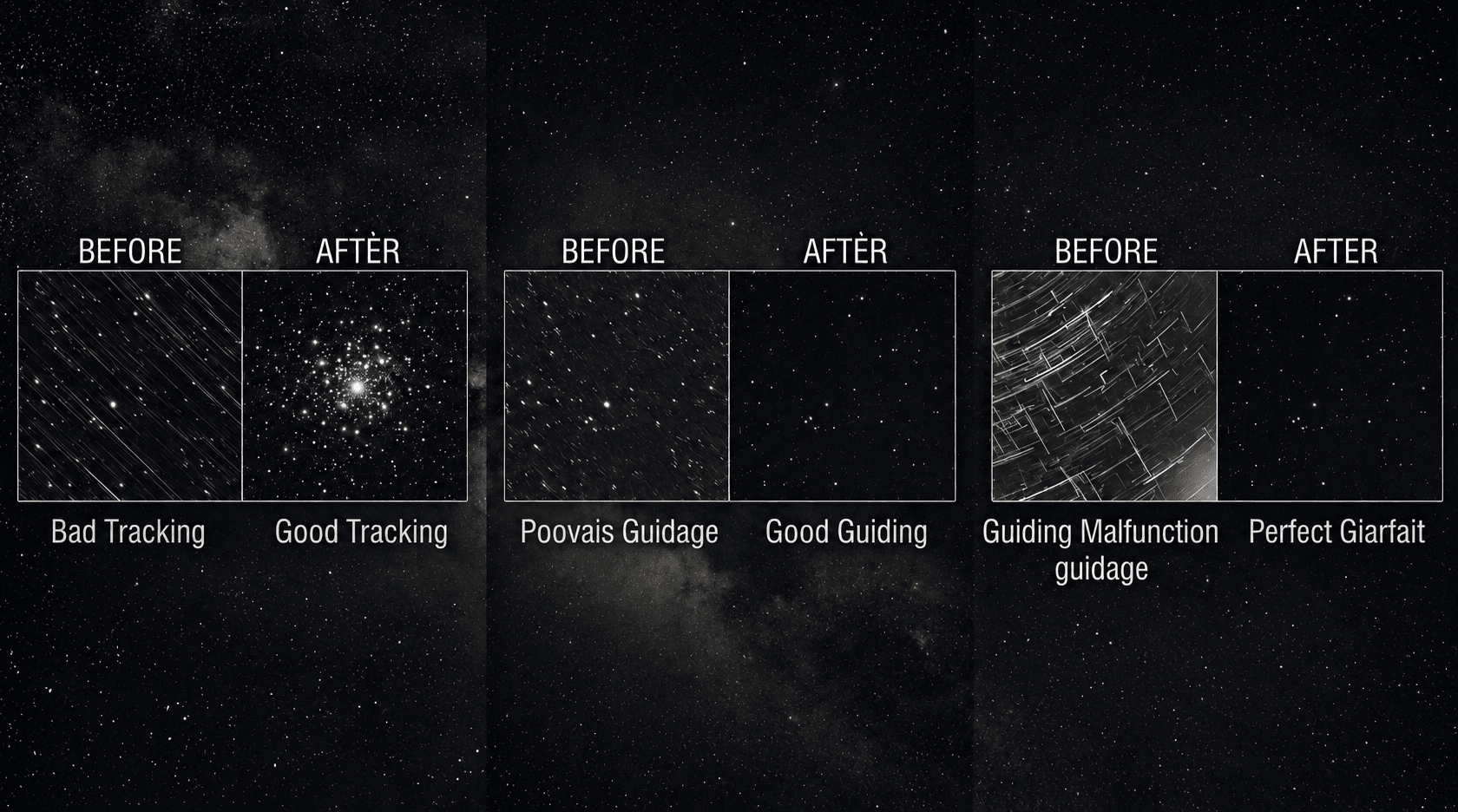
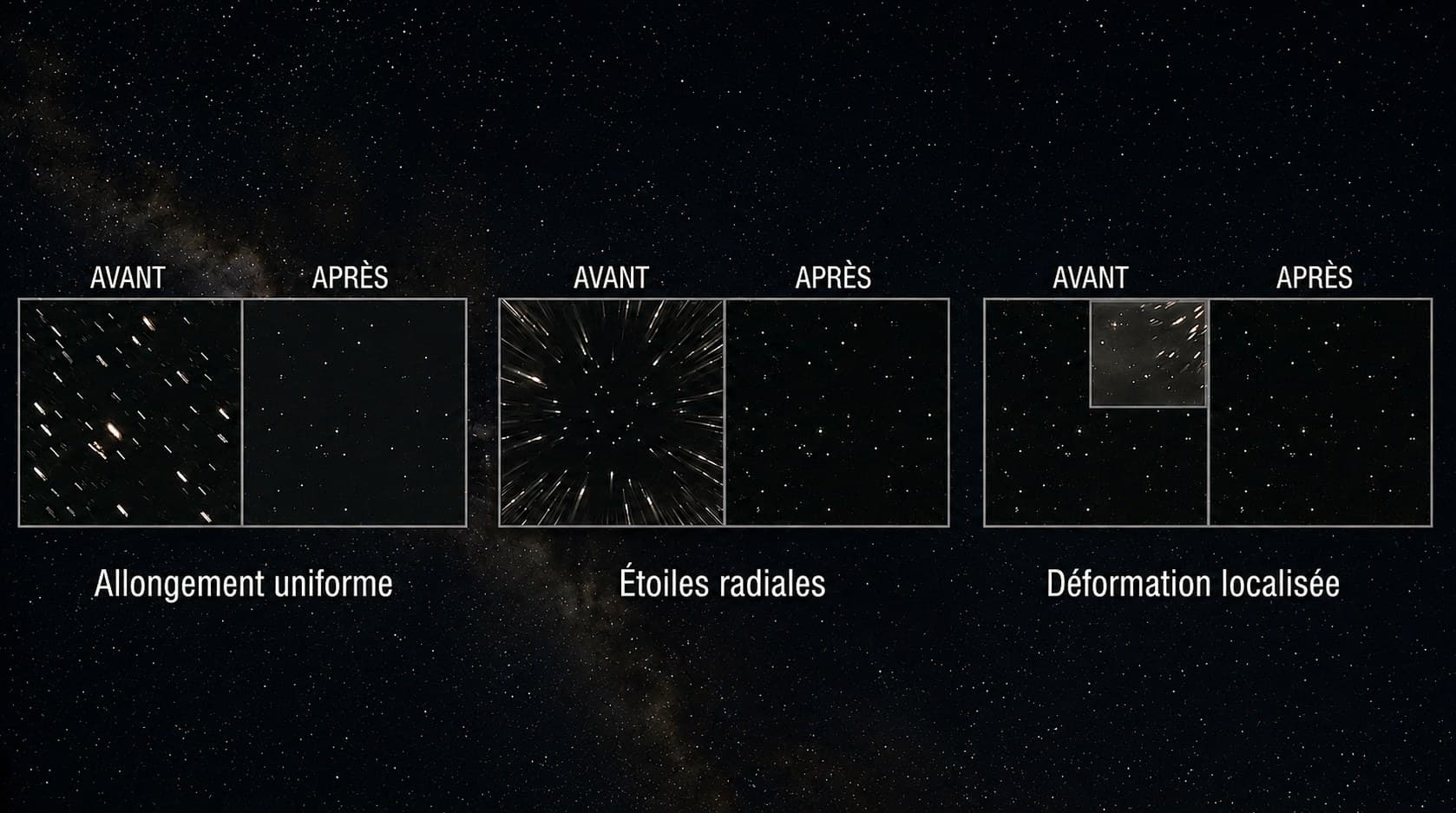
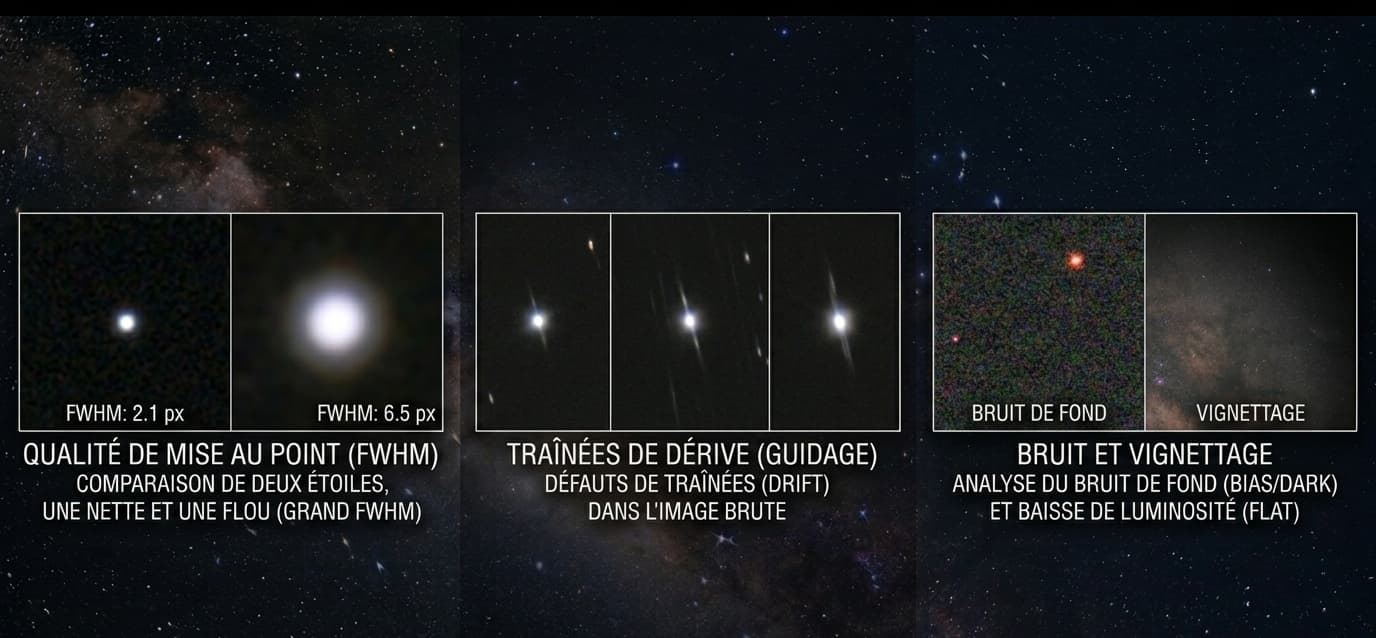
The image is overall good for a narrowband sub. The aberration plate confirms healthy optics: the corner/center FWHM ratio is only 1.16 and the horizontal/vertical asymmetries are near zero (0.03 and 0.001), so no significant tilt, backfocus or coma. The only real defect is a tracking drift: center elongation (1.62) exceeds the field floor (1.43) and above all, with a PA dispersion of only 2.9 degrees, all stars point the same direction (PA ~37 degrees). This is the signature of a steady mount drift during the 300s, not an optical issue.
Concretely, this drift is the sole factor degrading star sharpness here. The stars are not catastrophic (elong 1.4 to 1.7), the image remains usable, but stacking subs like this will propagate the elongation. The most likely cause is absent or imperfect guiding, or imperfect polar alignment.
The sky background is clean (negligible gradient and vignetting, low R2, nothing to correct on the flat side for this uncalibrated sub). The nebulosity faithfully matches the DSS, so no gradient/IFN confusion. By resolving the tracking and accumulating exposure, you will get a very nice base on this Veil.
Priority actions
- Fix tracking: PHD2 autoguiding aiming for RMS < 1 px, and refine polar alignment
- Reduce sub exposure to 120-180s if the mount cannot hold 300s without drifting
- Accumulate more Ha subs and discard the most drifted ones at integration
- Enable dithering between exposures to ease rejection at stacking