Astrophotography diagnosis of Pléiades: Light pollution gradient, clipped stars and 1 other
Processed360x20s
The Doc examined this image of Pléiades (processed, 360x20s). Estimated overall technical quality: 6/10. 3 defects found: Light pollution gradient (severity 3/5), Clipped stars (severity 3/5), Background chroma noise (severity 2/5).
&w=1920&q=75)
Info
- Cible
- Pléiades
- Position
- 3h46m60s · +24°07'12"
Lunar conditions were ideal: a 3% waxing crescent, so no moon contribution to the sky background. The measured gradient therefore comes entirely from local light pollution or a low altitude above the horizon. The Pleiades are a broadband target, very sensitive to sky background: this is the right lunar window for them, but shoot them as high as possible and point away from the light source. The reported seeing of 5 is mediocre, which partly explains the rather puffy bright stars.
Setup
- Type d'image
- Traitée
- Télescope
- Seestar s50
- Monture
- AZimutale
- Exposition
- 360x20s
- Phase de lune
- Premier croissant (3 %)
- Seeing
- 5
- FOV
- 1.50°
The Seestar s50 fits well here: a 1.50 degree field frames the main cluster with the Merope and Maia nebulosity, even though the Pleiades spill slightly beyond the frame, which remains an acceptable composition. 360 subs of 20s, so 2 hours of signal, are enough to pull out the reflection nebulosity, but 20s subs on magnitude 3 stars inevitably saturate the cores: that is a structural limit of the instrument on this target. An extra set of short exposures blended in HDR is the only real remedy. The alt-az mount holds up fine at this sub length, no tracking defect visible.
The diagnosis in detail
The diagnosis comes down to two independent points, one in acquisition, one in processing. On acquisition, the sky background carries a clear linear gradient, measured at 63% amplitude oriented at 274 degrees, with a plane fitting at R2=0.96 and dominating any radial component by a factor of 39. So this is not vignetting: it is a light ramp of external origin, and with the Moon at 3% ruled out, it points to ground light pollution or a target shot too low. This gradient was clearly not removed before stretching, which bakes it into the final image and also pulls the background color toward brown-red along the left edge.
On processing, the stretch was pushed hard enough to flatten the cores of the main Pleiades into white plateaus, which costs the blue signature of those giants. The same excess contributes to bloating the star discs, an effect amplified by mediocre seeing. Finally, with a background-to-black-point margin of only 1.55, the image is not truly sky-limited and chroma noise remains visible in the dark areas.
Nothing structural: stars are round out to the corners, the Seestar calibration holds, and the file is entirely recoverable by reprocessing from the master.
Priority actions
- Remove the gradient on the linear image with GraXpert or DBE before any stretch, then neutralize the background
- Redo the stretch with a star mask to preserve the blue tint of the Pleiades cores
- Add a set of short exposures for an HDR blend of the bright stars
- Apply targeted chroma noise reduction on the sky background only
- Shoot the target higher above the horizon and away from the light pollution source
Similar diagnoses

M 33 - Triangulum Galaxy
Sensor tilt

SH2-188
Light pollution gradient

Quintet de Stephen
Light pollution gradient
Related articles
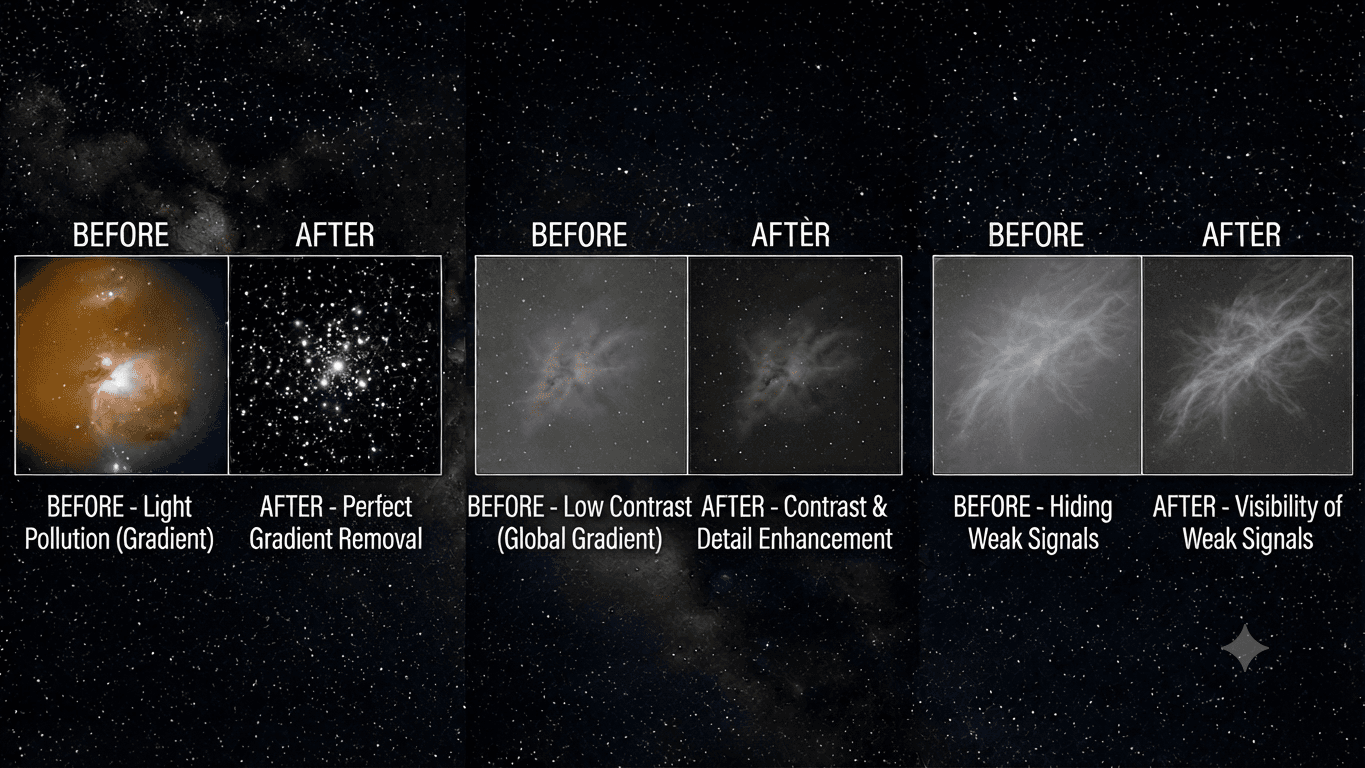 Sky background gradients in astrophotography: light pollution, Moon, and fixes
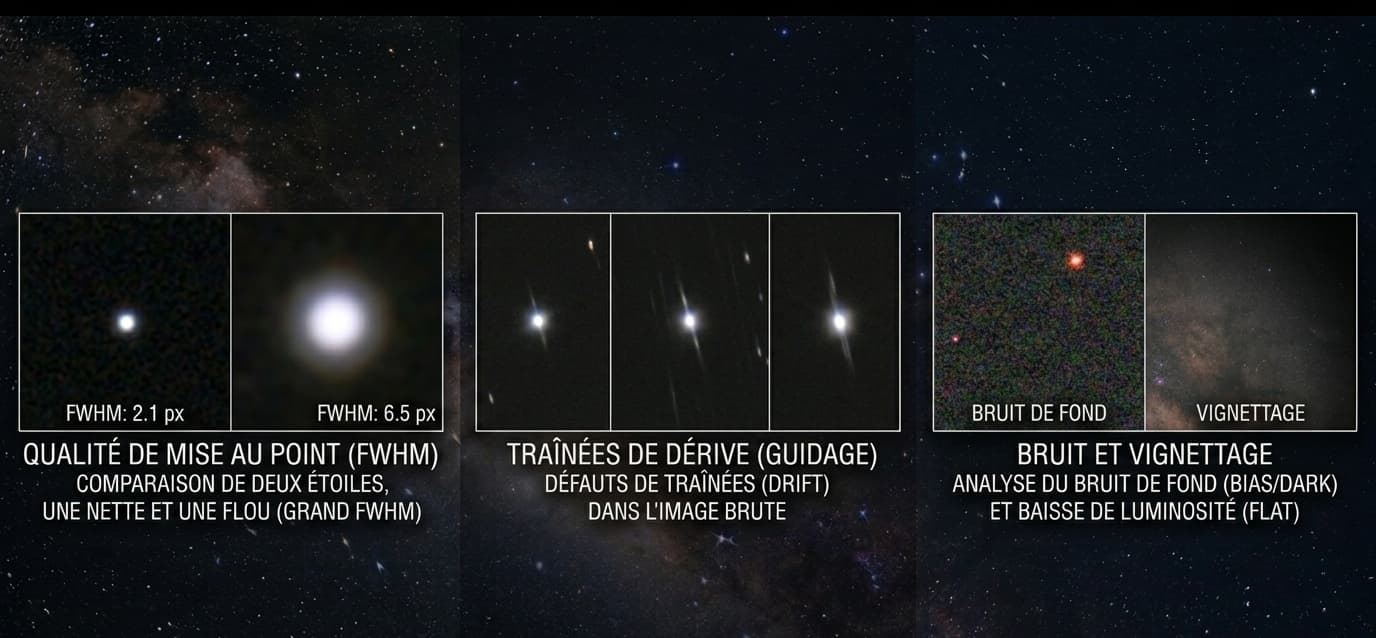 How to Analyze an Astrophoto Light Frame Before Stacking
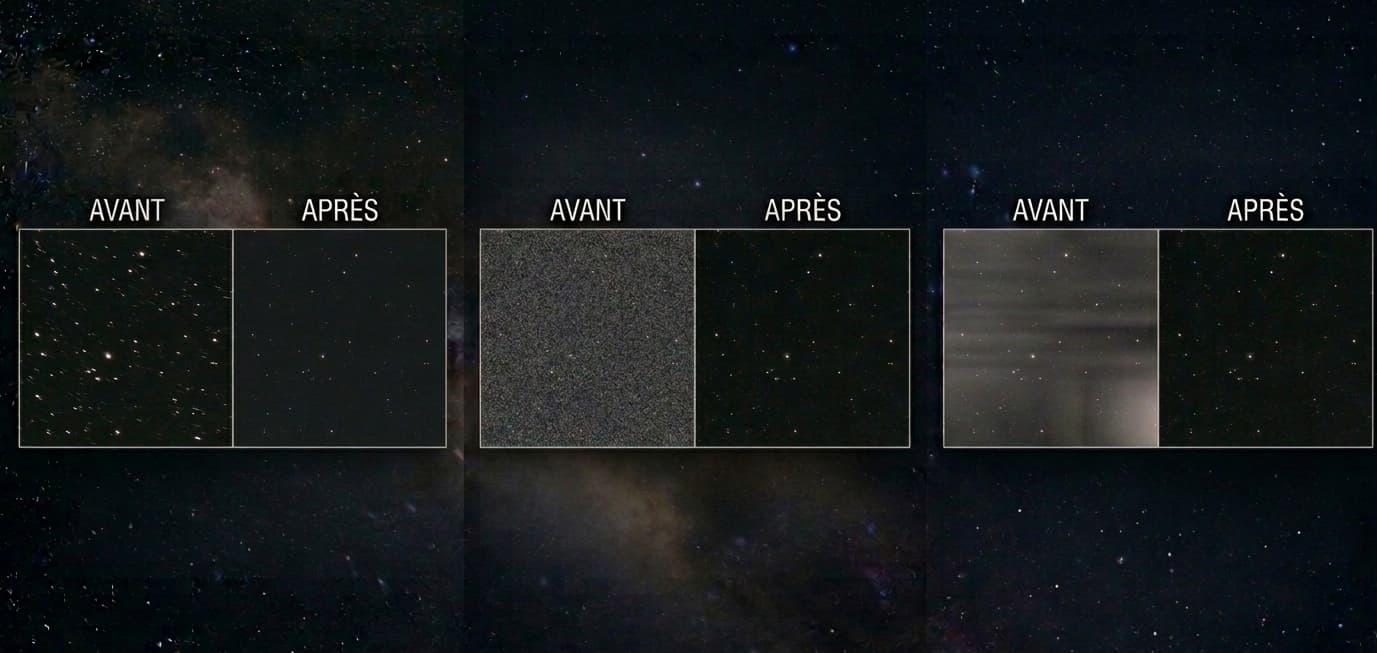 Astrophotography Problems: Solutions for Successful Images