Astrophotography diagnosis of polaris: Tracking drift, sensor tilt and 1 other
Raw4s
The Doc examined this image of polaris (raw, 4s). Estimated overall technical quality: 5/10. 3 defects found: Tracking drift (severity 3/5), Sensor tilt (severity 2/5), Light pollution gradient (severity 2/5).

Info
- Cible
- polaris
A 22% waxing crescent is marginal: at that illumination it does not seriously contaminate the background, especially on a circumpolar field usually far from it. The measured gradient (6%, oriented 145.9 deg) is therefore not lunar but terrestrial, consistent with the stray light visible at the left edge. The background to black point margin of 2.41 shows a background barely lifted: at 4s that is expected, the exposure is too short to be sky-limited in broadband. Once the mount is guided, longer exposures will markedly improve the signal to noise ratio.
Setup
- Type d'image
- Brut
- Exposition
- 4s
- Phase de lune
- Premier croissant (22 %)
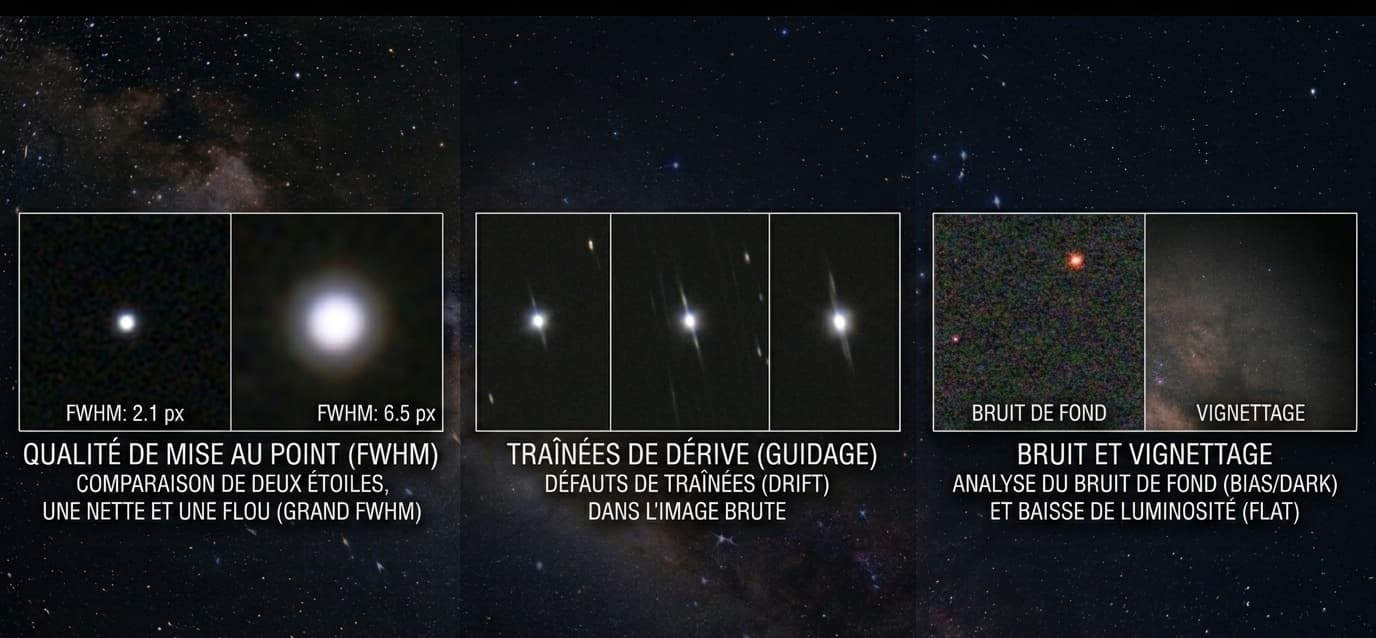
The setup data is too partial to judge optical consistency (no telescope, camera or focal length declared). What can be used: a 4s exposure on the polar field suggests a polar alignment or tracking test rather than a production run, and at that duration the monochrome sensor already records visible drift, which says a lot about the current alignment. The mean FWHM around 5 px is wide for such a short sub: part of it comes from the drift, the rest could come from focus or sampling, impossible to settle without focal length and pixel size.
The diagnosis in detail
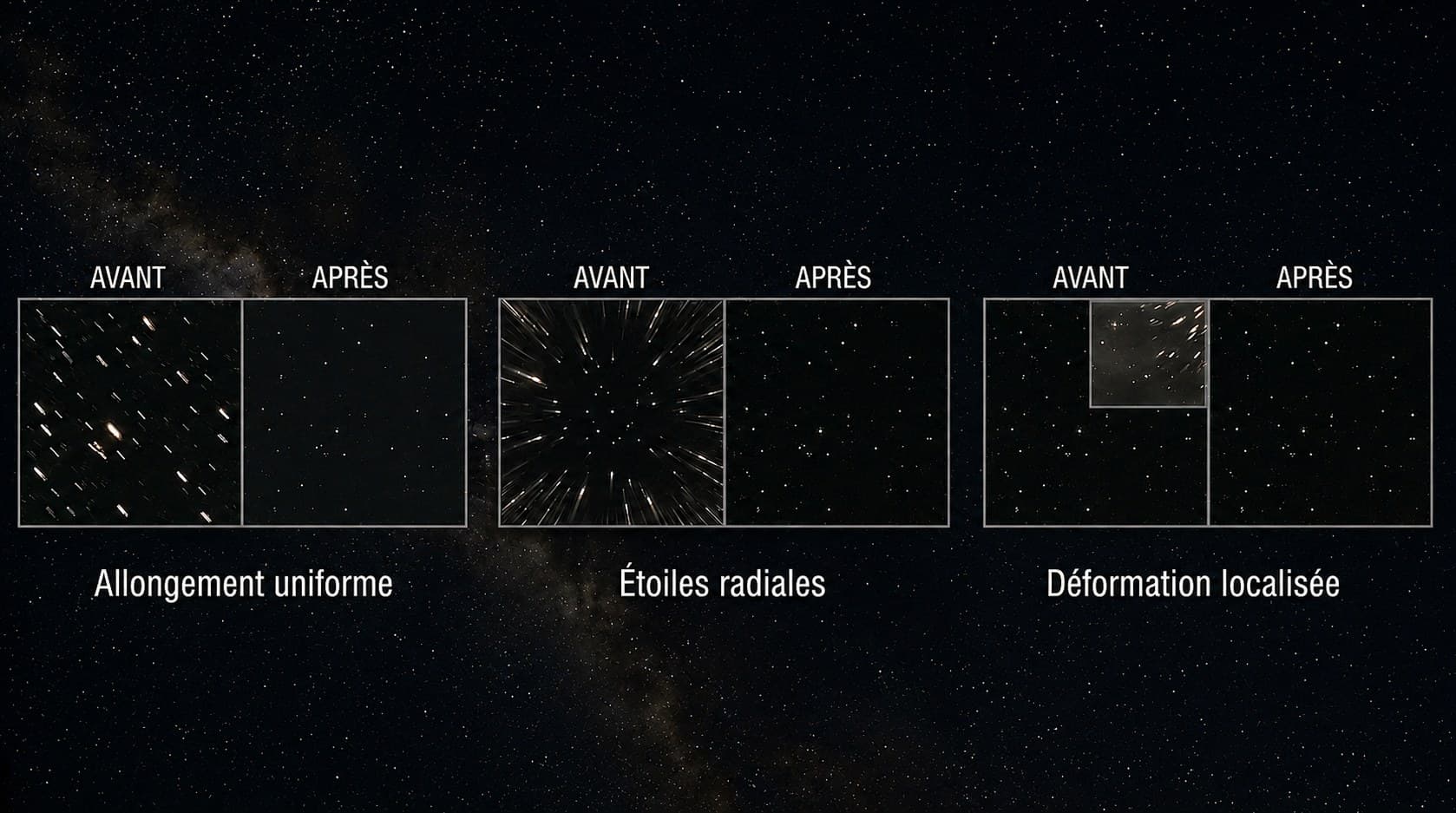
The dominant issue is tracking drift. Elongation is present at field center (1.76 against a measured floor of 1.41) and the position angle spread across the nine zones stays within 10.3 degrees: all stars run in the same direction, which rules out a field optics cause (coma or backfocus would leave the center round and vary radially). On a mere 4 second exposure, already visible drift points to clearly improvable polar alignment or a drive that binds.
Behind that issue, a second, subtler component shows up in the FWHM asymmetry: 0.177 on the horizontal axis against 0.018 on the vertical, with the left and bottom-left sides more bloated than the bottom-right corner. This looks like a slight imaging train tilt, but the corner/center ratio stays modest (1.184) and the drift blurs the reading. The measurement should be repeated on a properly guided sub to confirm and quantify this component.
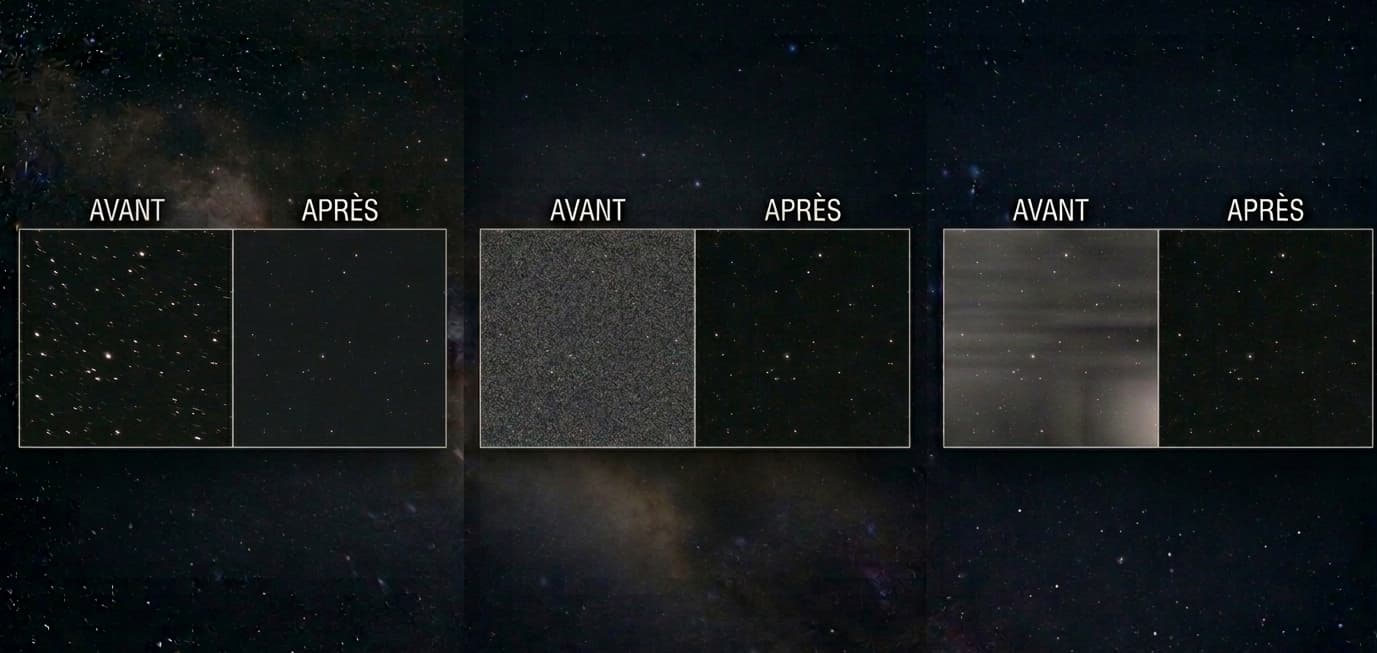
On the background, the radial model is null (0%) while the tilted plane explains the surface far better (dominance 15.39): this is not vignetting but an oriented gradient, likely tied to the stray light visibly spilling in from the left edge of the frame.
Priority actions
- Redo a careful polar alignment, then check drift on a test exposure before any acquisition
- Set up autoguiding, or stay on short exposures as long as the mount is unguided
- Block the stray light source entering from the left edge and extend the dew shield
- Re-run the aberration inspector on a guided sub to isolate and quantify the tilt component
- Plan a gradient removal (GraXpert or DBE) in processing once the subs are stacked