Astrophotography diagnosis of SH2-129: Flat frame mismatch, noise / underexposure and 3 others
ProcessedSvbony sv220 300 sec
The Doc examined this image of SH2-129 (processed, Svbony sv220, 300 sec). Estimated overall technical quality: 3/10. 5 defects found: Flat frame mismatch (severity 4/5), Noise / underexposure (severity 4/5), Background chroma noise (severity 3/5), Green cast (severity 3/5), Framing issue (severity 3/5).

Info
- Cible
- SH2-129
- Site
- Bortle 5 · banlieue résidentielle (saisi)
Conditions were frankly unfavorable for SH2-129. A 69% waxing gibbous Moon strongly raises the sky background, and in Bortle 5 you stack two pollution sources on one of the faintest emission nebulae in the sky. The SV220 dual-band helps, it cuts the continuum and limits lunar damage, but it does not compensate everything: on such a tenuous target the Moon directly eats into the accessible Ha/OIII contrast. The measurements show it: e_margin 4.03, below the sky-limited threshold, so the background stays poorly lifted despite 300s subs. For this target, aim for nights with the Moon below the horizon or under 20% illumination, and favor high meridian altitude.
Setup
- Type d'image
- Traitée
- Télescope
- Skywatcher quattro 200/800
- Caméra
- Zwo asi 2600mc
- Filtre
- Svbony sv220
- Monture
- Eq6r
- Exposition
- 300 sec
- Phase de lune
- Waxing gibbous (69 %)
- Seeing
- 4
The setup is sound in principle. The Quattro 200/800 at f/4 is fast, exactly what a faint nebula needs, and the ASI2600 with its 3.76 micron pixels gives about 0.97 arcsec per pixel. That is slightly oversampled for a stated seeing of 4, which the 3.3 px FWHM confirms: binning 2 at integration would buy SNR without losing any real detail. The SV220 dual-band is the right choice on an emission target under moonlight. The EQ6-R holds up perfectly, stars stay round at 300s. So the weak link is not the hardware but the flat calibration and the accumulated integration time.
The diagnosis in detail
Let us start with what works, because it is solid: the PSF panel gives 3.32/2.69 px at center for an elongation of 1.23, barely above the monochrome floor, and 2.79/2.28 on the top edge. Translation: correct focus, controlled tracking on 300s subs with the EQ6-R, and no meaningful field aberration in the measured zones. The Newtonian and the guiding are not at fault.
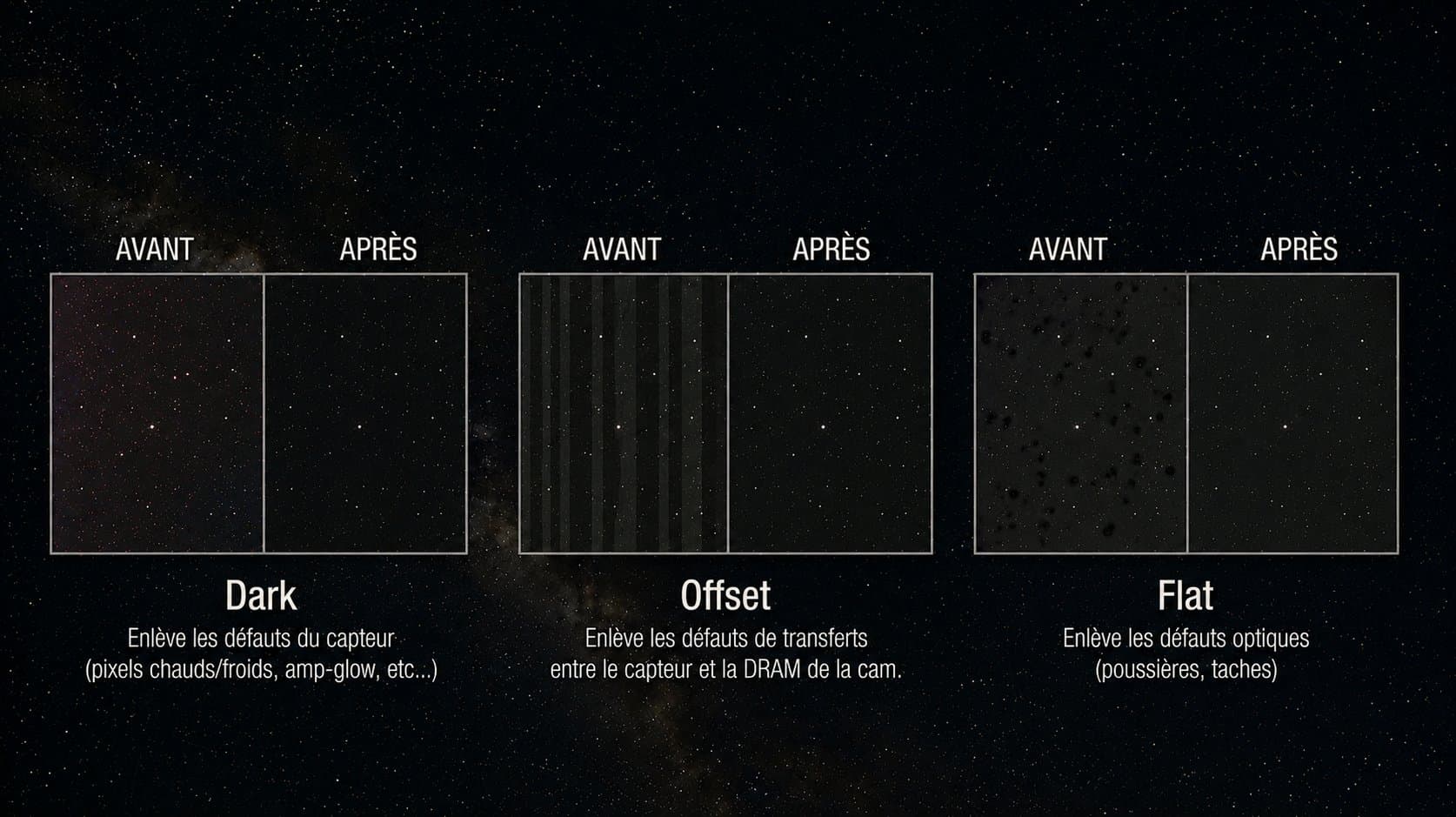
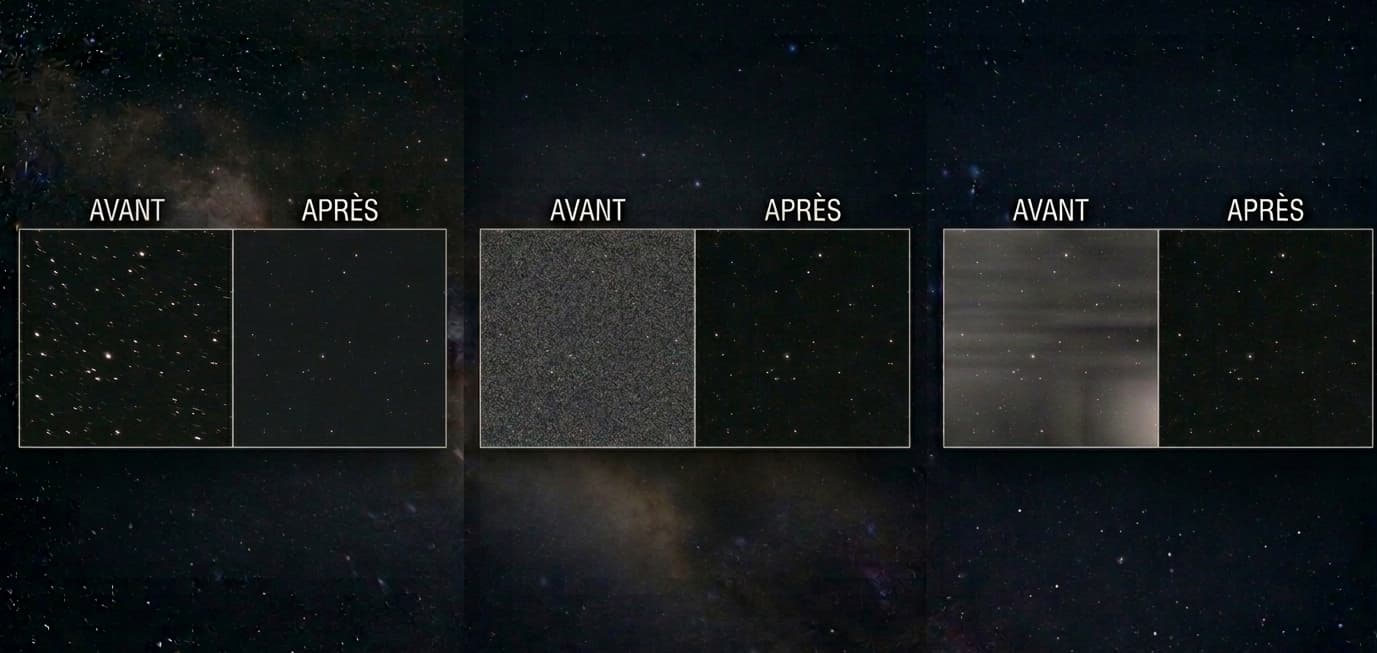
The structuring defect is calibration. The background map shows a 32% rise from center to edges with an R2 of 0.93, azimuthal anisotropy of 0.02 and a plane/radial dominance of 0.07: that is a pure figure of revolution, so not a pollution gradient but genuine flat over-correction. The master flat divided harder than the real vignetting, probably because the optical train or focus moved between flats and lights, or because the flats fell outside the linear range.
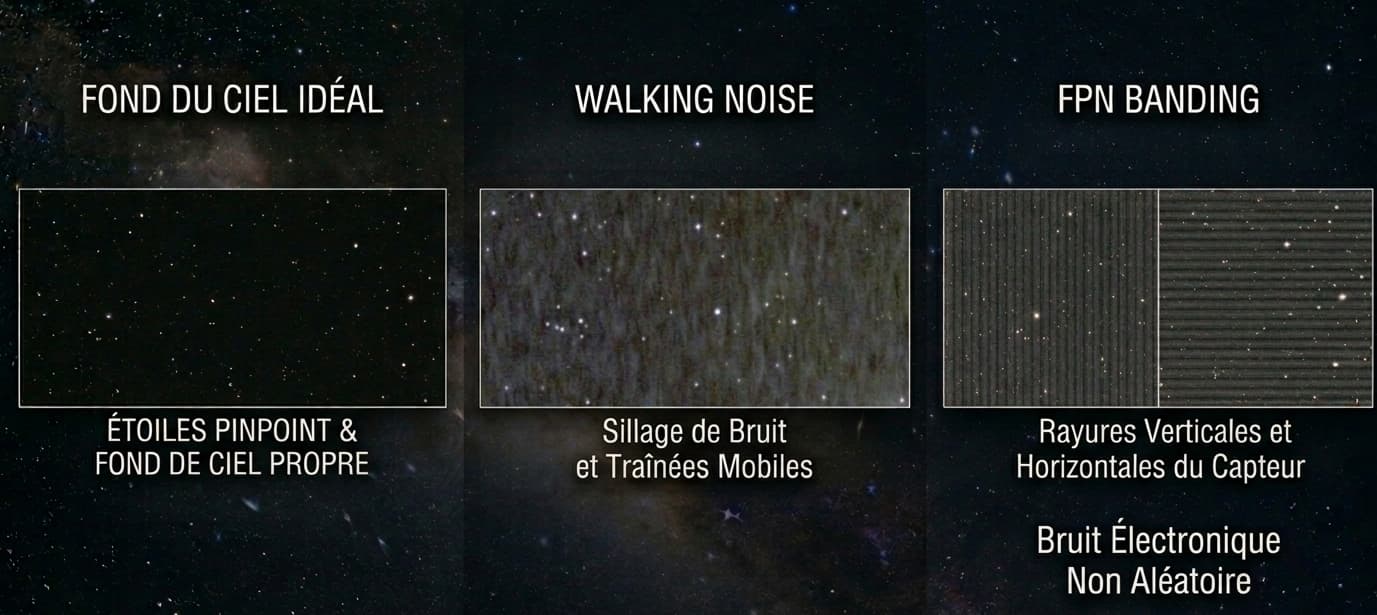
This compounds with an obvious lack of signal. With an e_margin of 4.03 and a Bowley skew of 0.9 the background is under-exposed, and the stretch needed to reveal SH2-129 lifts the luminance grain and chroma mottling. The green dominance does not help and betrays missing color calibration. Finally, the nebulosity only appears against the right edge: the framing needs rework.
Priority actions
- Reshoot the flats without disassembling the optical train and recalibrate the stack, this is what will fix the corners being brighter than the center
- Stack far more integration on SH2-129, aim for 10h or more, on moonless nights
- Reframe via plate solve to actually center SH2-129 instead of leaving it against the right edge
- Neutralize the background and apply SCNR before stretching to remove the green cast
- Stretch more gently and treat background chroma noise with a luminance mask