Astrophotography diagnosis of Voie Lactée: Astigmatism, backfocus error and 3 others
Processed300x8s
The Doc examined this image of Voie Lactée (processed, 300x8s). Estimated overall technical quality: 6/10. 5 defects found: Astigmatism (severity 2/5), Backfocus error (severity 2/5), Flat frame mismatch (severity 2/5), Green cast (severity 2/5), Background chroma noise (severity 2/5).
&w=1920&q=75)
Info
- Cible
- Voie Lactée
The moon at 3% is negligible, dark-sky conditions favorable for this rich Milky Way field. The main limiter here is not the moon but the green airglow visible top-left, common on this kind of wide-angle exposure toward the galactic horizon. The background remains usable and the dark lane contrast is well rendered, a sign of a decent sky. No lunar gradient to fear in these conditions.
Setup
- Type d'image
- Traitée
- Télescope
- Sigma 18-35mm f/1.8 DC HSM ART
- Caméra
- Nikon D5200
- Monture
- Trépied fixe
- Exposition
- 300x8s
- Phase de lune
- 3%
- Notes
- ISO1600
The Sigma 18-35 f/1.8 on a D5200 is an excellent choice to widely frame the Milky Way, which comfortably fills the APS-C field. The trade-off is optical: wide open, the corners suffer from astigmatism and field curvature (corner FWHM ~5px versus 2.7-4.5 at center). Stopping down to f/2.8 would clearly tighten edge stars at the cost of some signal. On exposure, 300x8s on a fixed tripod is consistent for freezing stars without trailing, but e_margin=2.53 indicates a background barely lifted off the black point: longer subs on a small tracking mount would gain a lot of SNR.
The diagnosis in detail
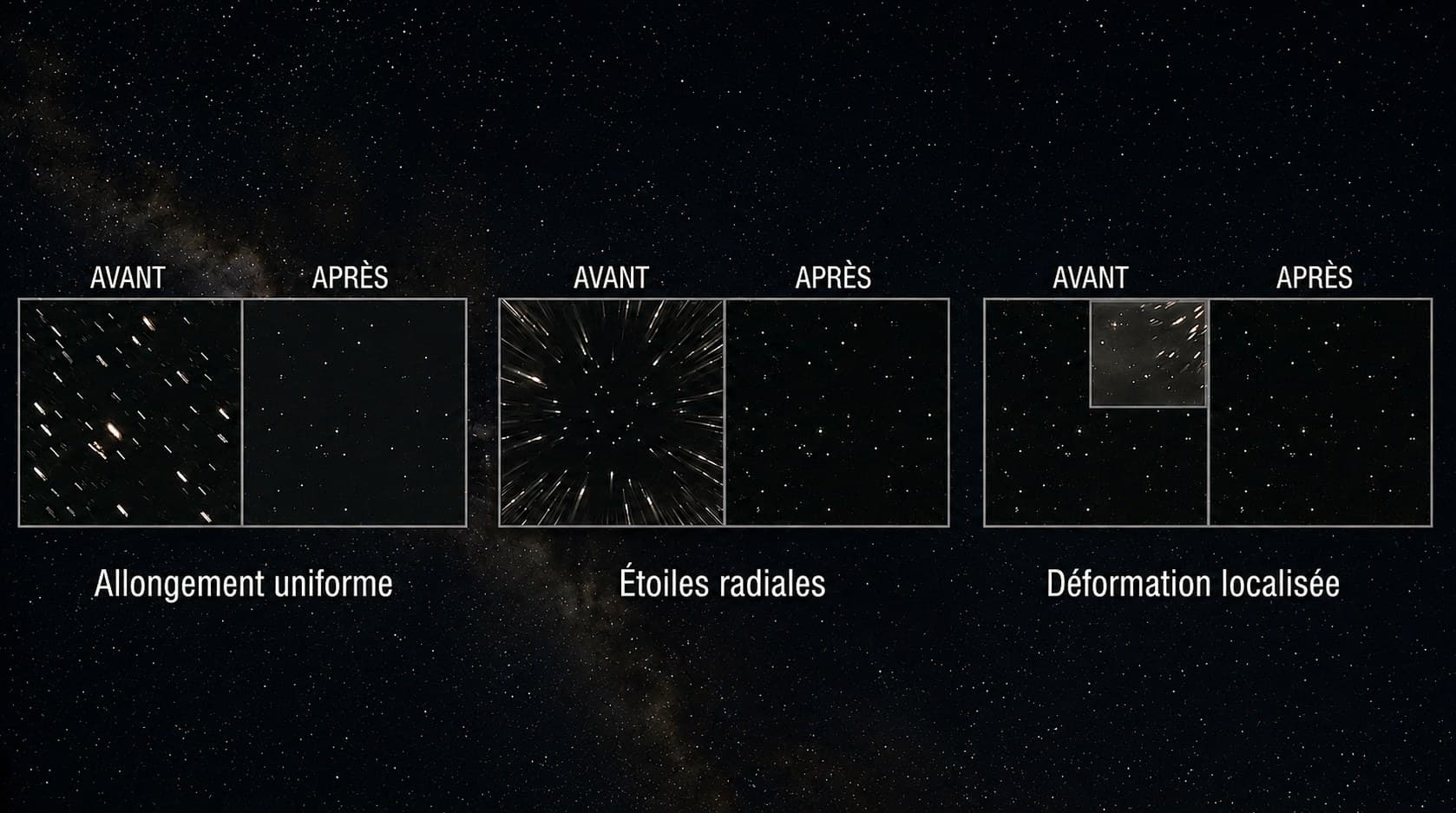
The image confirms a well-handled nomadic setup: the center is sharp (FWHM 4.54, elong 1.05) and the elongation dispersion is consistent with a successful stack of short exposures on a fixed tripod, with no drift or trailing. That is the successful part. The defects are optical and calibration-related, not tracking.
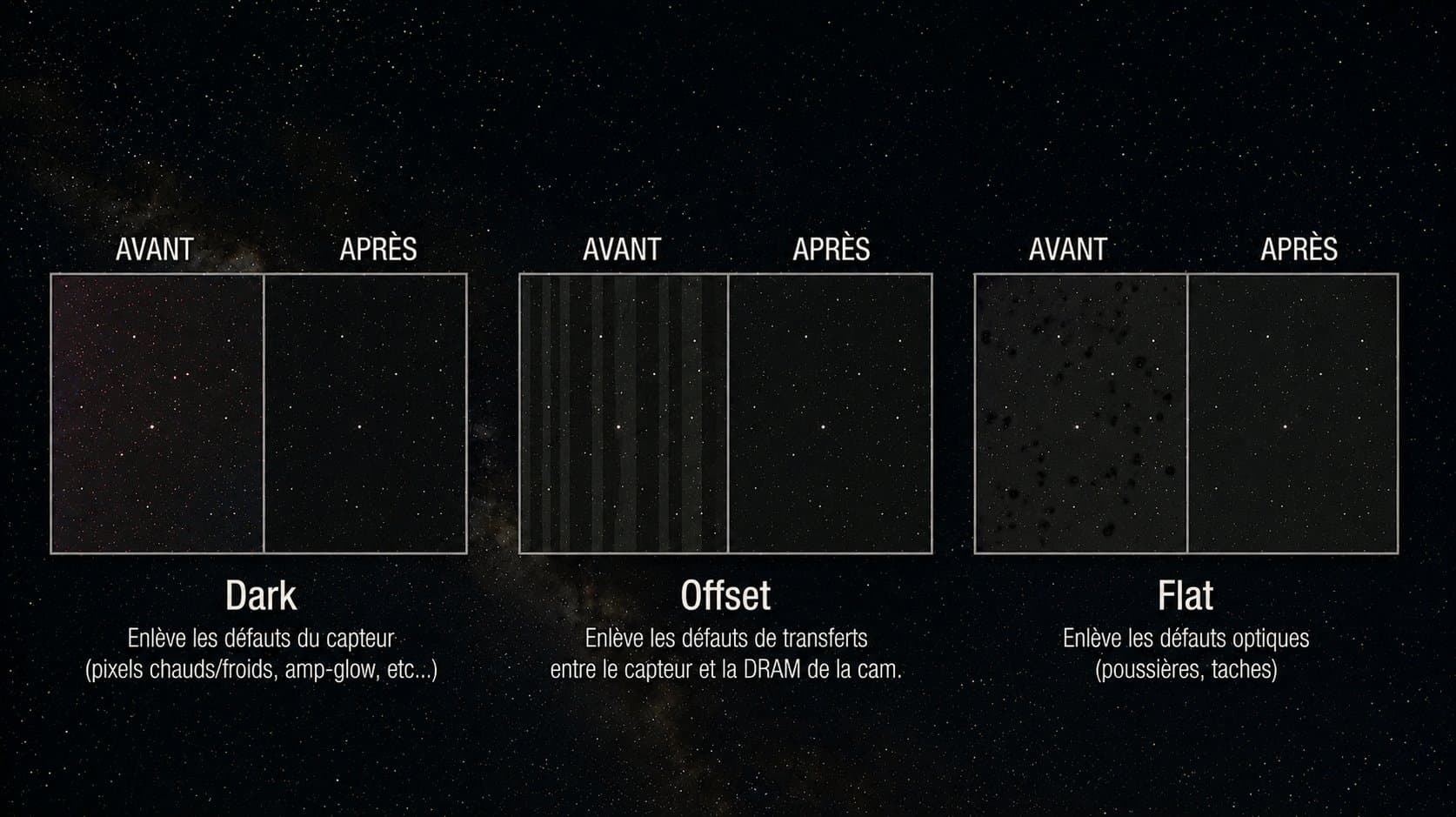
The corner degradation (TL elong 1.70, TR/TL FWHM ~5px, corner/center ratio 1.165) combines field astigmatism and field curvature/backfocus, expected behavior of a fast photo zoom open at f/1.8. Both defects are addressed together by stopping down slightly. Field calibration is imperfect (BL illumination dipole, 19% residual plane), to be corrected with proper flats then software gradient removal.
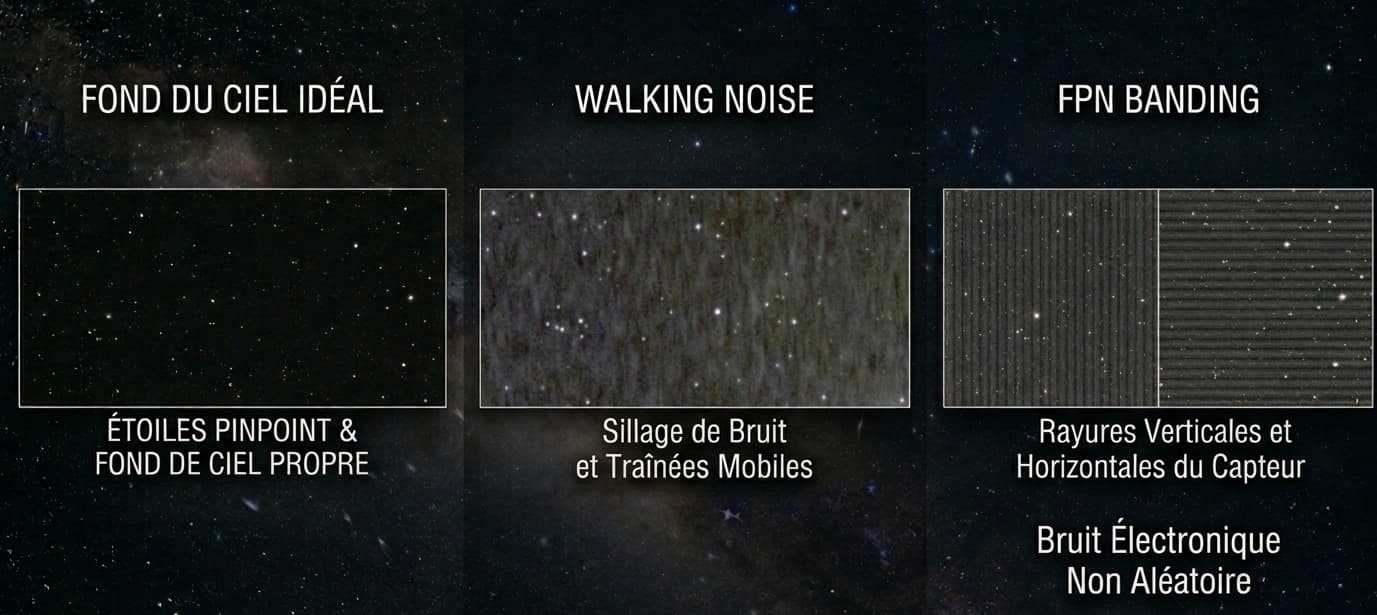
Finally, the color rendering is the most improvable area: green cast top-left (unneutralized airglow) and background chroma noise, a direct consequence of the 8s subs at ISO1600 on an uncooled sensor. An SCNR, color calibration (PCC/SPCC), and targeted chroma noise reduction would transform the result without new acquisition.
Priority actions
- Redo color calibration (PCC/SPCC) then apply a green SCNR to neutralize airglow and the green cast
- Apply targeted chroma noise reduction on the sky background
- Remove the residual gradient/dipole with GraXpert or DBE/ABE
- Stop down to f/2.8 on future sessions to tighten corner stars
- Move to a tracker to lengthen individual exposures and gain SNR (e_margin too low)